






Description
Open sky at the Riviera Palace in Nice
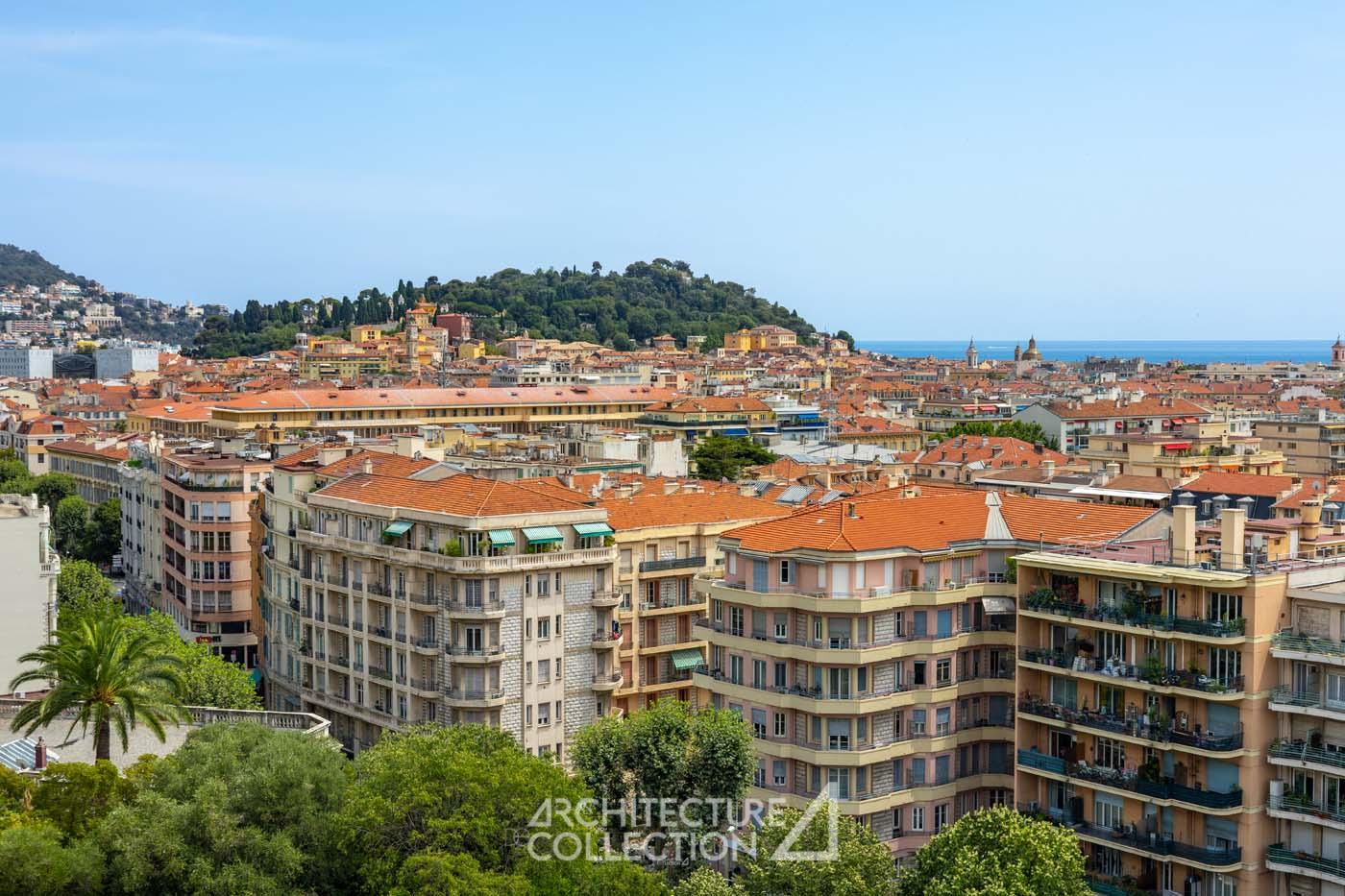
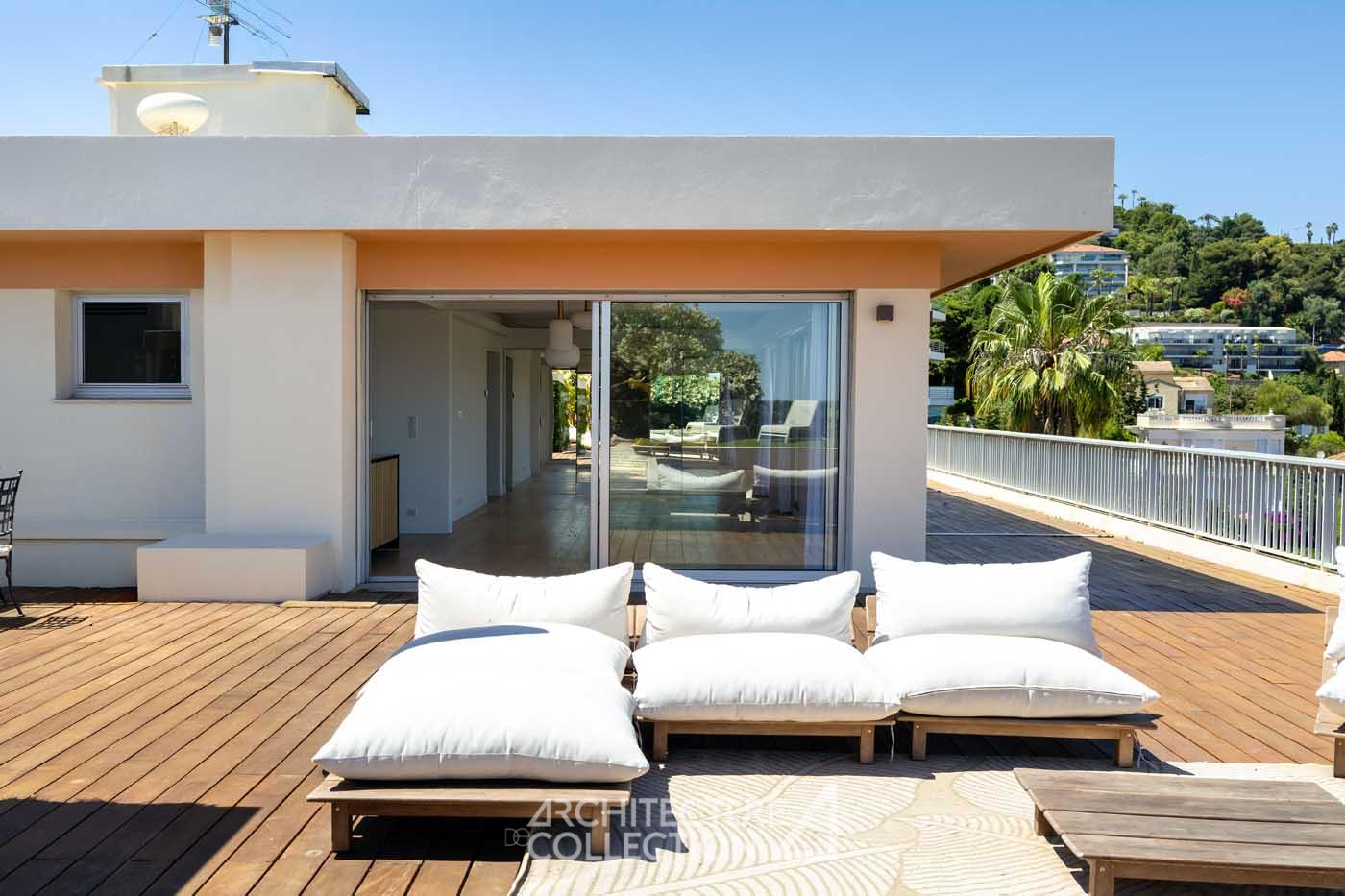
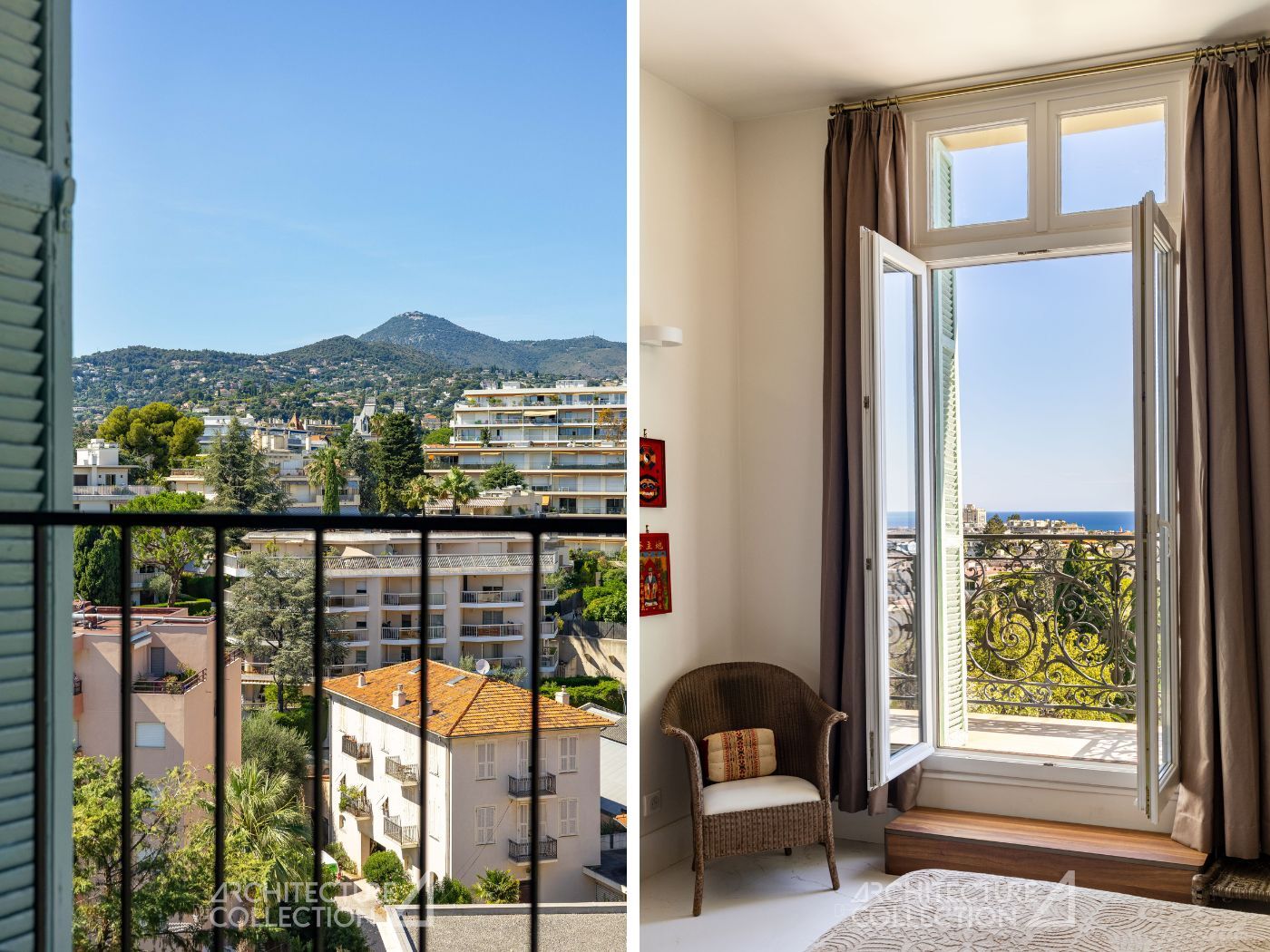
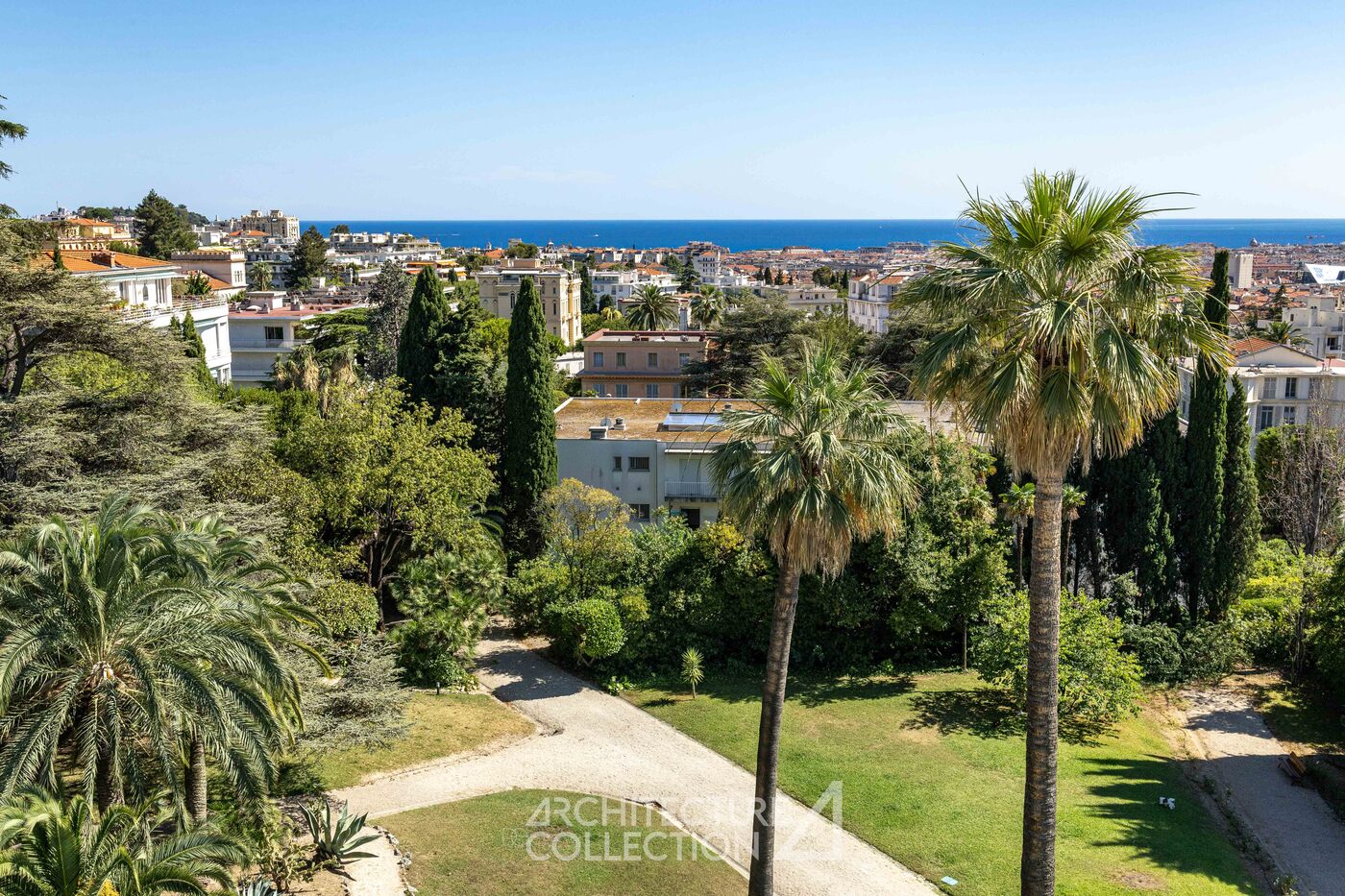
Located on the top floor of the iconic Riviera Palace in Nice, this 123 sq m (1,324 sq ft) apartment enjoys sweeping panoramic views over the Mediterranean Sea, Cap d’Antibes, and the surrounding hills.
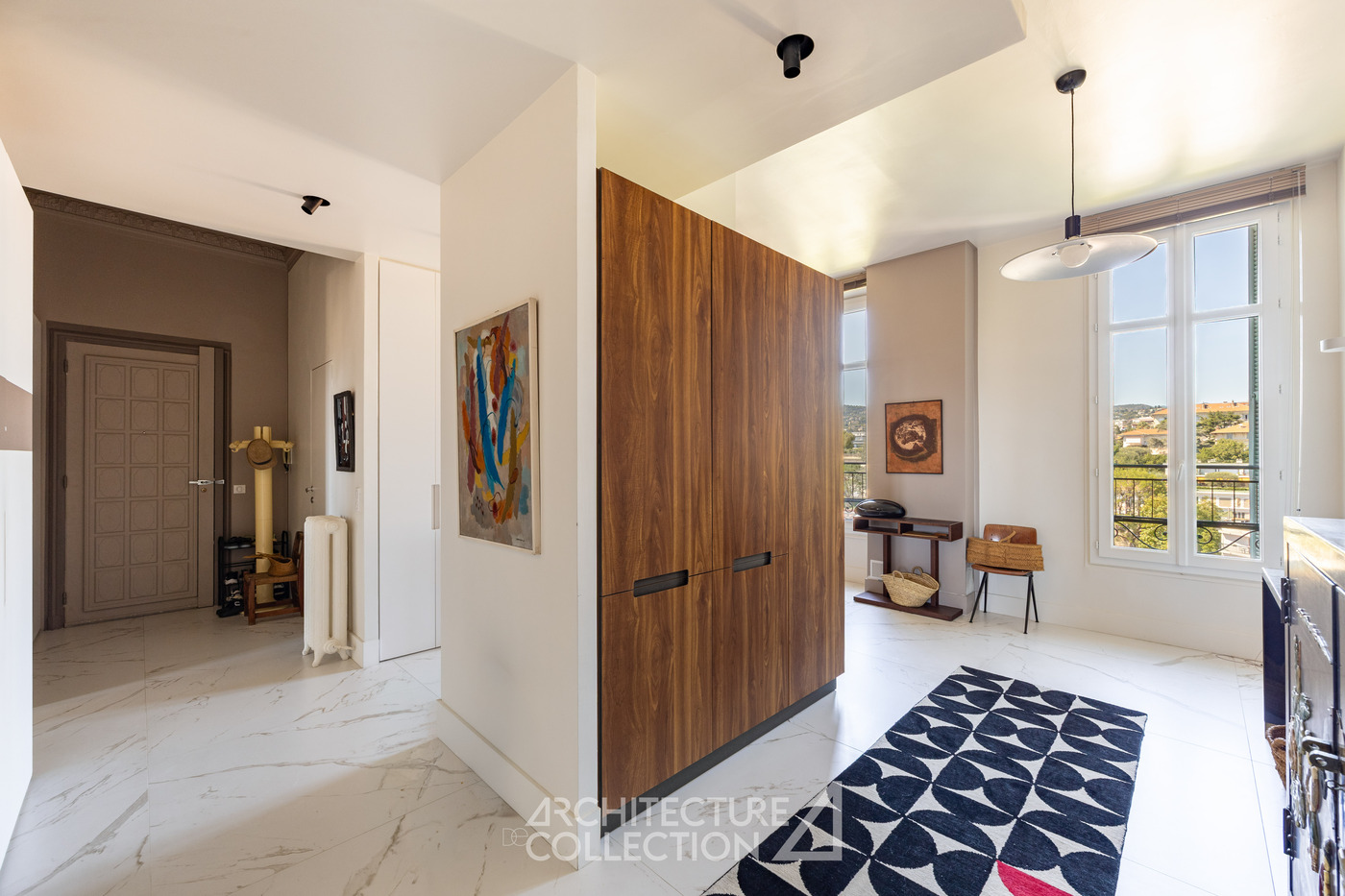
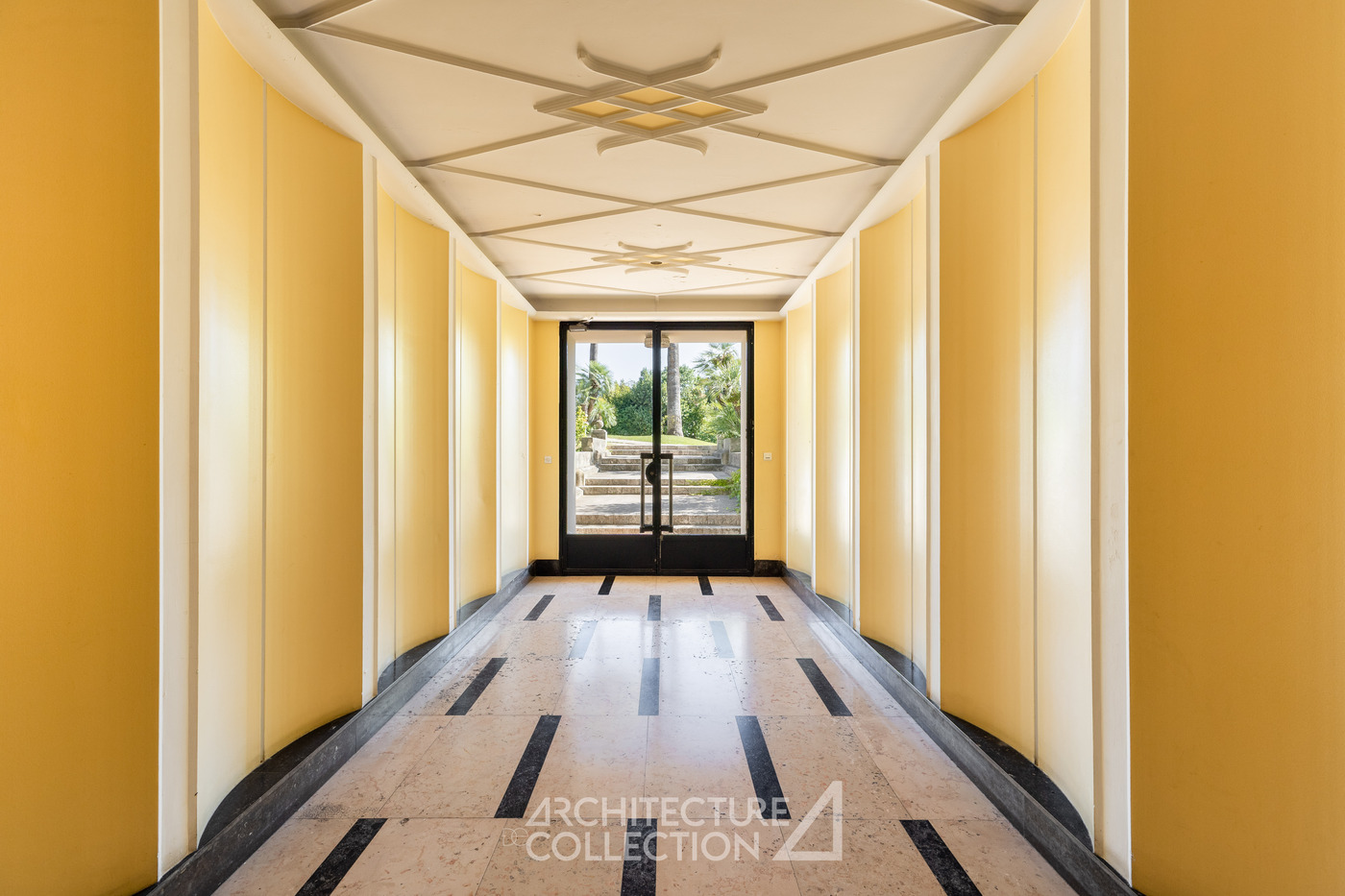
The apartment is arranged around an entrance gallery that provides access to all the rooms.
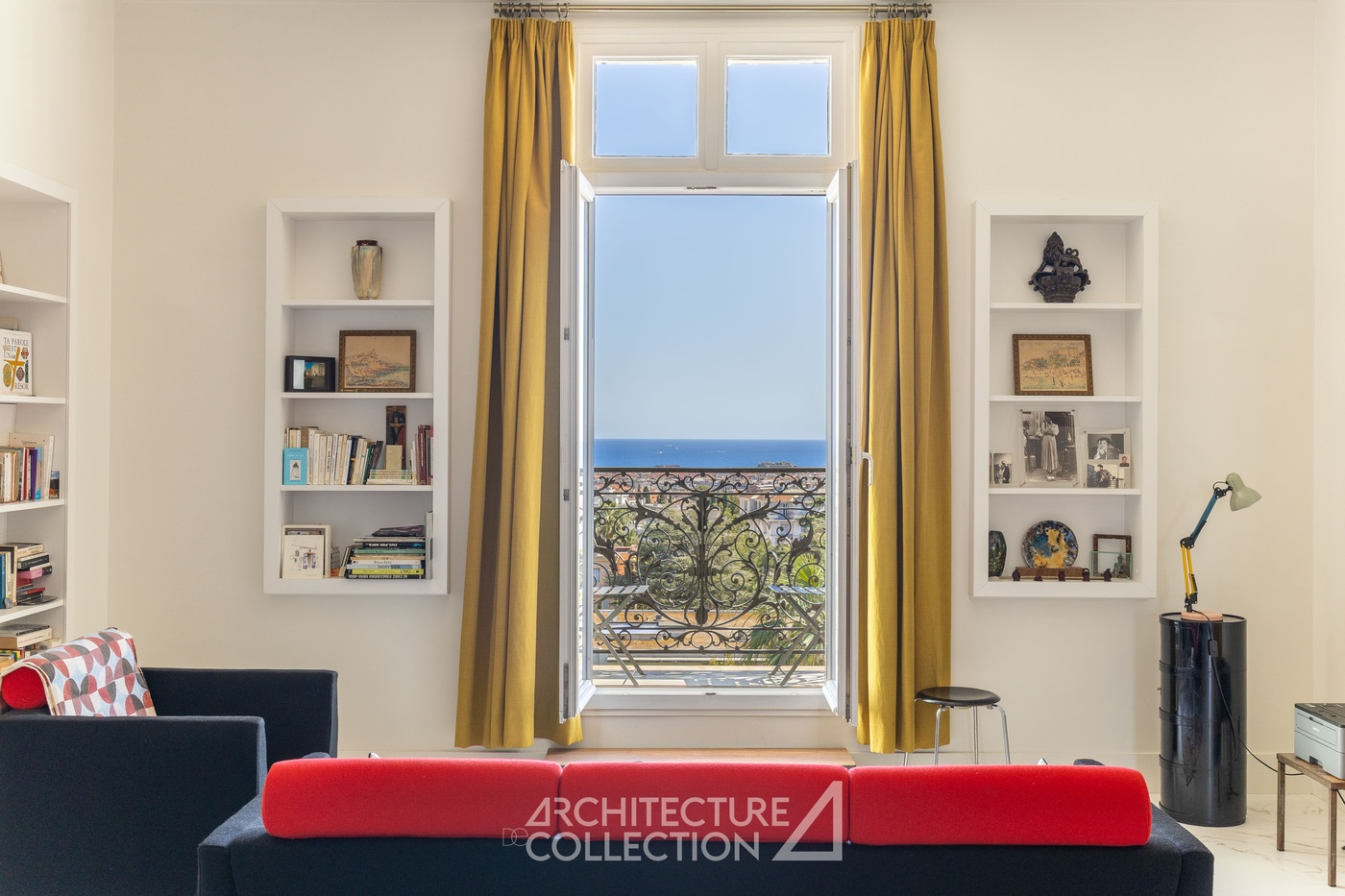
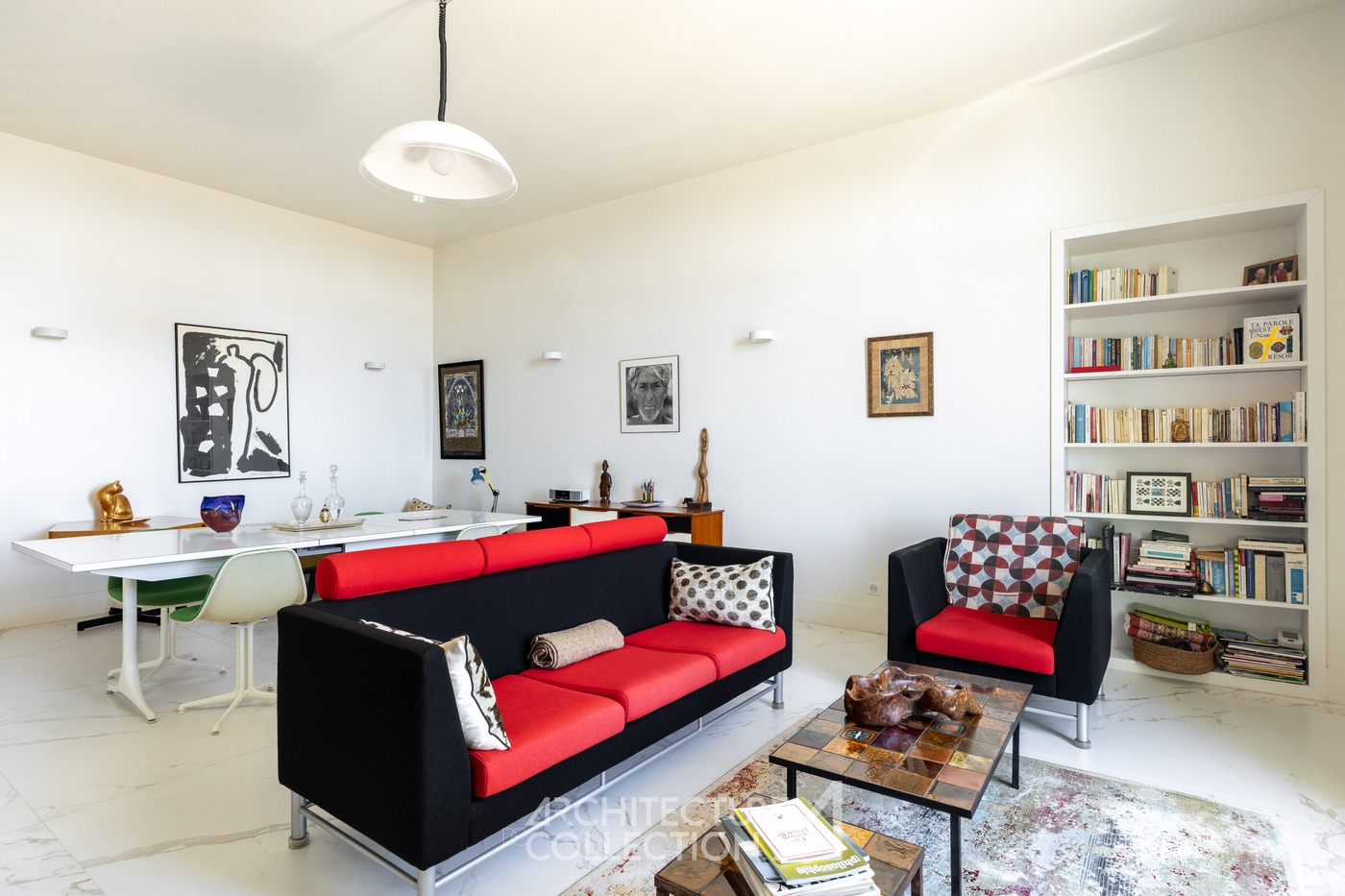
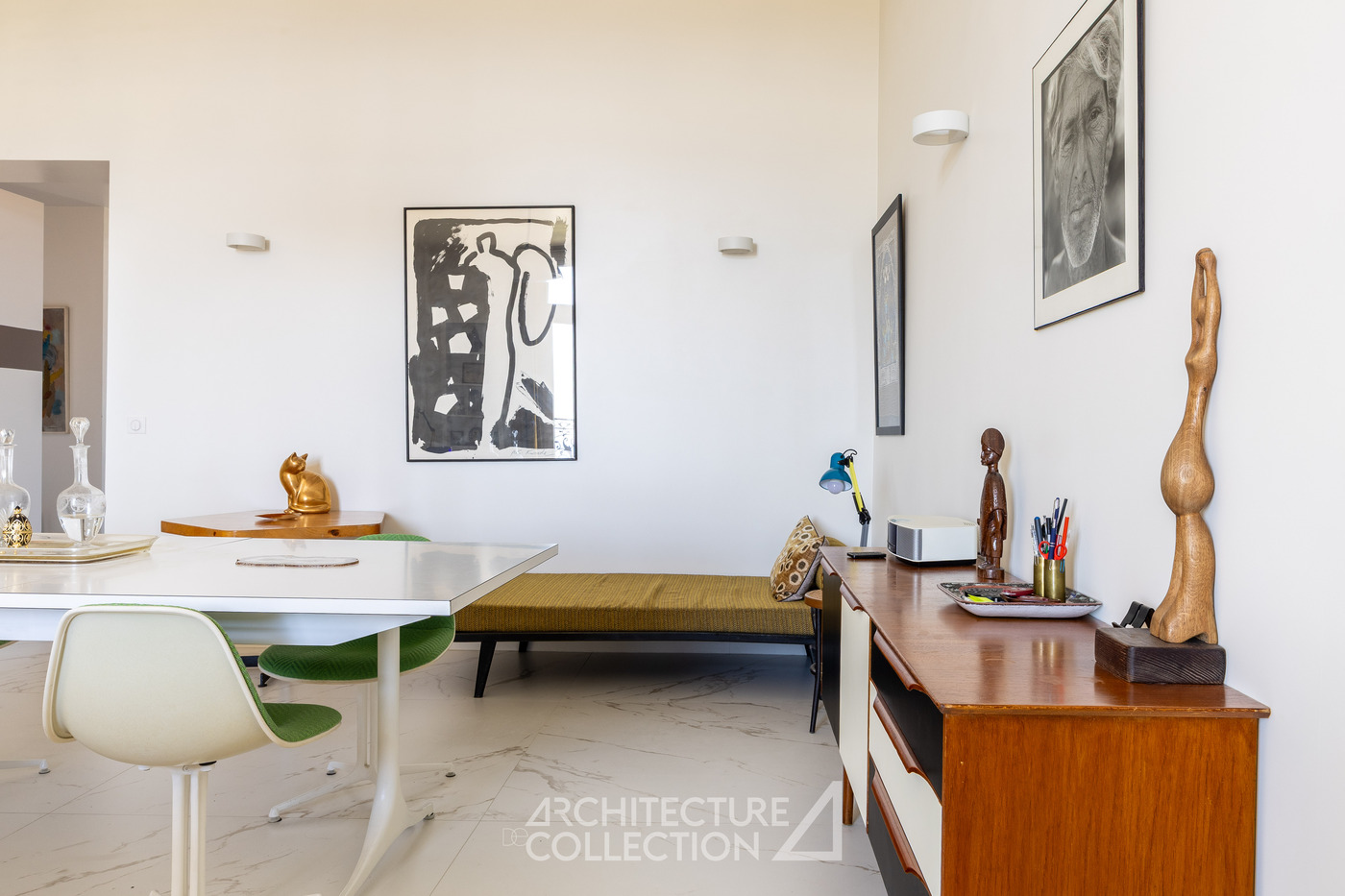
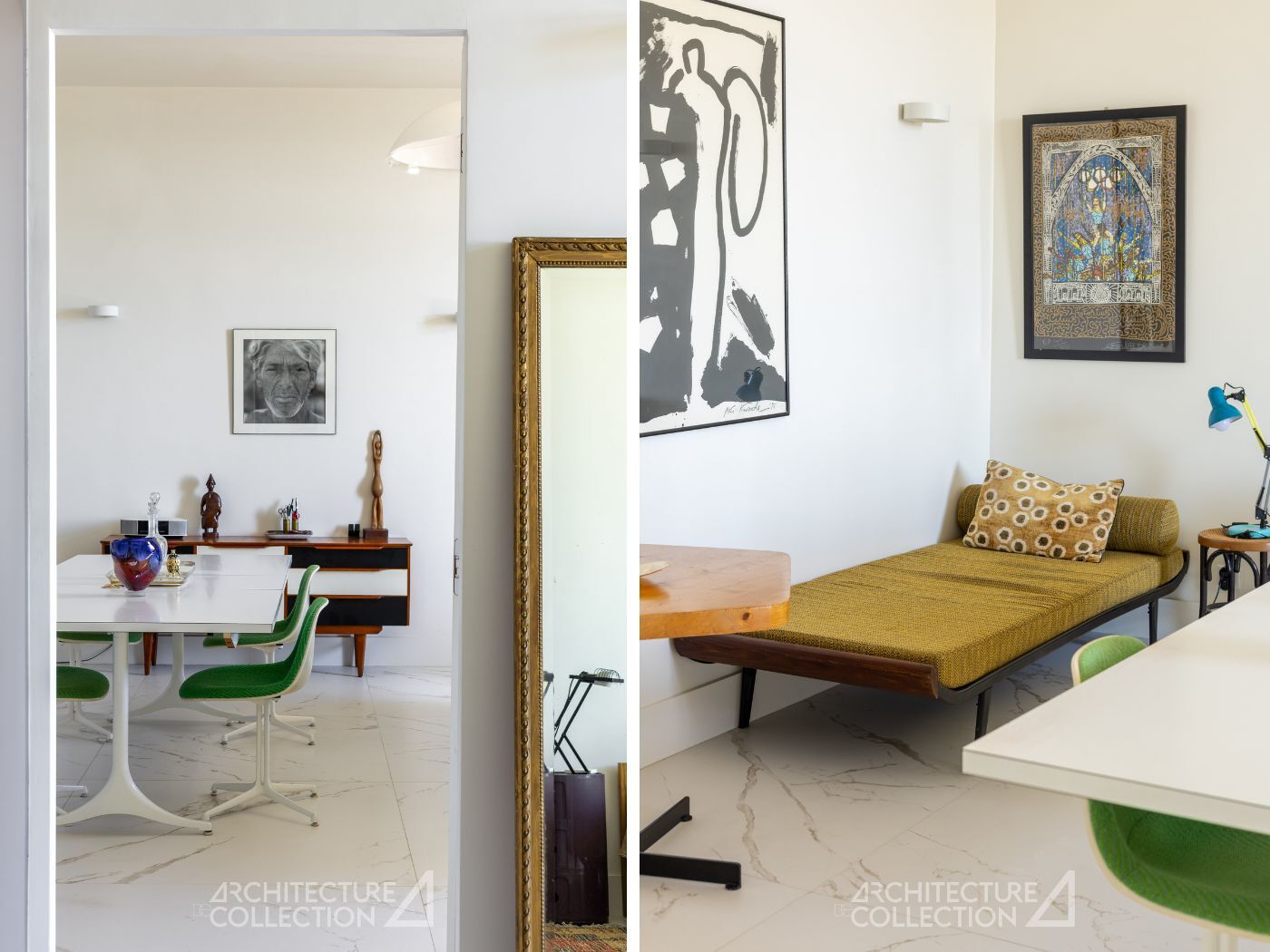
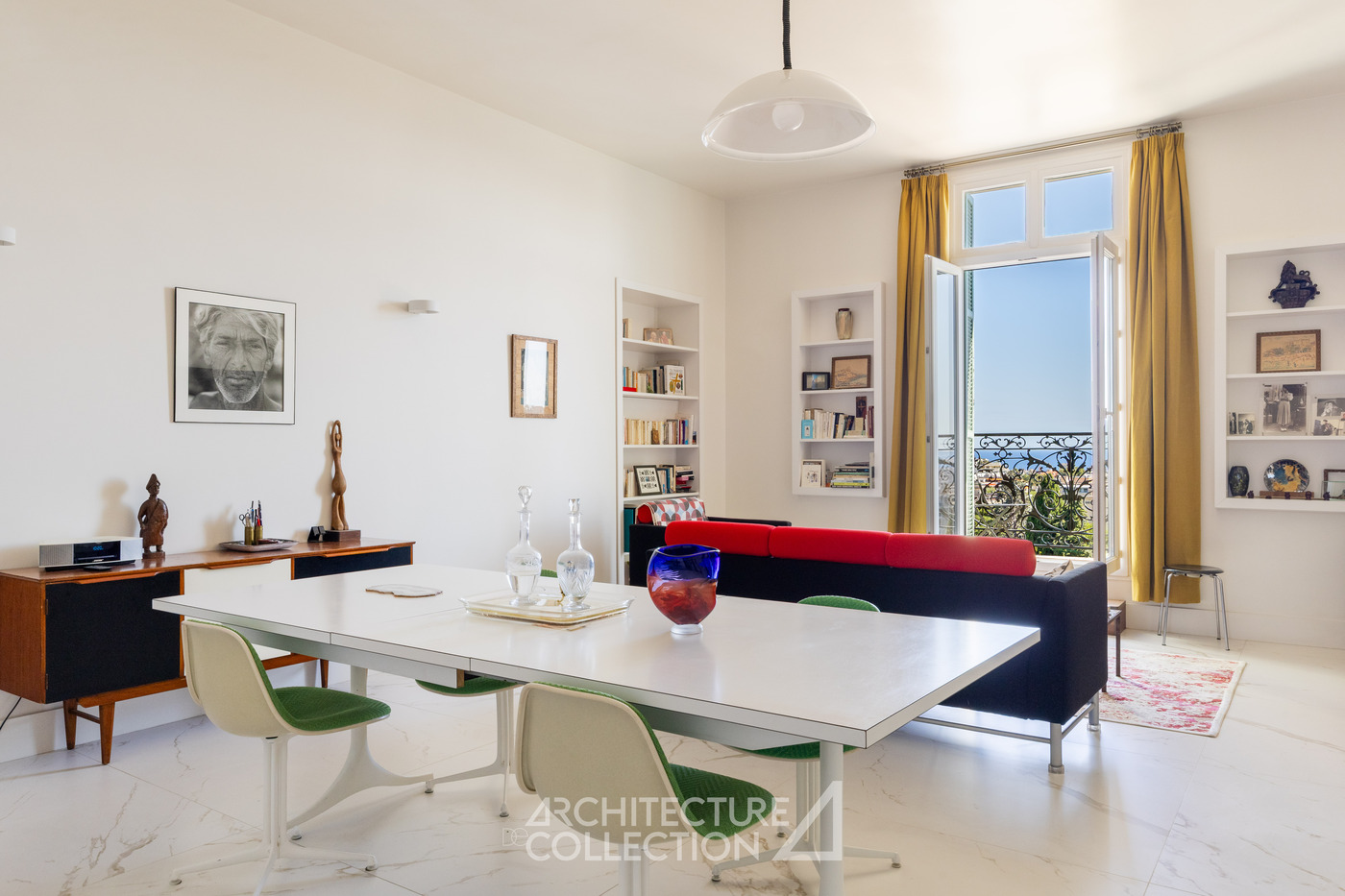
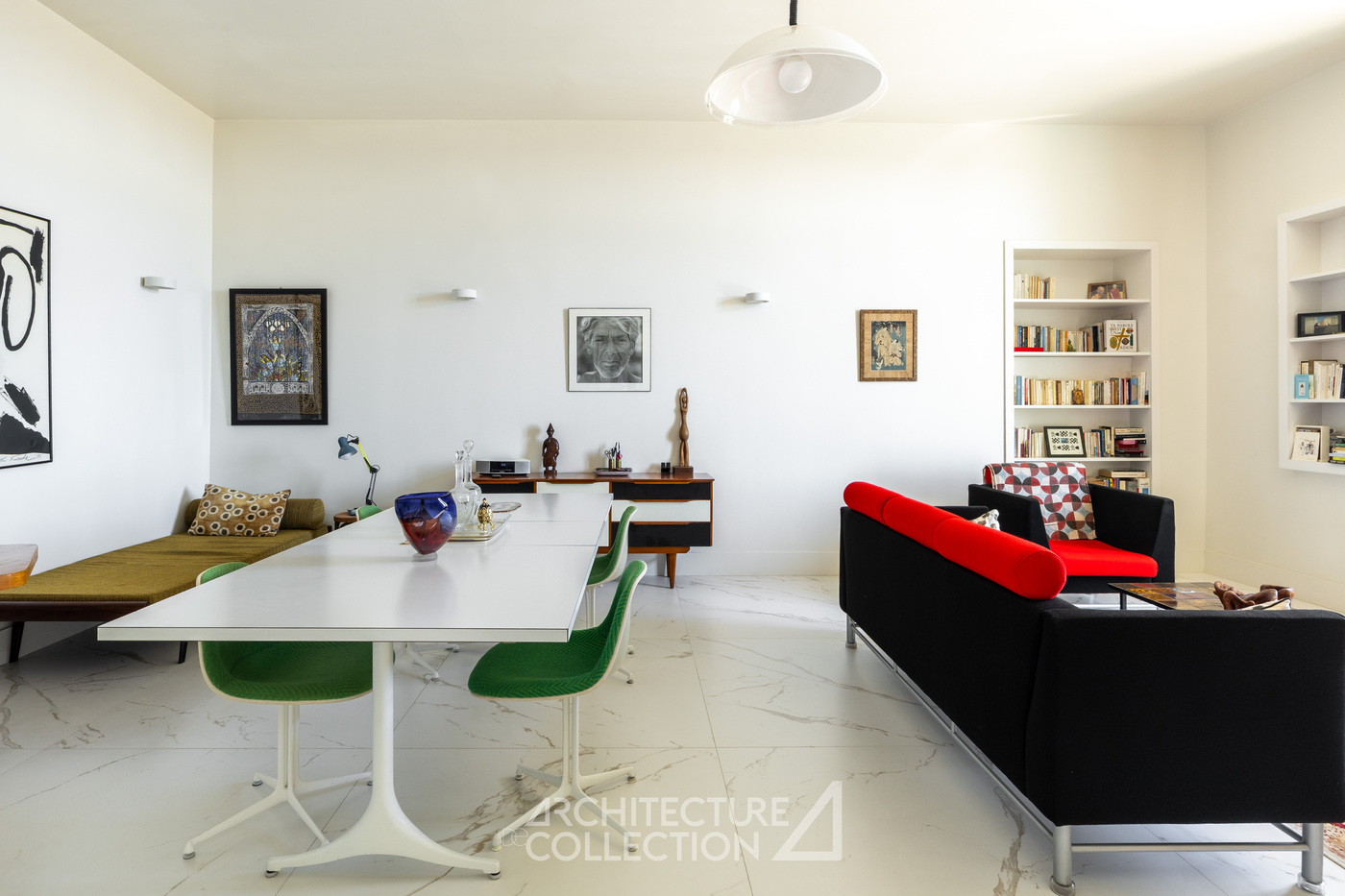
The living areas feature a spacious, light-filled reception room with a dining area and impressive ceiling heights. South-facing and opening onto a balcony, the living room overlooks the palace gardens and enjoys breathtaking panoramic views of the sea and the horizon.
Recently renovated to an exceptional standard, the apartment has nonetheless retained several of its original architectural features.
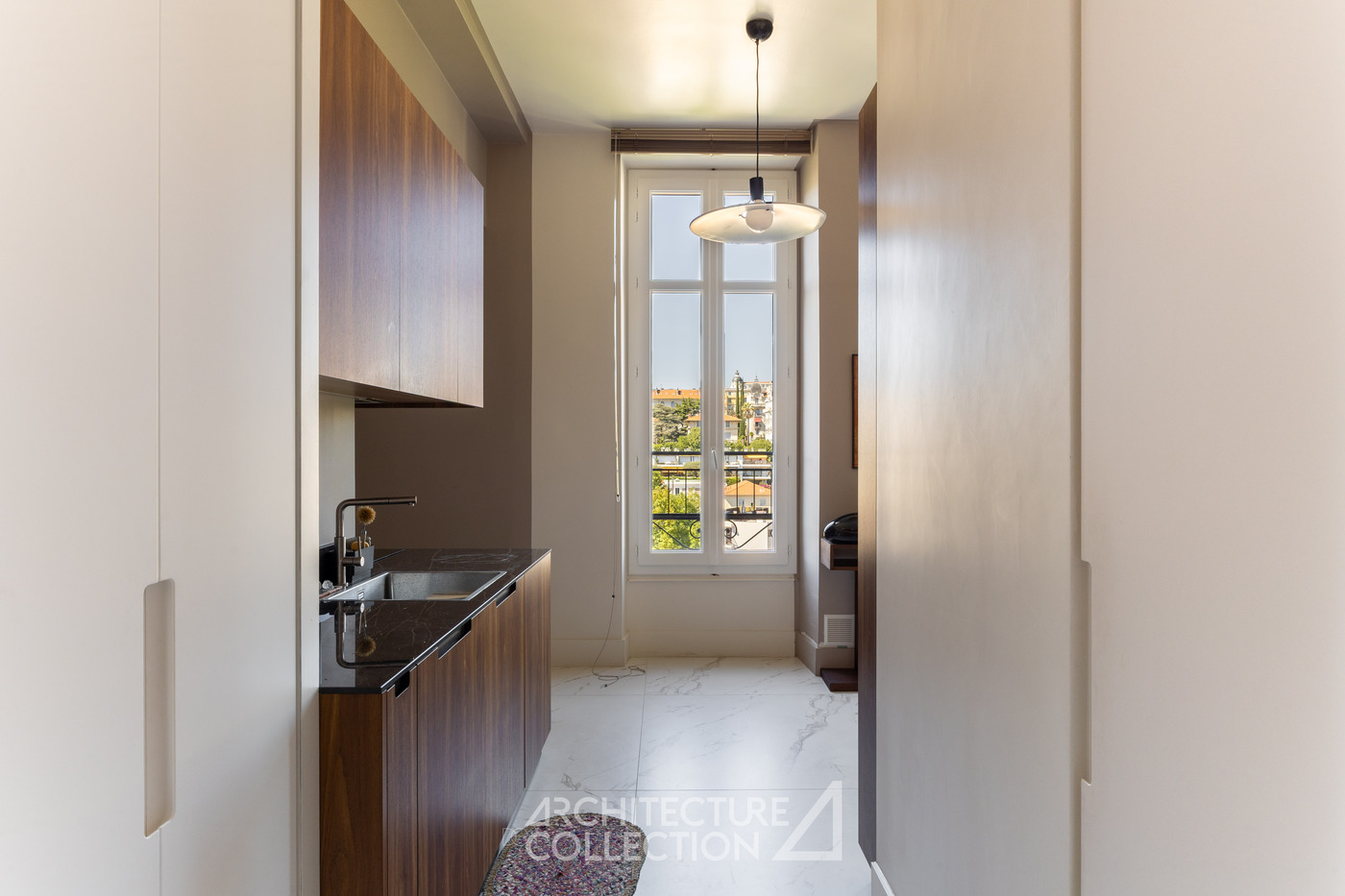
The fully fitted open-plan kitchen, with a separate utility room, offers space for an informal dining area and enjoys unobstructed views of Mont Chauve.
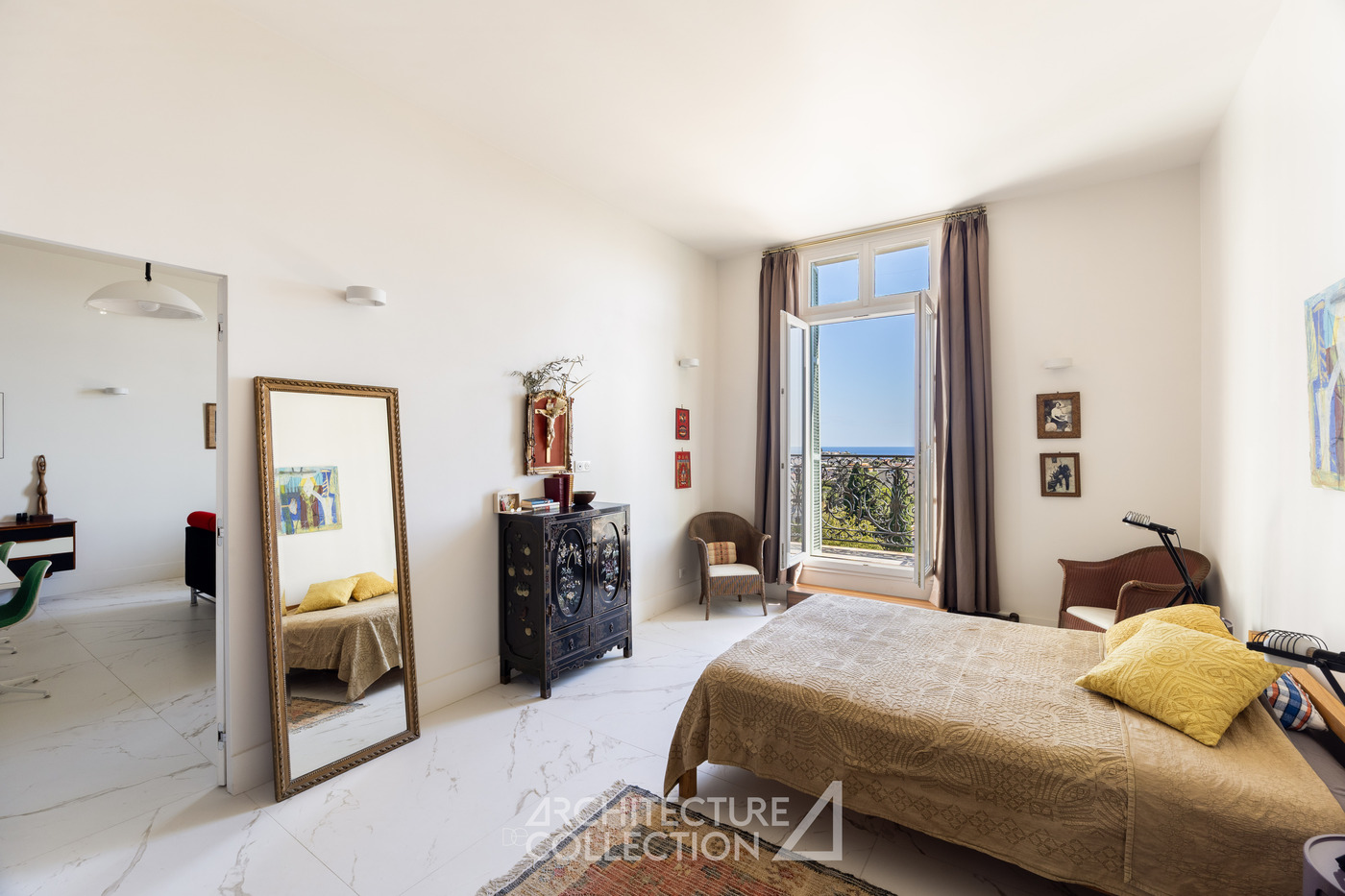
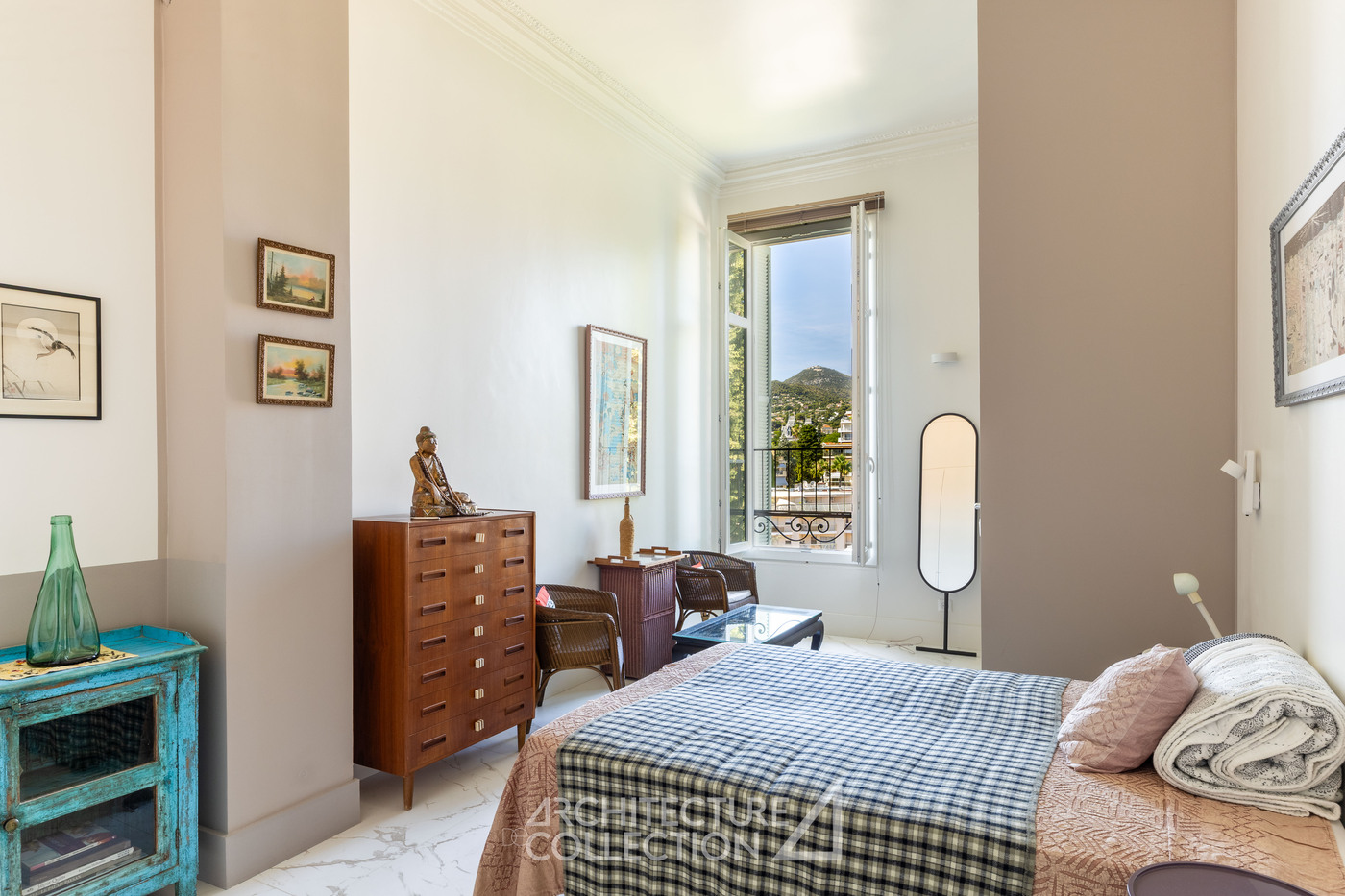
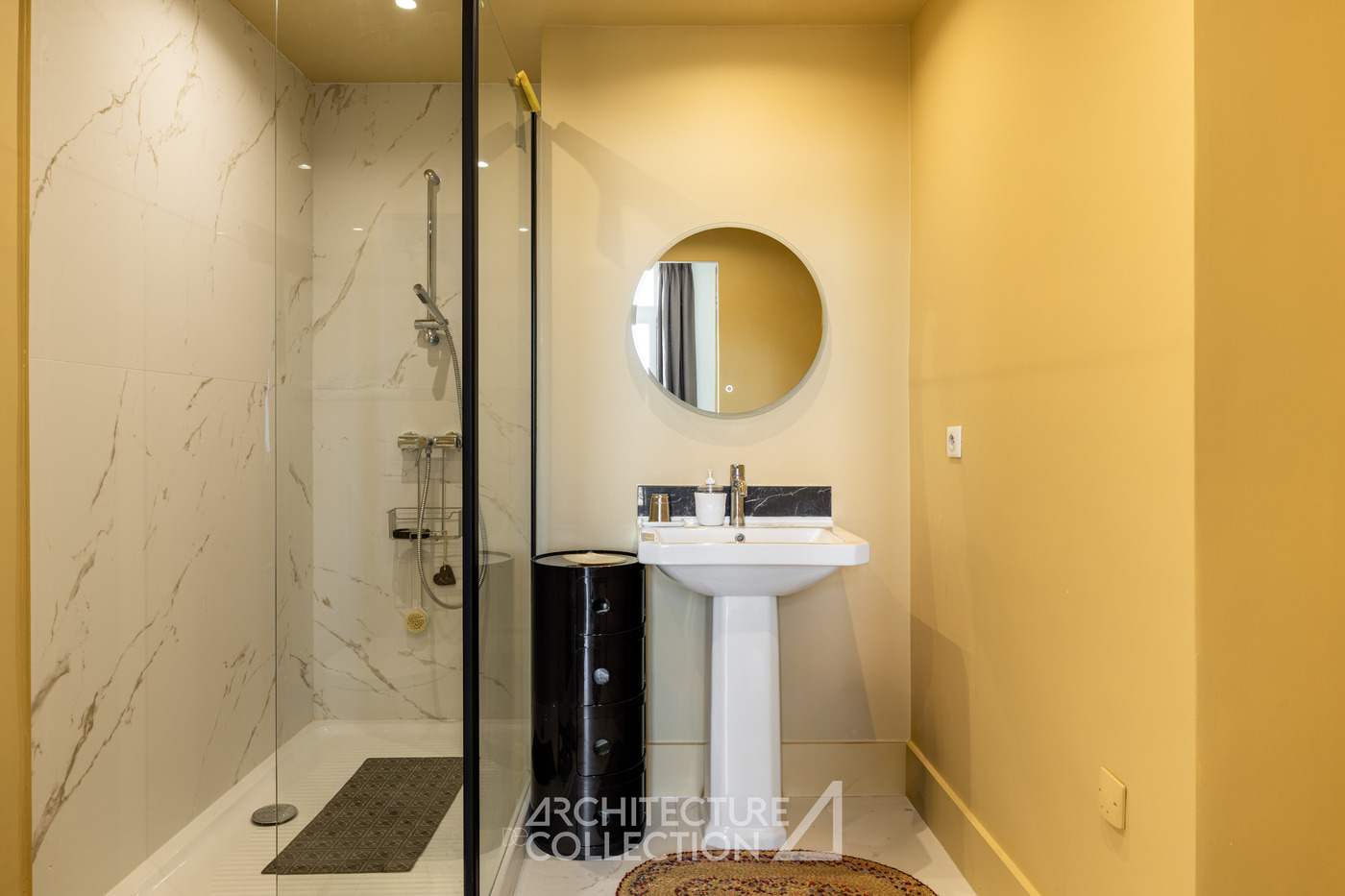
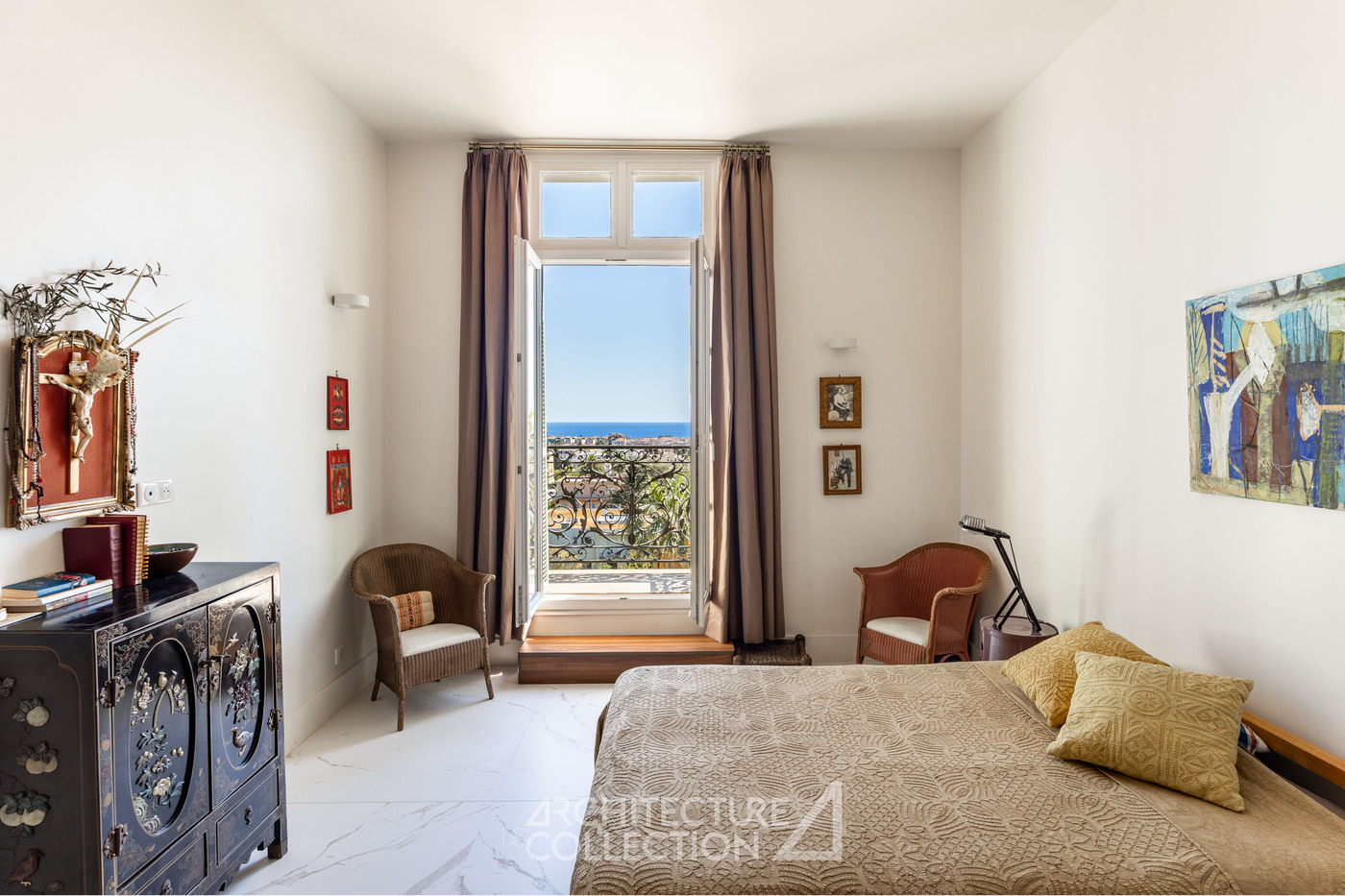
The sleeping quarters comprise a principal suite with an en-suite shower room and WC, also benefiting from spectacular views, as well as a second bedroom with its own en-suite shower room.
Additional features include a guest WC, extensive built-in storage throughout the entrance hall and bedrooms, a cellar, and a private parking space.
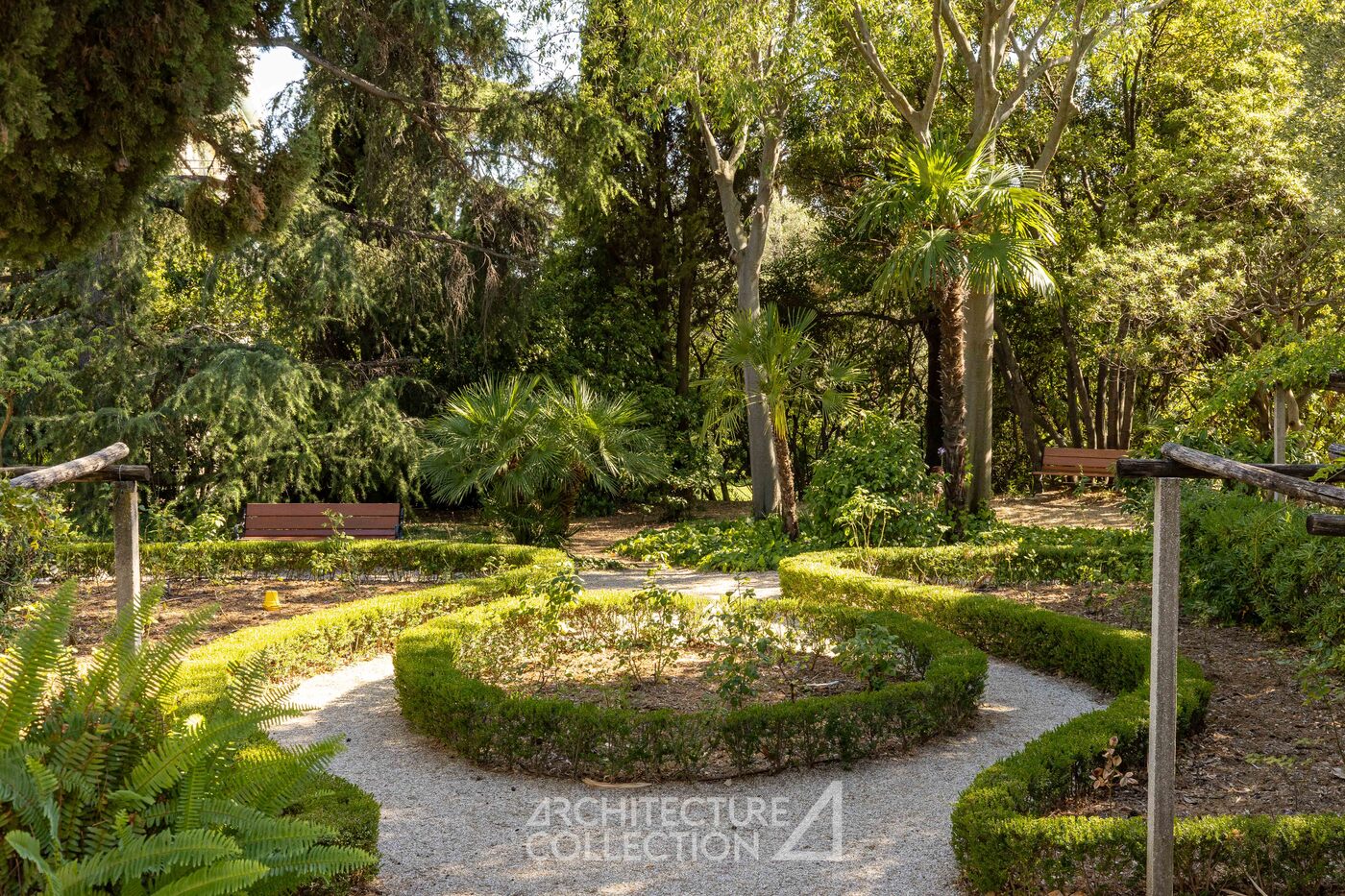
The Riviera Palace also benefits from beautifully landscaped private grounds, offering a peaceful green oasis in the heart of the historic Cimiez district.
The apartment is located on the prestigious hill of Cimiez, one of Nice’s most sought-after residential neighbourhoods. Renowned for its magnificent Belle Époque palaces, Cimiez is distinguished by its tree-lined avenues, abundant green spaces, peaceful atmosphere, and immediate proximity to the city centre.
Set in an elevated position, Boulevard de Cimiez offers convenient access to local shops and everyday amenities. The neighbourhood is also celebrated for its exceptional architectural and cultural heritage, home to the Matisse Museum, the Marc Chagall National Museum, and the Monastery of Cimiez with its historic gardens.

Belle Époque heritage and modernisation
The Riviera Palace, the first building in Nice to be recognised as a palace hotel, stands as a remarkable testament to Belle Époque architecture. Its eclectic, Neoclassical-inspired design combines understated elegance with refined proportions. The façade is articulated by rhythmic bays of windows, projecting cornices, balconies, and gracefully curved bow windows, all contributing to its distinctive architectural character.
From the 1920s through the 1950s, the Riviera Palace underwent a significant programme of modernisation. In 1924, the building was extended by Jules Febvre (1859–1934), the Nice-based architect behind the Majestic Hotel, a landmark of the city’s modern architectural movement and once the largest hotel in Nice. In 1947, the palace was comprehensively refurbished under the direction of architect Louis Heitzler (1895–1951).
During this renovation, the south façade adopted a cleaner, more restrained appearance, with many of its original decorative features—including friezes and pilasters—removed. The original cast-iron and glass galleries were replaced with a reinforced concrete portico, creating covered terraces on both the ground and first floors. Inside, a mezzanine level was introduced within the ground floor, altering the generous double-height volumes that had originally characterised the entrance spaces.


A landmark development shaped by 20th-century history
In 1889, architect Sébastien-Marcel Biasini was commissioned to design and build the Riviera Palace on the renowned Boulevard de Cimiez.
Developed on land acquired by the Compagnie Internationale des Wagons-Lits et des Grands Express Européens, the hotel opened in 1892. Stretching 110 metres (361 ft) in length, it rose over five storeys, featured 200 guest rooms, and was set within a one-hectare landscaped park.
A favourite destination for the European aristocracy and international bourgeoisie, the Riviera Palace was requisitioned as a military hospital during the First World War. Weakened by the economic and social upheavals of the interwar years, it ultimately fell victim to the decline in luxury tourism that followed. Like many of Nice’s grand hotels in the Cimiez district, it was eventually converted into an exclusive residential property, preserving its architectural heritage while entering a new chapter in its history.
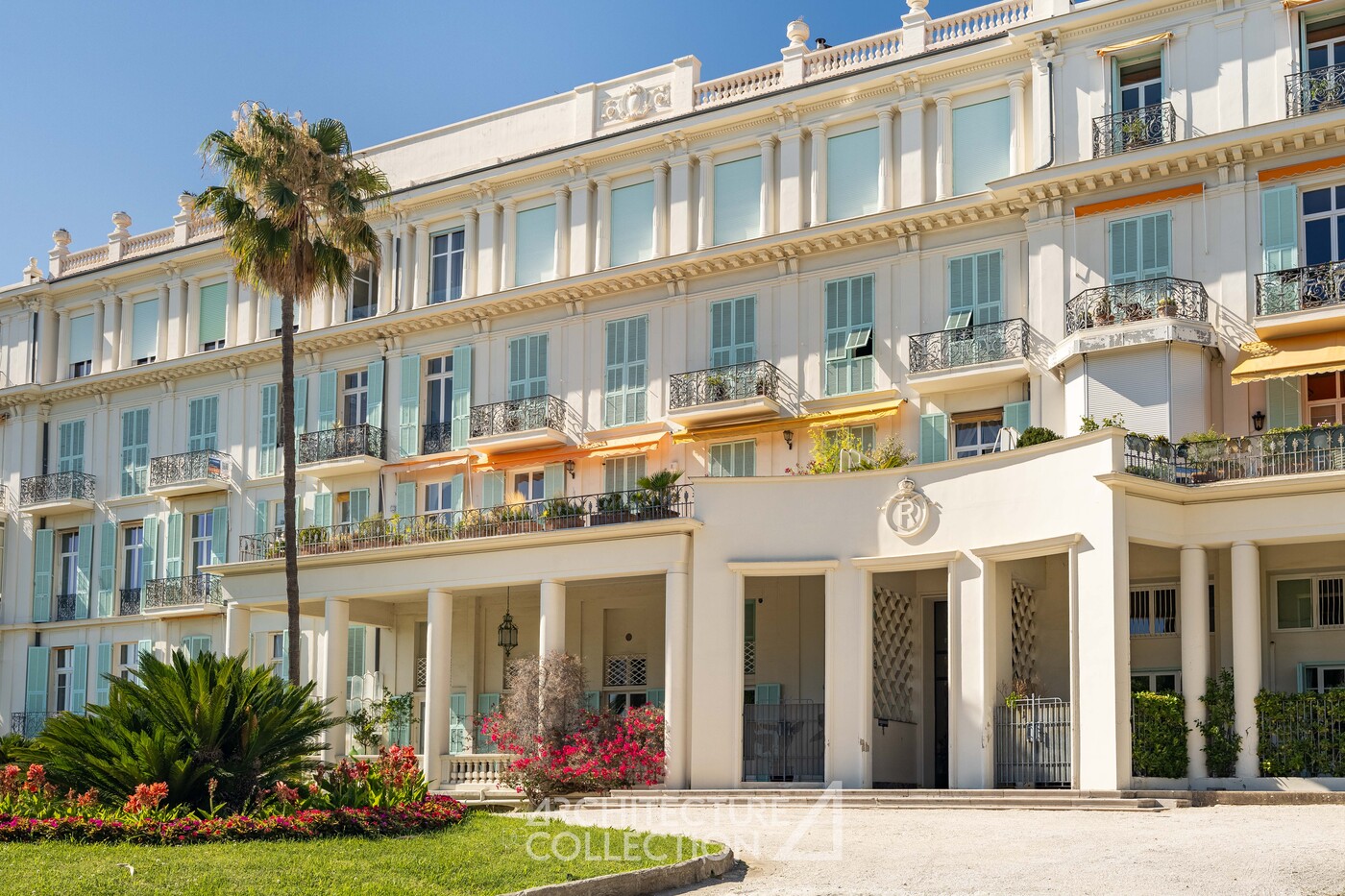
Riviera Palace, 1892, Nice

Hôtel Excelsior Régina, 1896, Nice
Sébastien-Marcel Biasini: An architect of Nice’s Belle Époque
Sébastien-Marcel Biasini (1841–1931), affectionately nicknamed “His Majesty” Biasini, was one of the leading architects of Nice’s Belle Époque. Born in Nice to the son of a stonemason, he enrolled at the École des Beaux-Arts in Paris in 1862, graduating with a First-Class Medal before returning to his native city to begin his architectural career.
Biasini played a pivotal role in the transformation of Nice, and particularly in the development of the Cimiez hill into one of the city’s most prestigious residential districts. A defining figure of the Belle Époque, he designed and built an impressive portfolio of palaces, villas, and residential buildings, working closely with major developers such as the Société Foncière Lyonnaise and the Société Immobilière et de Construction de Nice.
Among his most notable works are the Hôtel Excelsior Regina, the Crédit Lyonnais building, the Palais de Marbre (now home to the city archives), Villa Starzinski, the Hôtel Impérial, and the Palais Marie-Christine. His extensive body of work has left an enduring mark on Nice’s architectural identity and contributed significantly to the city’s rich heritage, recognised in 2021 when Nice, Winter Resort Town of the Riviera, was inscribed on the UNESCO World Heritage List.
Technical Information
Asking Price: €1,095,000
Agency fees are payable by the seller.
Property Tax (Taxe Foncière): €1,330 per year
Monthly Service Charges: Approximately €850
Reversible air conditioning
Recently renovated
Information regarding potential risks to which this property is exposed is available on the French government’s Géorisques website.
© Text: Architecture de Collection
© Photography: Elodie Gutbrod
Energy Performance Rating (DPE): C
Greenhouse Gas Emissions (GES): A
Estimated annual energy costs, based on average energy prices indexed for 2021, 2022 and 2023 (including subscriptions), range between €1,504 and €2,034 per year.