
Description
A renovated Type E duplex in 2026
Listed as a UNESCO World Heritage Site since 2016, the Cité Radieuse in Marseille is an icon of Le Corbusier’s work. Built between 1948 and 1952 in the context of post-war reconstruction, it represents the culmination of his research on housing and modern architecture.
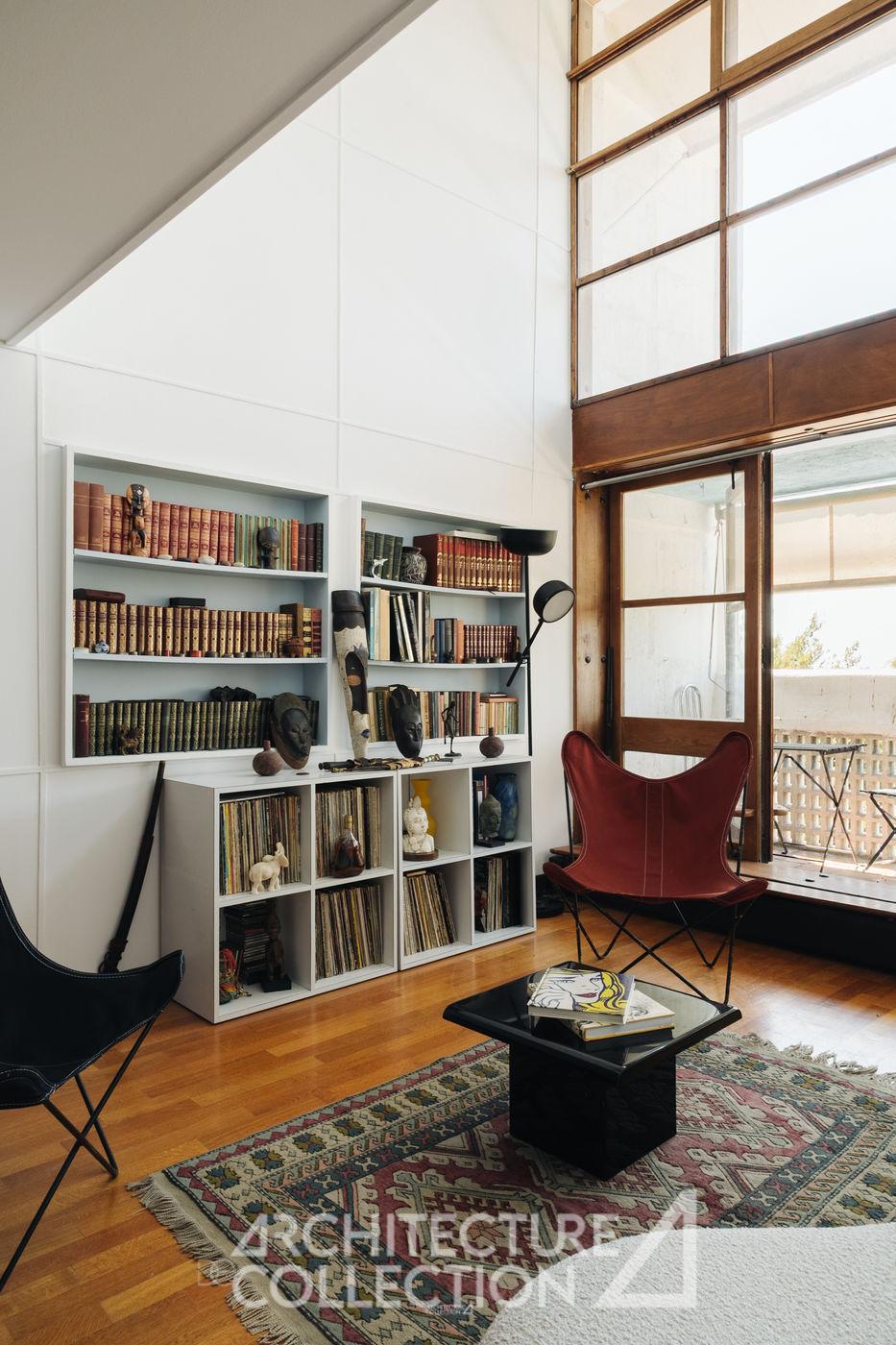
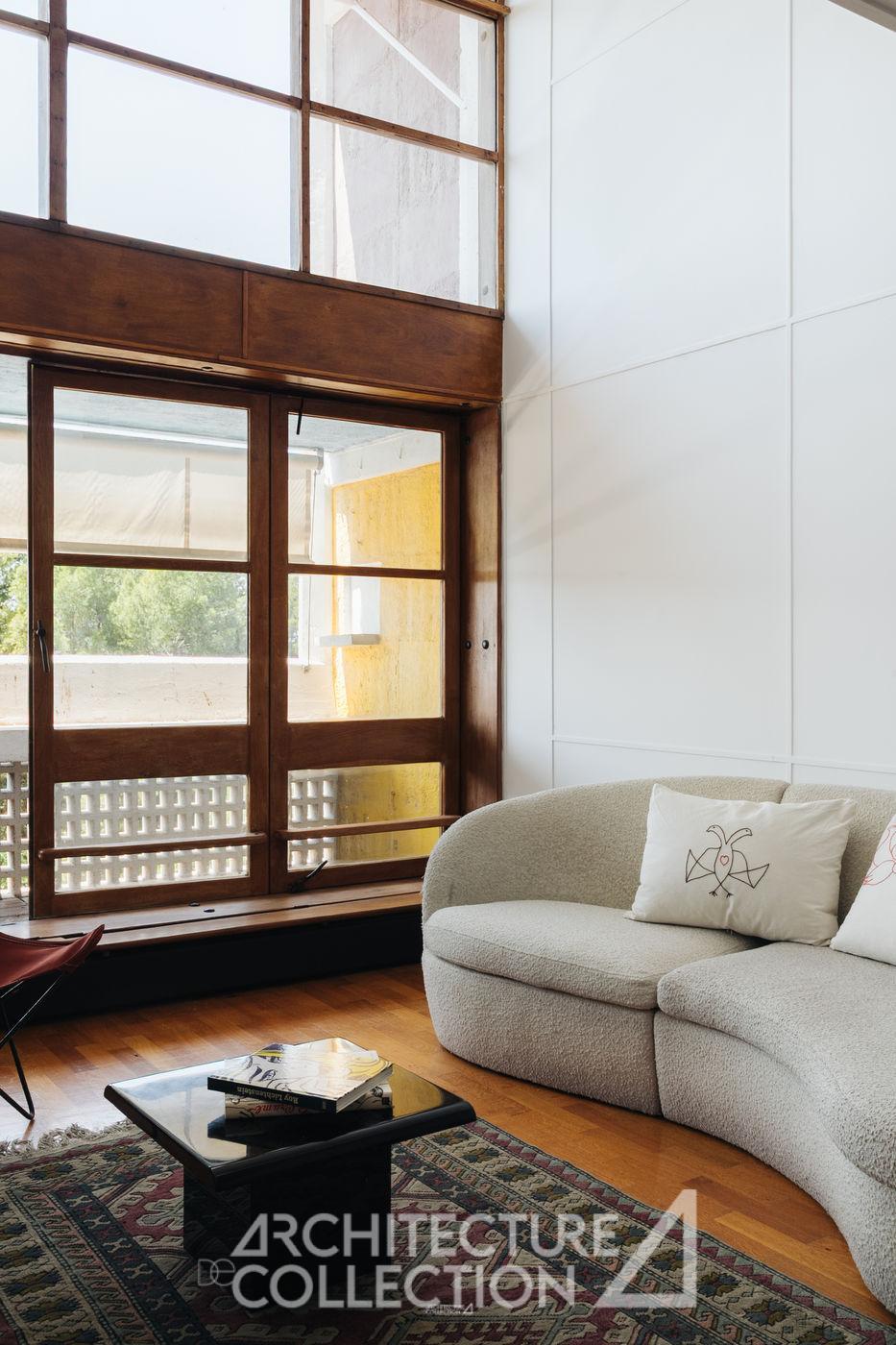
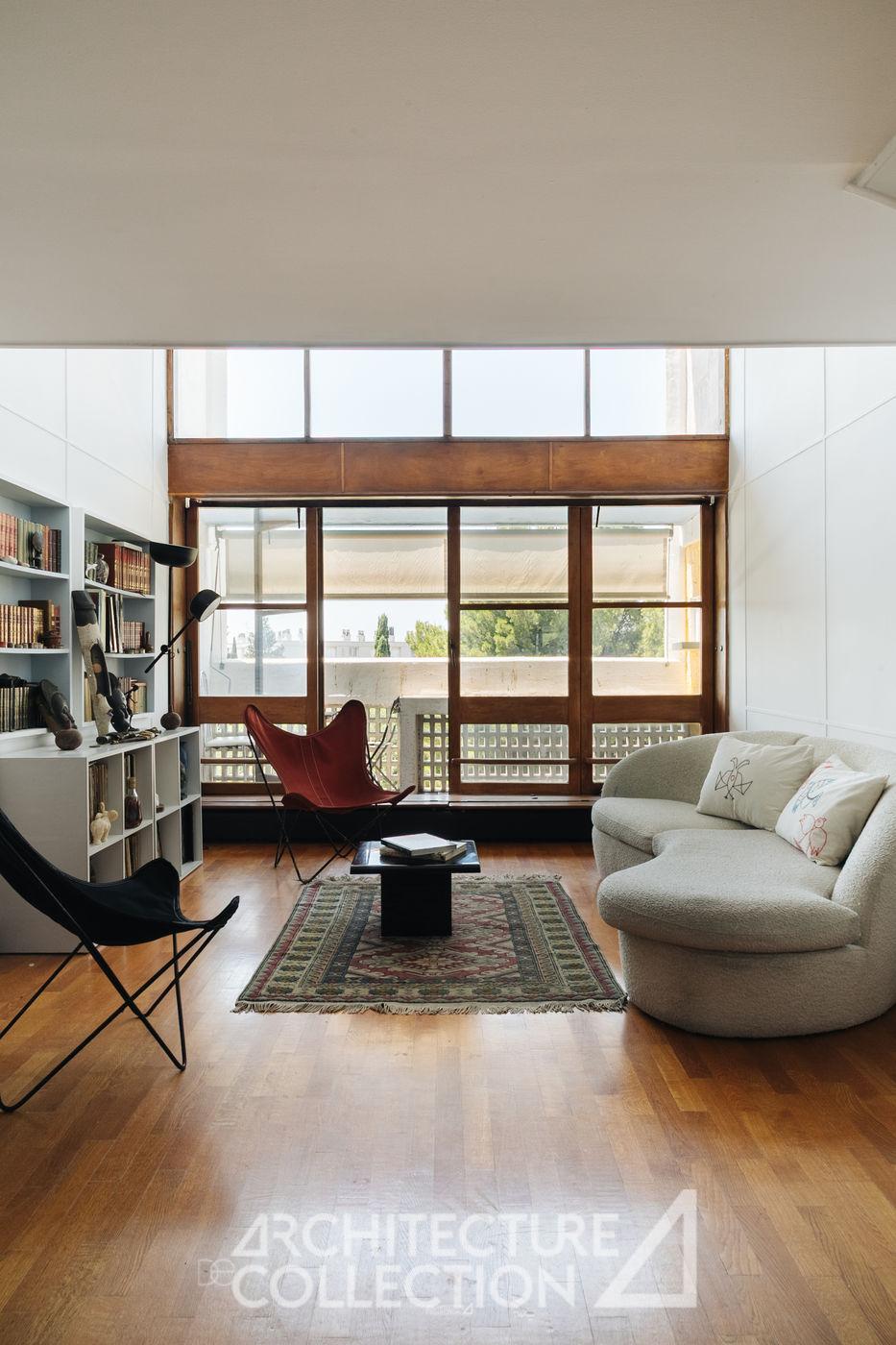
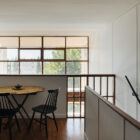
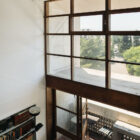
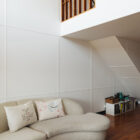
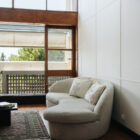
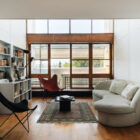
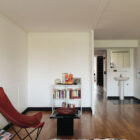
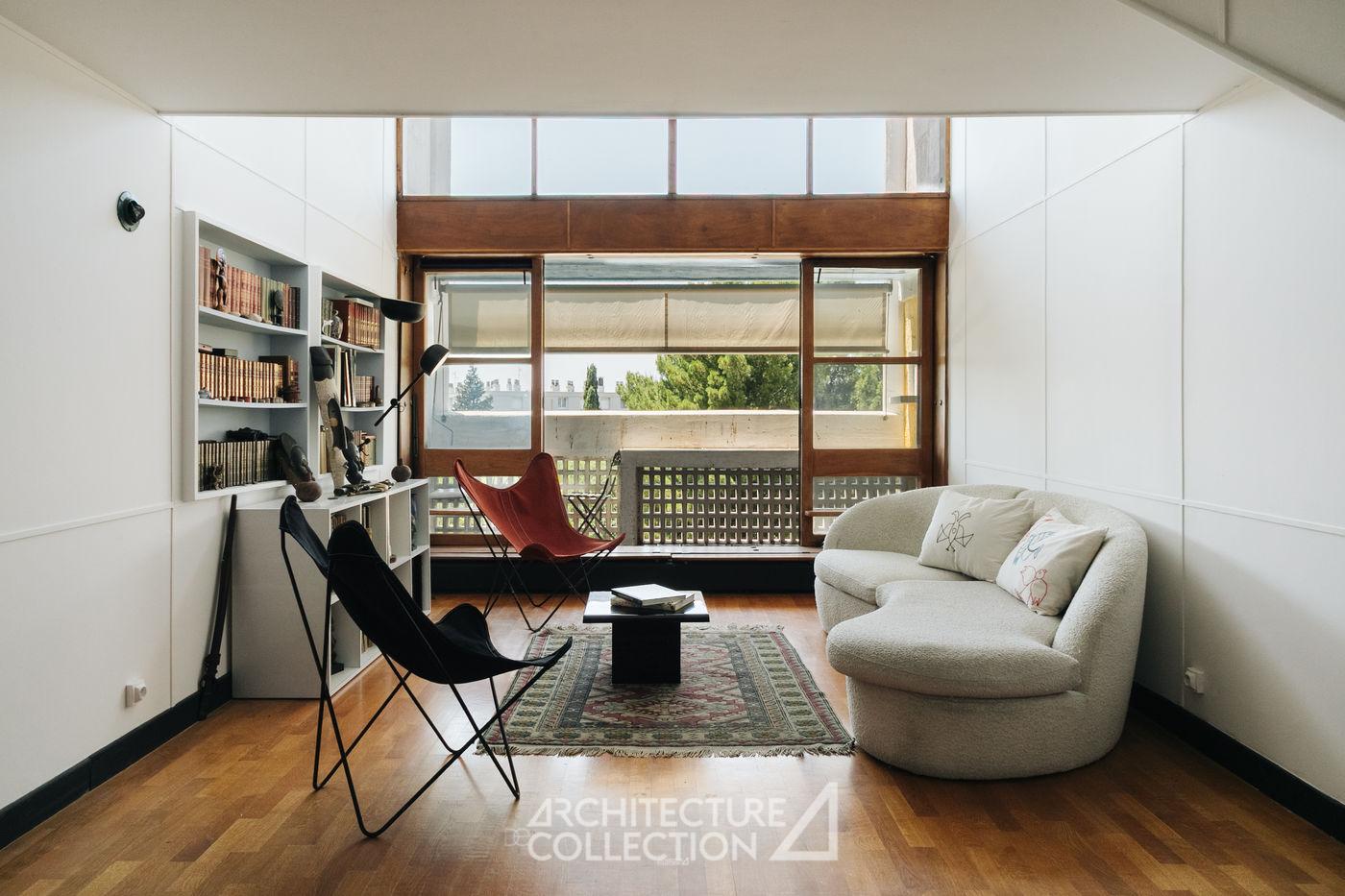
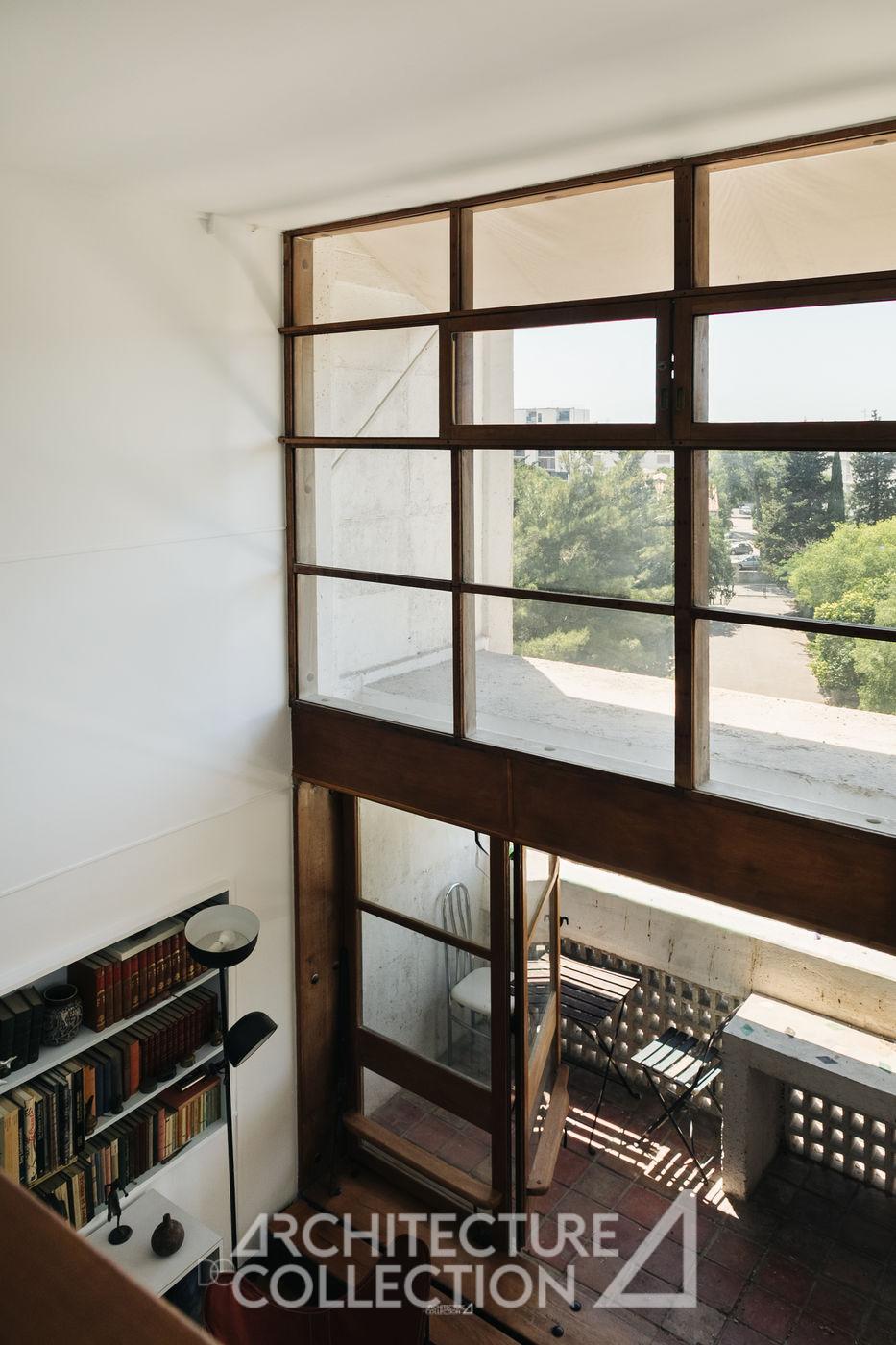
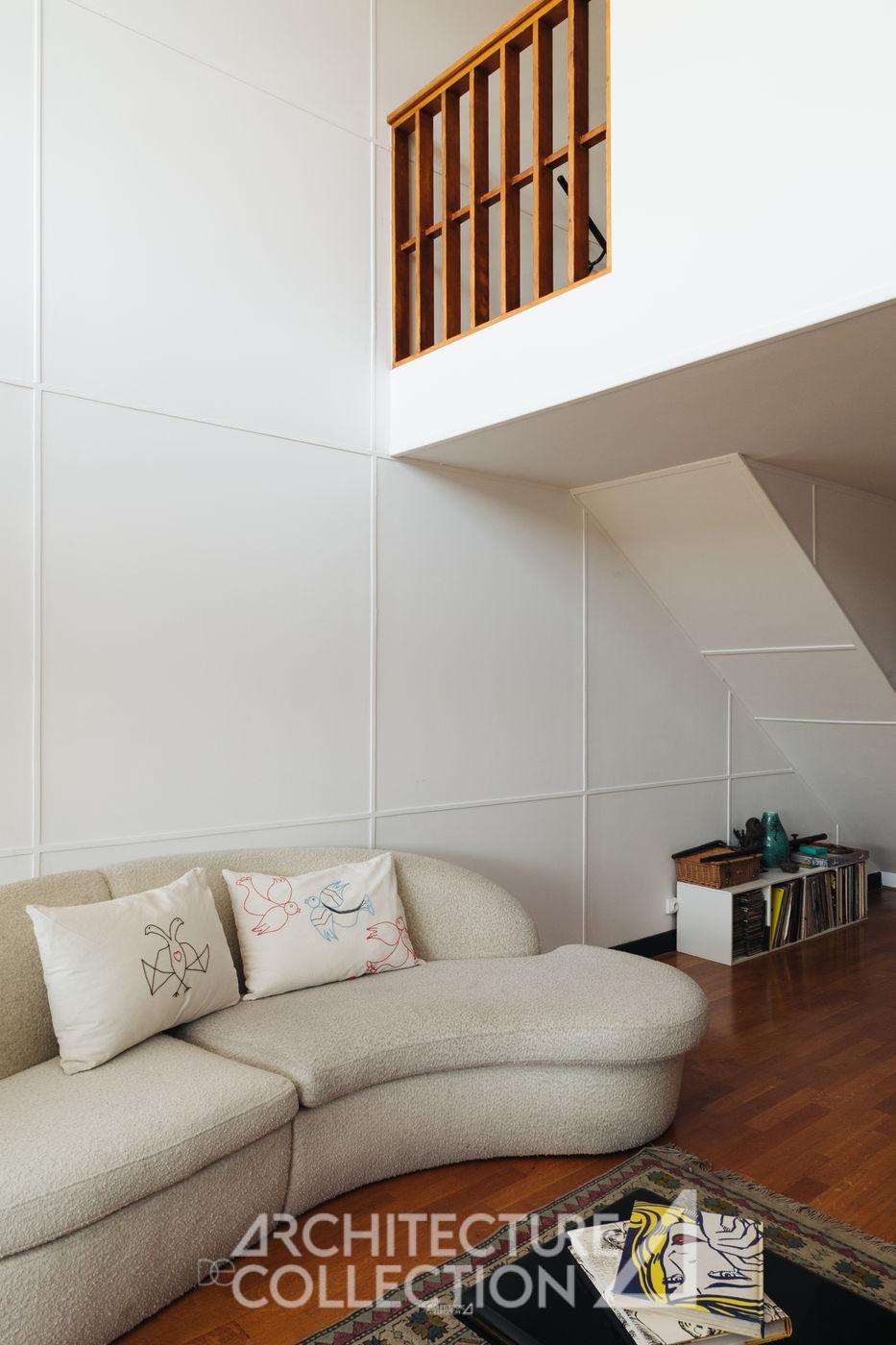
This Type E duplex underwent renovation in 2026. The extension of the kitchen into the living room was removed, allowing the home to return to its original layout: an open void overlooking the living space, enabling light to flood the interiors as Le Corbusier had envisioned.
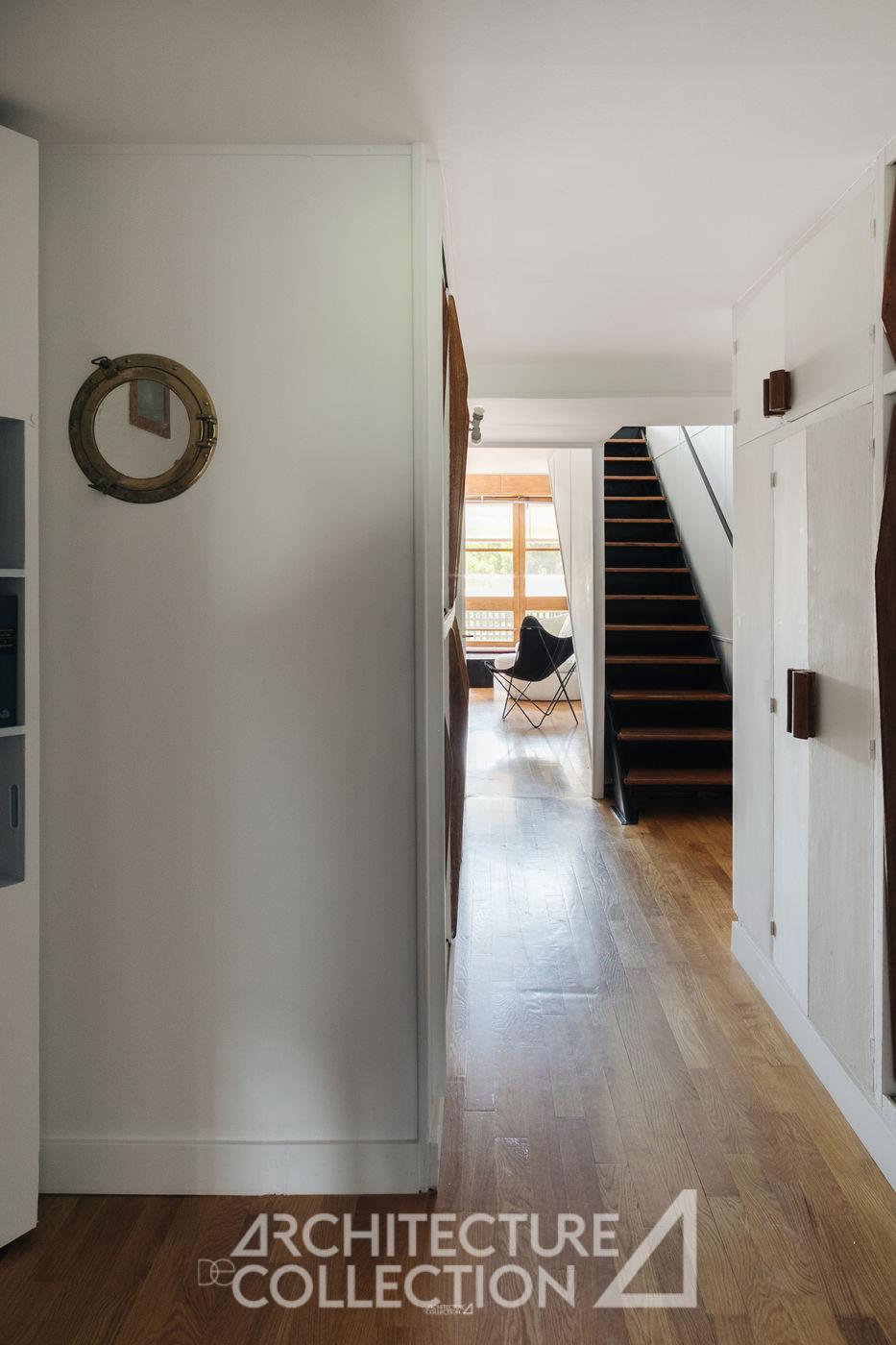
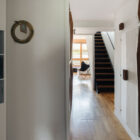
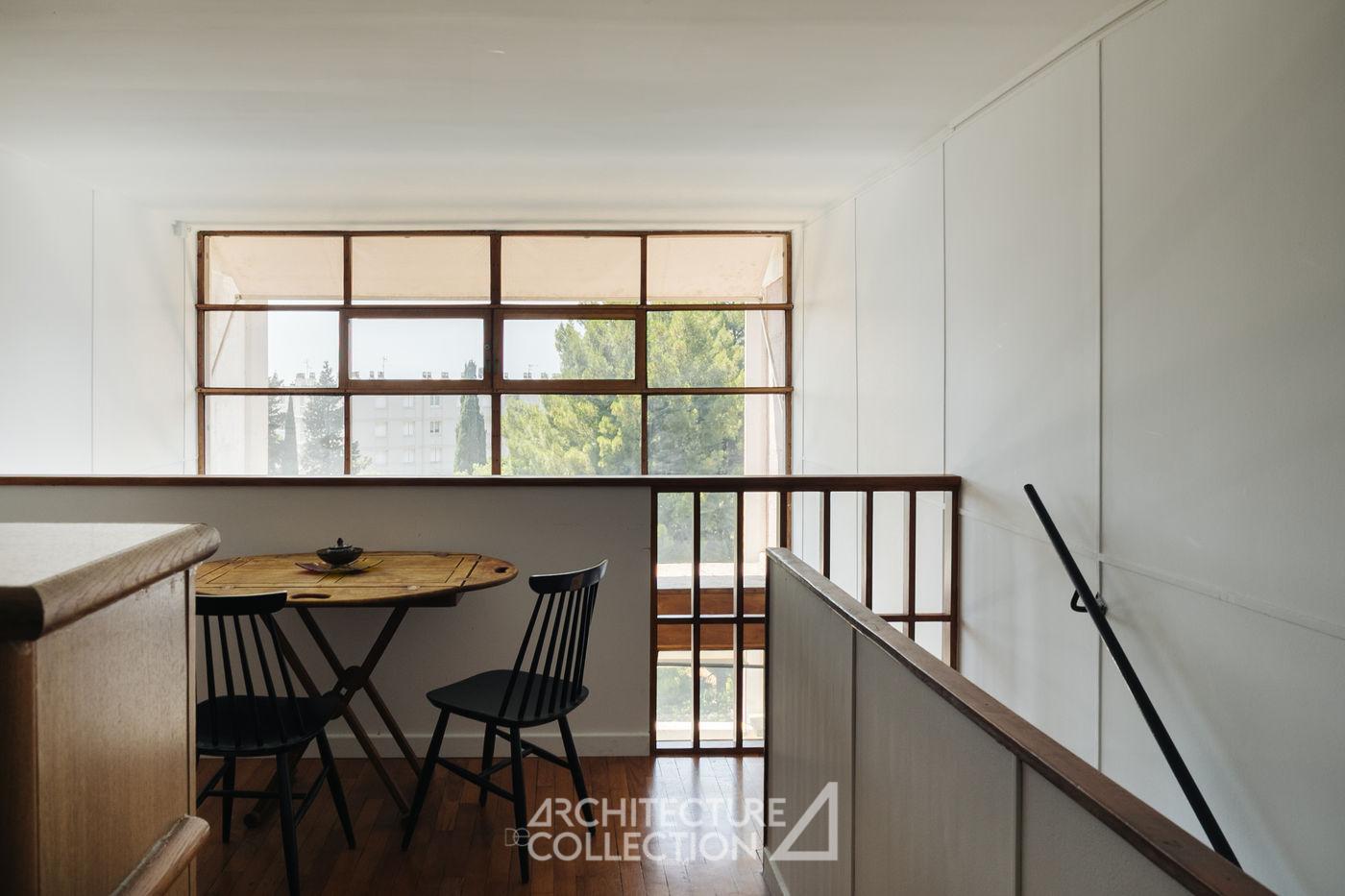
It offers approximately 90 m² of living space across two levels. The upper level features an entrance with storage that leads to a kitchen redesigned in the 1970s by an architect in the original kitchen location, a dining area open to the lower-level living room, and a double-height glass roof.
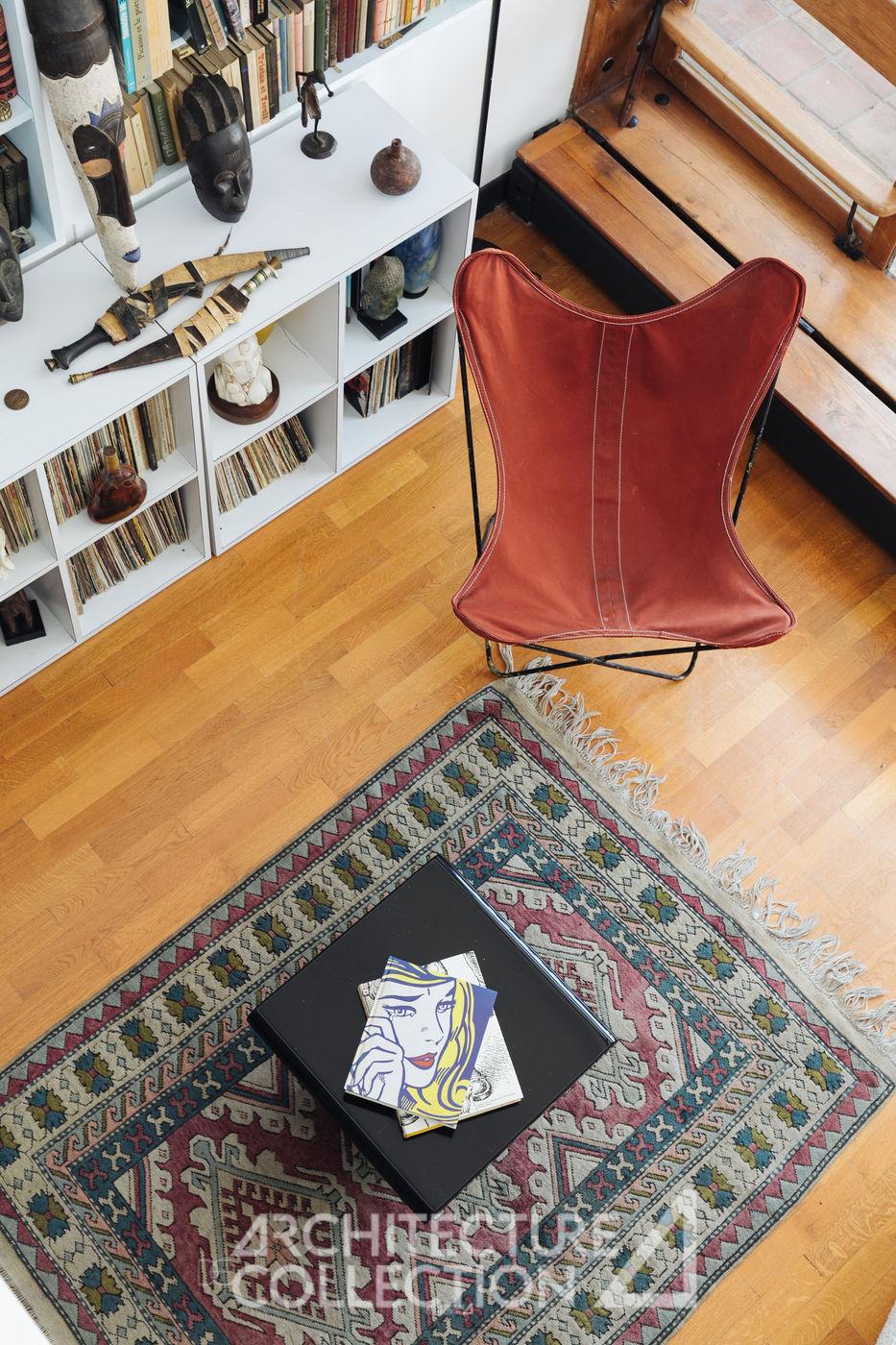
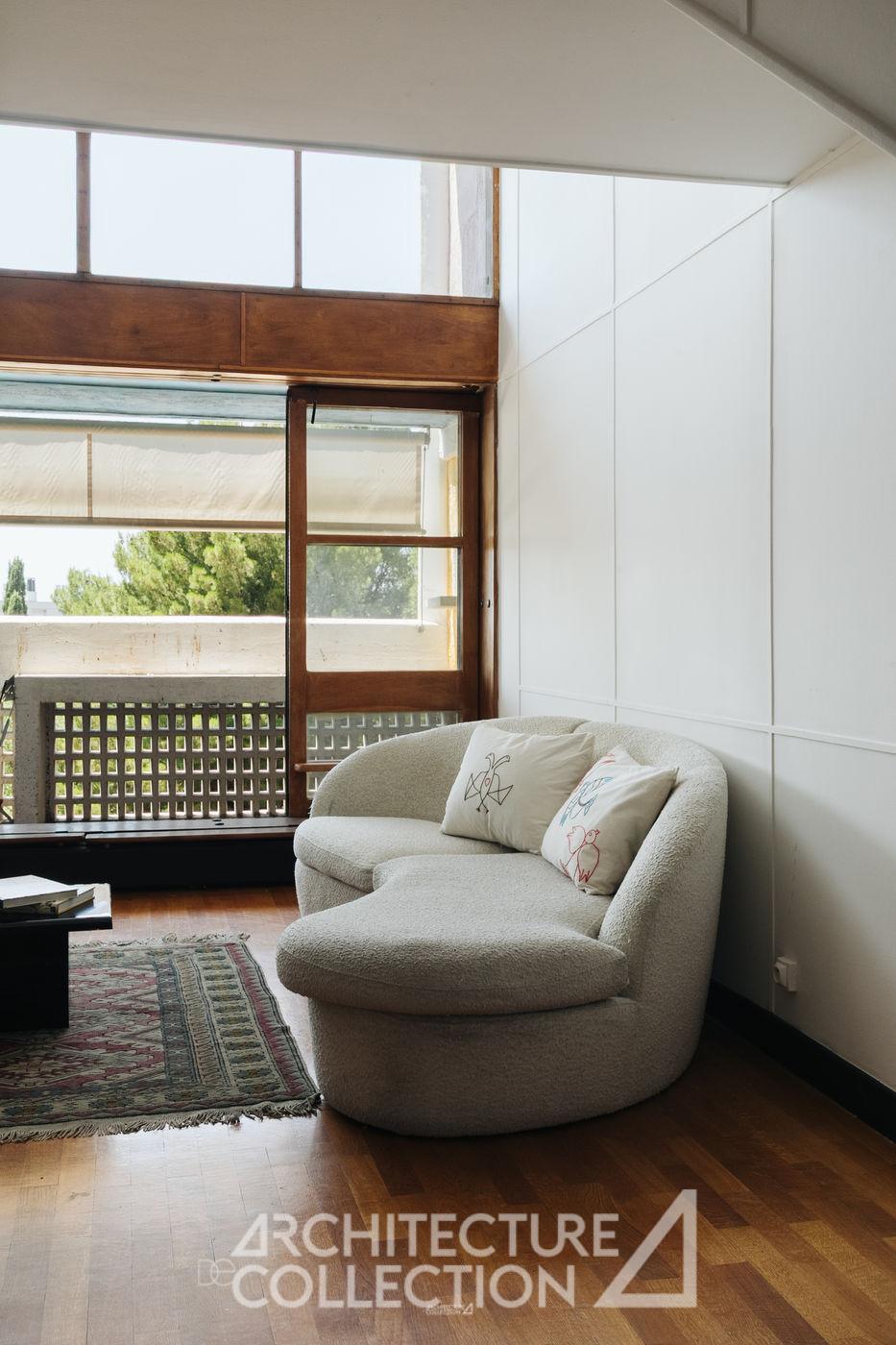
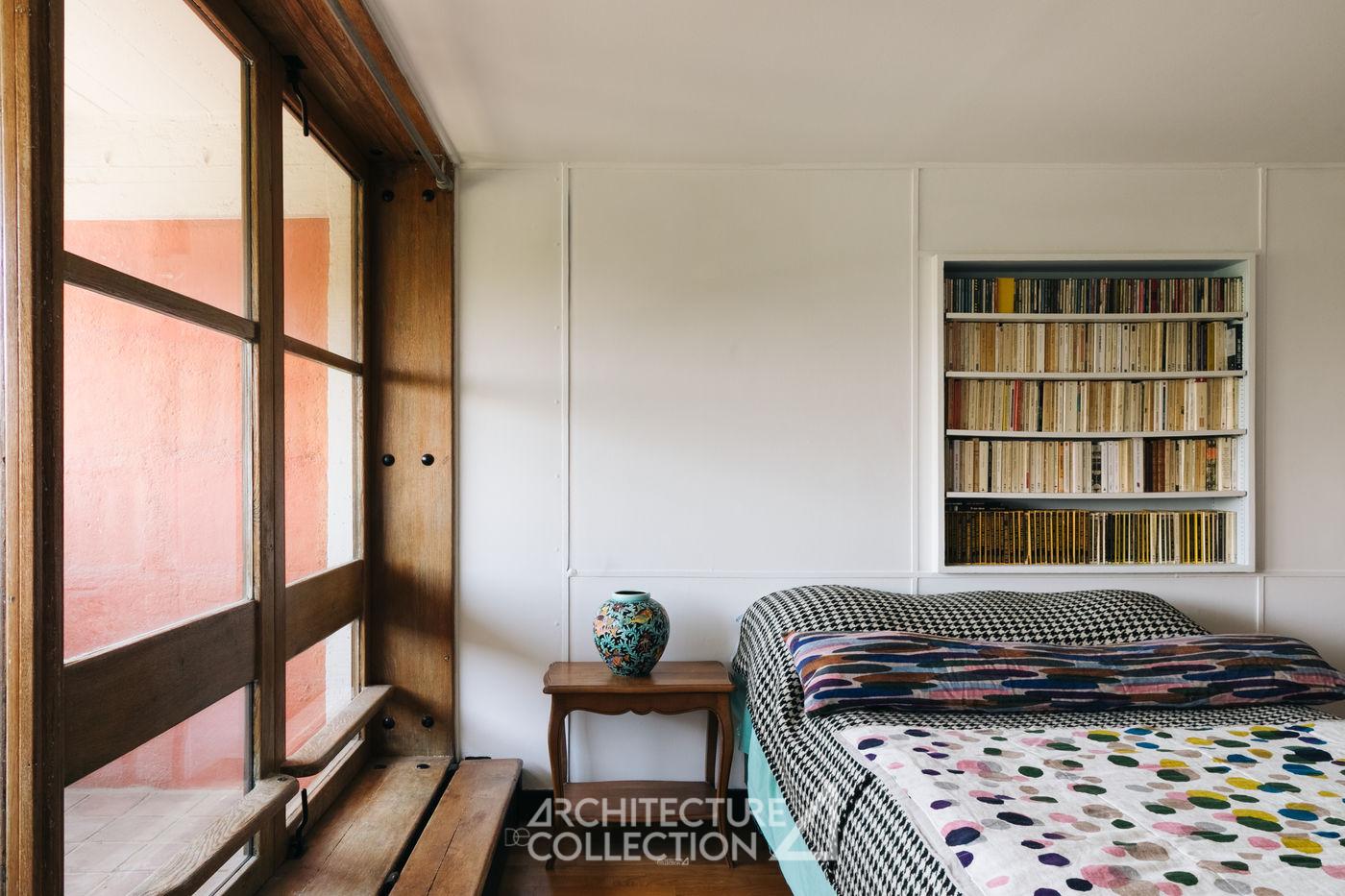
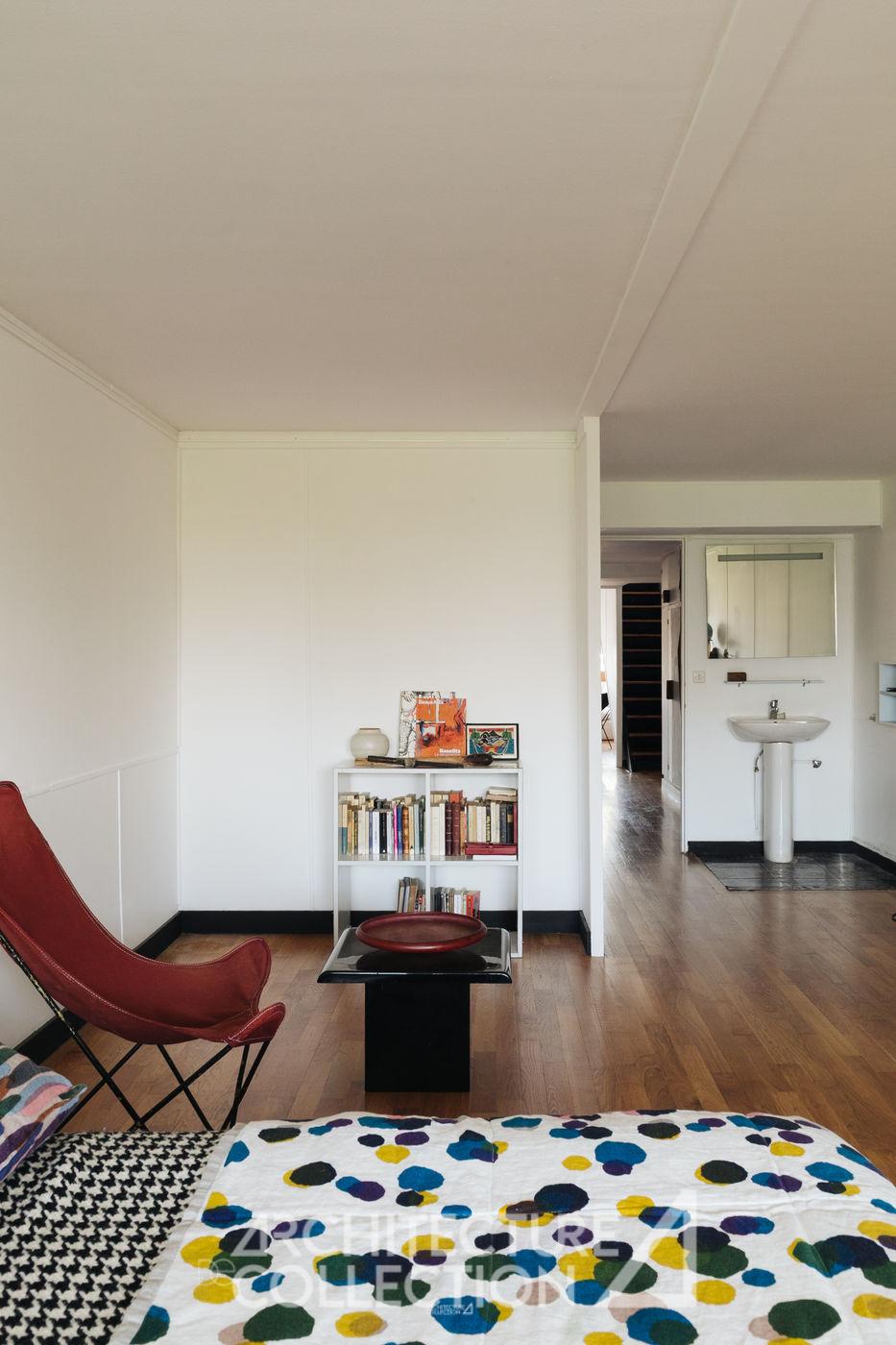
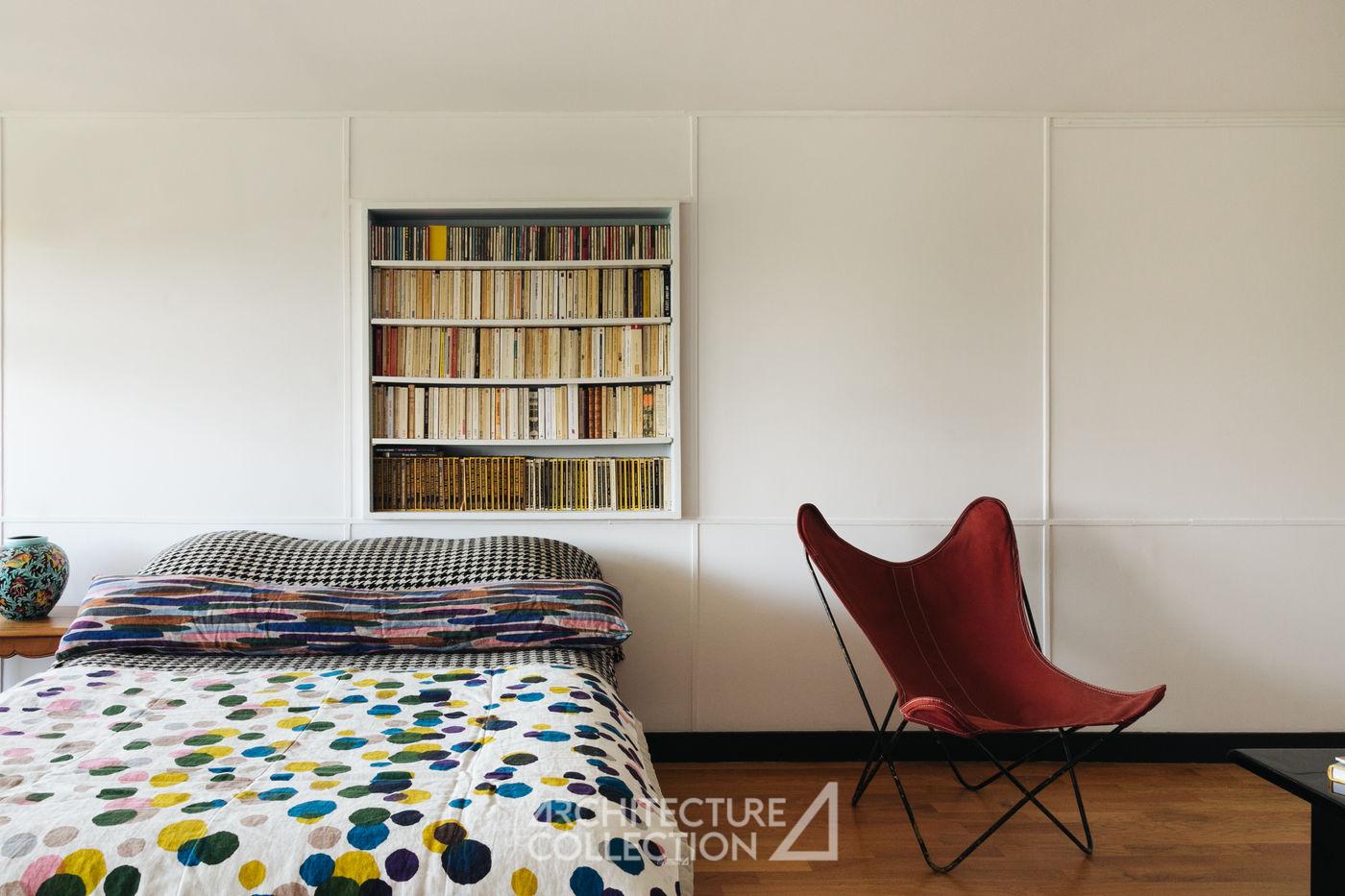
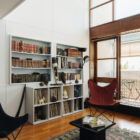
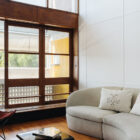
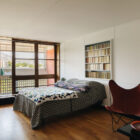
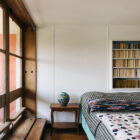
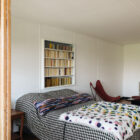
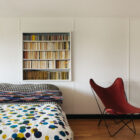
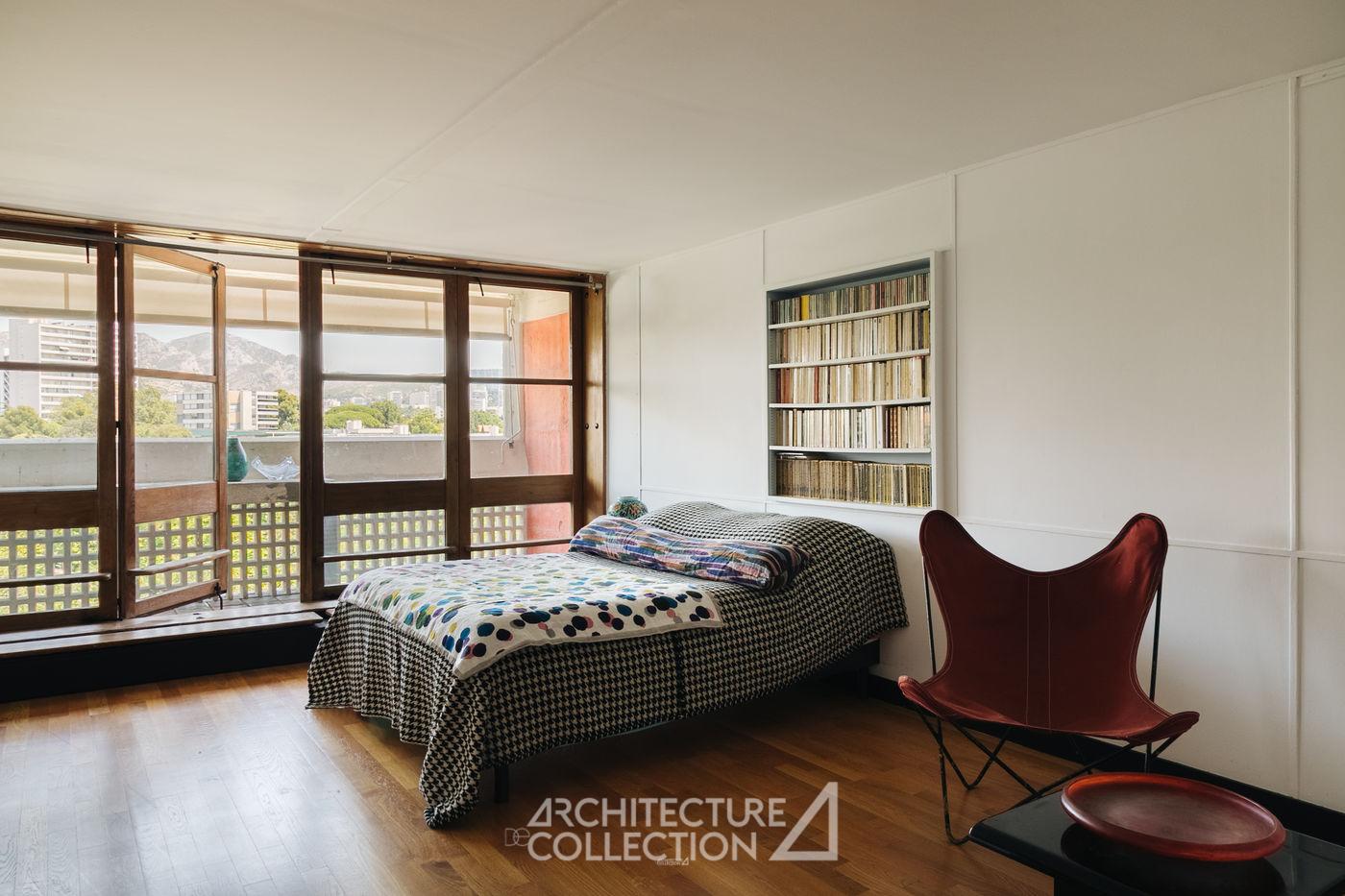
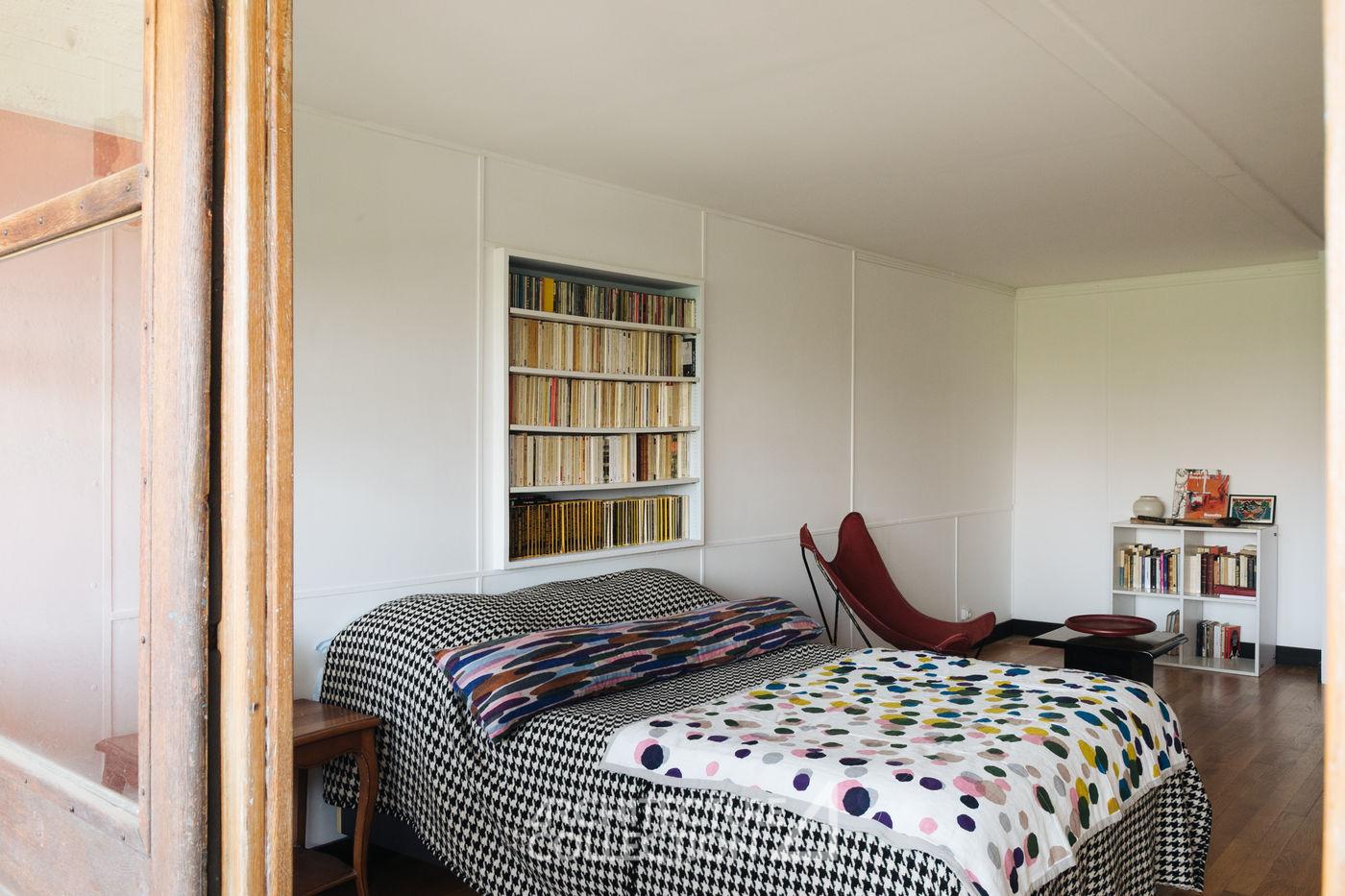
The lower level, which is cross-ventilated, is accessed via a Jean Prouvé staircase and includes the sleeping area as well as the living room. The latter, with its double-height ceiling, is distinguished by its generous space, brightness, and outdoor loggia. The sleeping area consists of a master bedroom and a bathroom. It also benefits from an outdoor loggia with views of the mountains and the city of Marseille.
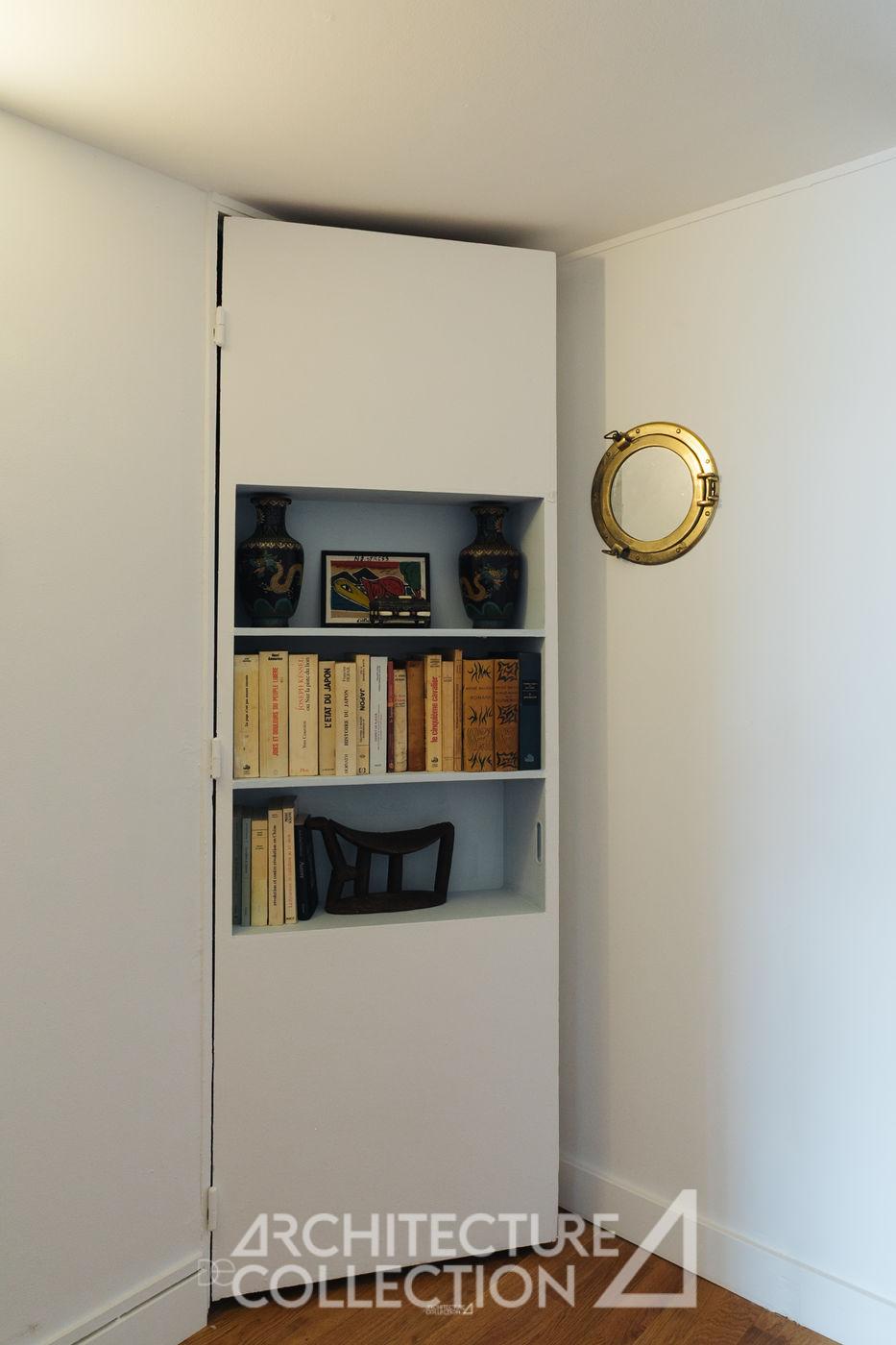
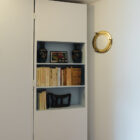
The apartment also retains many original storage features.
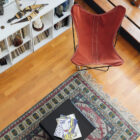
It is decorated by our partner Maison Mirbel, a specialist in modern and contemporary design.
Located in Marseille, the Cité Radieuse is set in one of the more desirable areas of the 8th arrondissement. It stands within a three-hectare park between the hills and the sea. With its two levels of services, including a shopping gallery with local shops and a hotel, as well as a nursery school, a solarium, a swimming pool, and an open-air theatre on the roof, along with permanent security, the Cité Radieuse offers an exceptional quality of life.
The facilities of the Cité Radieuse: avant-garde design and collective work
After the war, kitchens and storage solutions became central elements in interior design projects. The standardized kitchen of the Unité d’Habitation was notably inspired by the American kitchen and by the “Frankfurter Küche” designed by Margarete Schütte-Lihotzky (1928), created to optimize domestic labor.
Its design was the result of collective work. Charlotte Perriand developed an initial ambitious version, but one that proved costly. Simone Galpin reworked it, introducing major changes: a lowered worktop, right angles, the systematic use of oak and aluminum, reduced sliding doors, and an enriched color palette (green, white, dark red, and umber). Her husband André Wogenscky selected this more economical version and entrusted ATBAT, particularly Vladimir Bodiansky, with producing the final technical drawings.
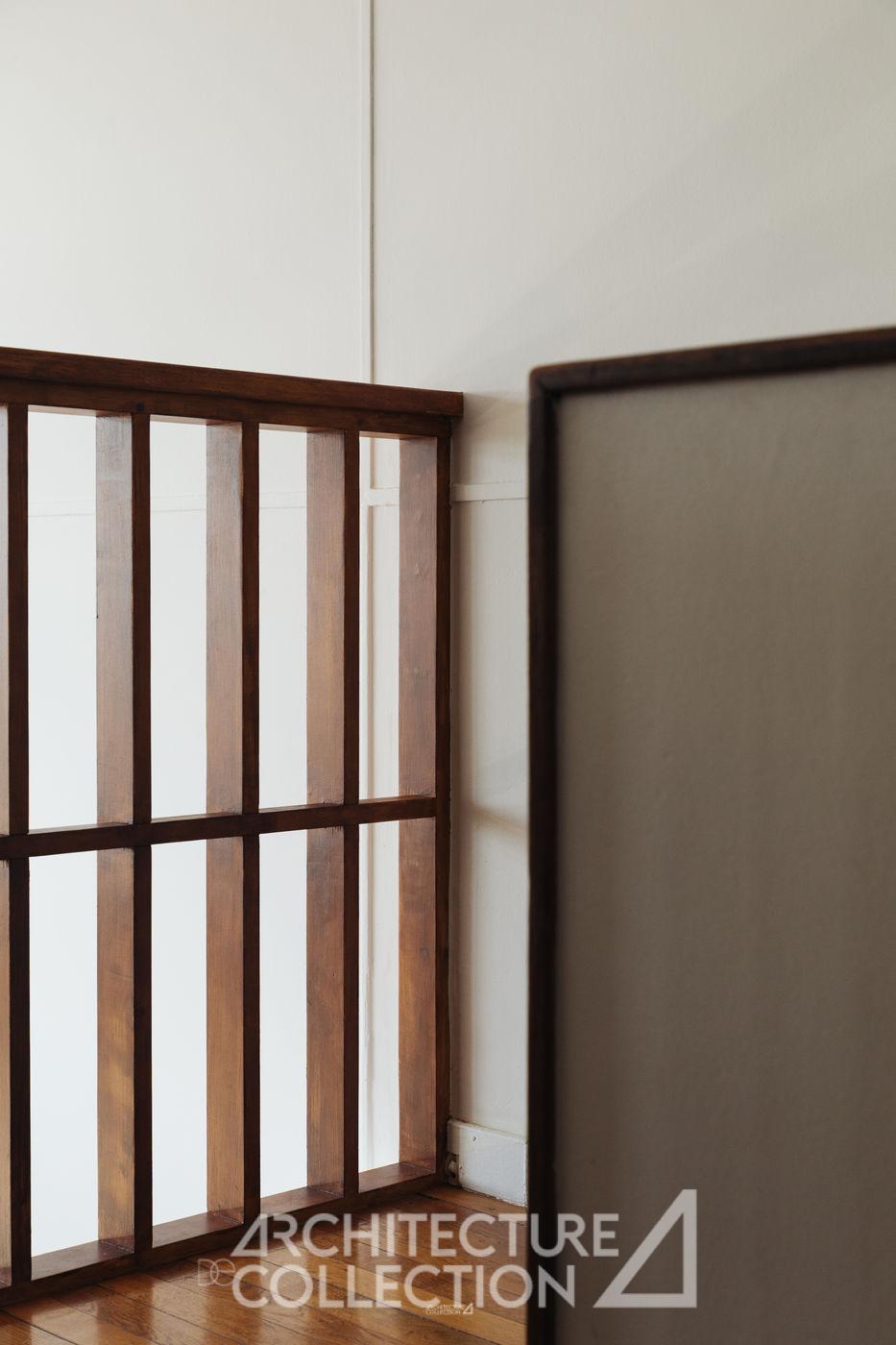
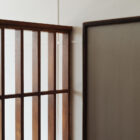
The interior staircase, designed by Jean Prouvé, features a lightweight metal structure and solid oak steps reminiscent of a ship’s companion ladder.
Raw concrete and plays of light
Making full use of the plastic and technical possibilities of concrete, Le Corbusier’s Cité Radieuse is a housing unit, a concrete structure raised on pilotis in which duplex apartments and shared services are inserted. Its façade, with its regular grid and prefabricated concrete sunbreakers, is echoed on the roof by sculptural forms, such as its large chimney.
Both inside and outside the building, the architect introduced a system of colour based on primary tones, which cover the interiors of the loggias and the apartment doors.
Designed according to the proportions of the Modulor—a human silhouette whose dimensions are based on the golden ratio—the spaces in this apartment are adapted to the human body and offer a high level of living comfort.

© Valérie Ruperti photographe
Le Corbusier
Born in 1887 in Switzerland and passing away in 1965, Charles-Édouard Jeanneret, better known as Le Corbusier, was an architect and urban planner renowned for his ability to turn architecture into a total work of art. He conceived buildings and interior layouts in terms of both furniture and comfort, while also considering the urban dimension of all his projects. He remains one of the most emblematic figures of the Modern Movement.
Throughout his career, Le Corbusier shared his visions and theories through participation in international exhibitions, such as the 1925 Exposition, where he presented the Pavillon de l’Esprit Nouveau, and the 1937 Exposition, with his Pavillon des Temps Nouveaux.
A defender of modernism and a rejection of decorative arts, Le Corbusier embedded his architectural thinking in his villas, most notably the Villa Savoye in 1928, where he formulated the “five points of modern architecture” (pilotis, roof terrace, horizontal ribbon windows, free façade, and free plan).
Although he was one of the most prolific architects of his time, many of his projects were never realized, such as the “Plan Voisin” or the Ville Contemporaine for three million inhabitants. At times considered controversial or radical by the public, Le Corbusier’s work nevertheless achieved international resonance. His final major project was commissioned by the city of Chandigarh in India, where he was responsible for overseeing the entire urban planning of the new capital of Punjab, combining raw concrete with lush vegetation.
Informations techniques
Asking price: €545,000
Fees are payable by the seller.
Co-ownership: 351 units
Average quarterly share of current charges: €913
Property tax: N/A
Information on the risks to which this property is exposed is available on the Géorisques website: www.georisques.gouv.fr
© Texts: Architecture de Collection
© Photos: Mathilde Lebreuil / Maison Mirbel & Valérie Ruperti
DPE : non available (Historical Monument)


