







Description
A family duplex in the Cité Radieuse
Listed as a UNESCO World Heritage site since 2016, the Cité Radieuse in Marseille is an icon of Le Corbusier’s work. Built between 1948 and 1952 during the post-war Reconstruction period, it represents the culmination of his research on modern housing and architecture.
This descending Type E duplex offers nearly 100 sqm of living space across two levels.
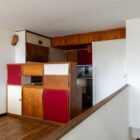
The upper level, featuring an entrance with storage, provides access to the kitchen and dining area, which opens onto the living room on the lower level of the apartment. The lower level, with a dual-aspect layout, is accessed via a Jean Prouvé staircase.
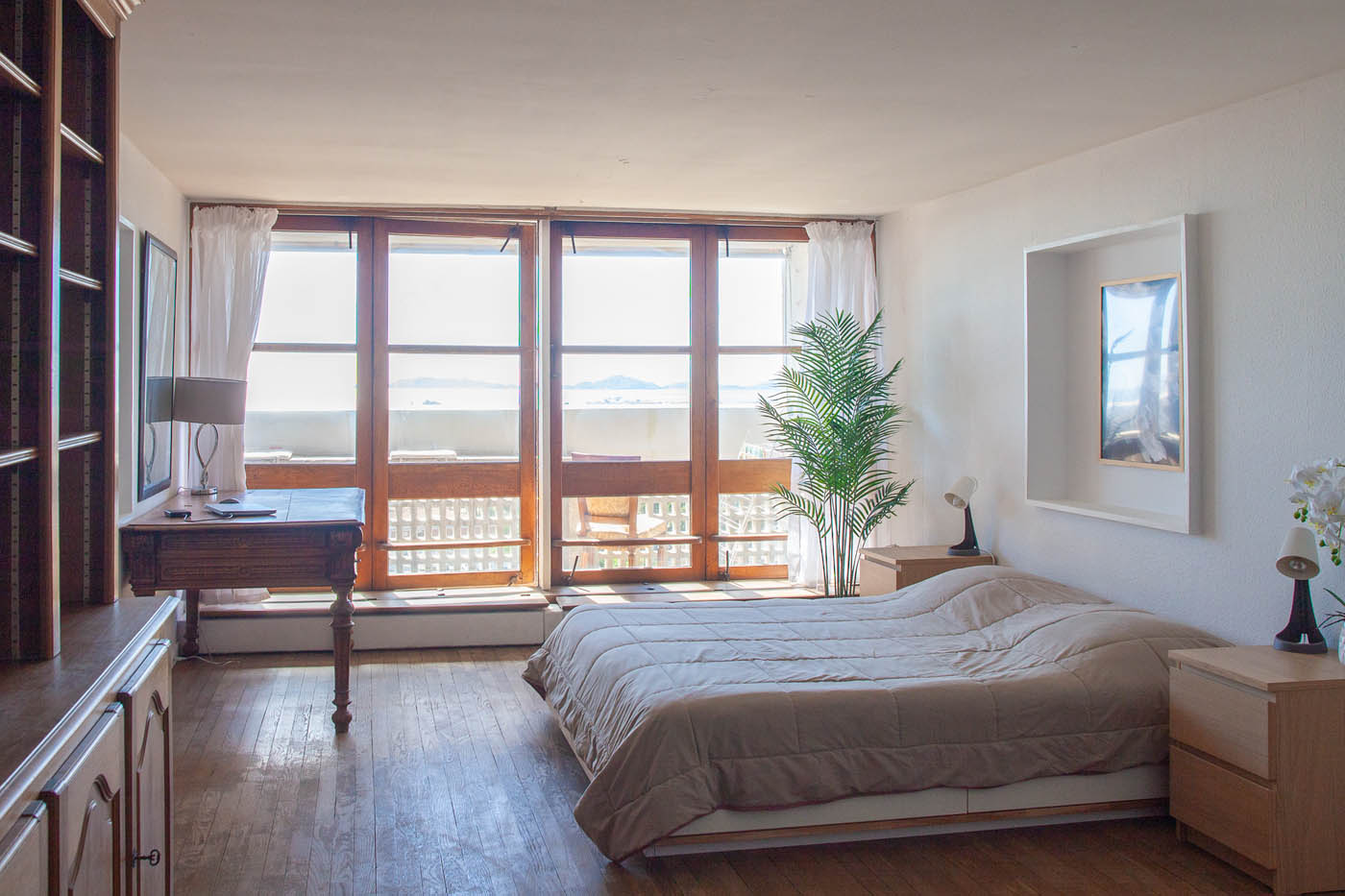
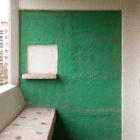
The apartment has been reconfigured to create a spacious living area, adaptable as a bedroom, with double-height ceilings and abundant natural light. This space extends onto an 8 sqm loggia, designed as an extension of the living area, offering exceptional views over the city of Marseille and its surrounding hills.
The children’s bedrooms, connected to each other, also open onto an 8 sq m loggia and enjoy panoramic views.
This level is completed by a bathroom with bathtub, a “boat-style” shower cabin, separate toilets, and ample built-in storage.
The property offers strong potential but requires renovation work.
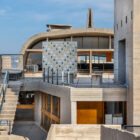
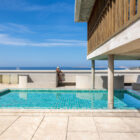
Located in Marseille, the residence is set within the prestigious 8th arrondissement. It occupies a three-hectare park, nestled between the hills and the sea. With its two levels of amenities—including a shopping gallery with local shops, a hotel, a nursery, a solarium, a swimming pool, and an open-air rooftop theater—alongside permanent security, La Cité Radieuse offers an exceptional quality of life.


The amenities of the Cité Radieuse: avant-garde and collective work
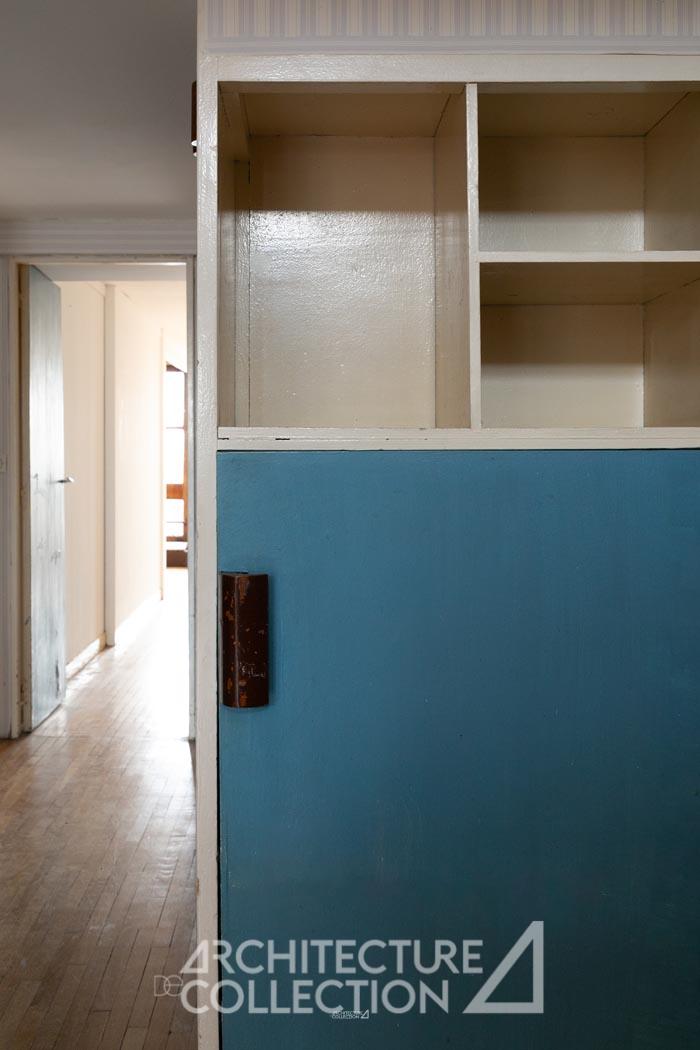
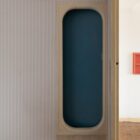
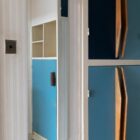
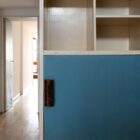
The apartment has preserved its original built-in furnishings.
After the war, kitchens and storage solutions became central elements in interior design projects. The standardized kitchen of the Unité d’Habitation draws inspiration in particular from the American kitchen and Margarete Schütte-Lihotzky’s 1928 “Frankfurter Küche,” designed to optimize domestic work.
Its design is the result of a collective effort. Charlotte Perriand proposed an ambitious first version, though costly. Simone Galpin, an artist and collaborator within the Atelier, revised it with major modifications: lowered countertops, right angles, systematic use of oak and aluminum, reduced sliding doors, and an enriched polychromy (green, white, dark red, and burnt umber). Her husband, André Wogenscky, the project’s chief architect, adopted this economical model and entrusted Vladimir Bodiansky and the ATBAT team with drafting the final plans.
Covering approximately 5 sq m in a square layout, the kitchen integrates seamlessly with the dining and living area via its breakfast bar. It was equipped with the modern conveniences of the time: electric stove, garbage chute, refrigerated cabinets, and ample storage. Presented at the 1950 Household Arts Exhibition, it embodies a balance between innovation and practicality.
The interior staircase, designed by Jean Prouvé, features a lightweight metal structure with solid oak steps, reminiscent of a ship’s companionway ladder.

© Valérie Ruperti photograph
Exposed concrete and play of light
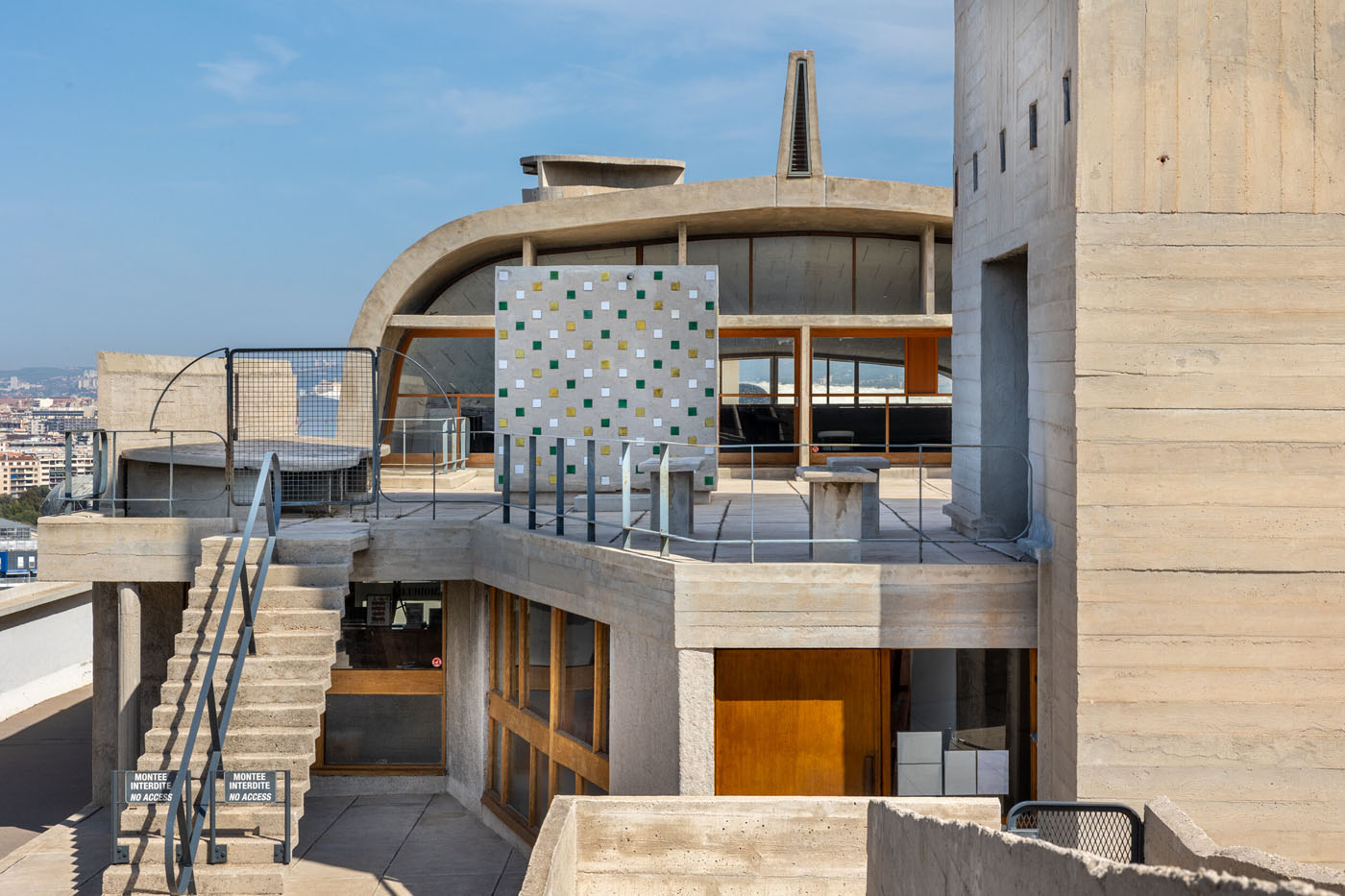
Exploiting the plastic and technical possibilities of concrete, the Cité Radieuse by Le Corbusier is a Unité d’Habitation, a concrete structure on stilts in which duplex apartments and communal facilities are integrated. Its façade, defined by a regular grid and prefabricated concrete sunshades, is echoed on the rooftop by sculptural forms, such as the prominent chimney.
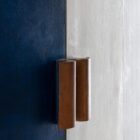
Both inside and outside the building, the architect introduced a play of color using primary hues, applied to the interiors of the loggias and the apartment doors.
Designed according to the Modulor, a human figure whose proportions are inspired by the golden ratio, the spaces in this apartment are tailored to the human body, offering exceptional comfort. The apartment also retains numerous period decorative elements designed by Le Corbusier.

© Valérie Ruperti photograph
Le Corbusier
Born in 1887 in Switzerland and passing away in 1965, Charles-Édouard Jeanneret, better known as Le Corbusier, was an architect and urban planner renowned for his ability to make architecture a total art. He approached building design and interior planning with equal attention to furniture, comfort, and urban context, making him undeniably one of the most emblematic figures of the Modern Movement.
Throughout his career, Le Corbusier shared his visions and theories through international exhibitions, such as the 1925 showcase where he presented the Pavillon de l’Esprit Nouveau, and the 1937 exhibition featuring the Pavillon des Temps Nouveaux.
A defender of modernism who rejected decorative arts, he expressed his architectural philosophy in his villas, most notably the Villa Savoye in 1928, where he theorized the “five points of modern architecture”: pilotis (supports), roof terrace, ribbon windows, free façade, and open plan.
Although one of the most prolific architects of his time, many of his projects were never realized, including the “Plan Voisin” and the Contemporary City for three million inhabitants. Sometimes seen as too radical or polemical by the public, Le Corbusier’s work nevertheless achieved international recognition. His final major project was commissioned by the city of Chandigarh in India, where he oversaw the entire urban planning of the new Punjab capital, blending exposed concrete with lush greenery.
Technical details
Asking Price: €435,000
Agency fees: payable by the buyer
Condominium: 351 units
Average quarterly share of standard service charges: N/A
Property tax: N/A
Information on risks affecting this property is available on the Géorisques website: www.georisques.gouv.fr
© Texts: Architecture de Collection
© Photos: Mathilde Lebreuil, Valérie Ruperti, FLC – ADAGP 2026
Energy Performance Certificate (DPE): Not applicable (Historic Monument)