


Description
A “bubble house” icon of the Pop Years
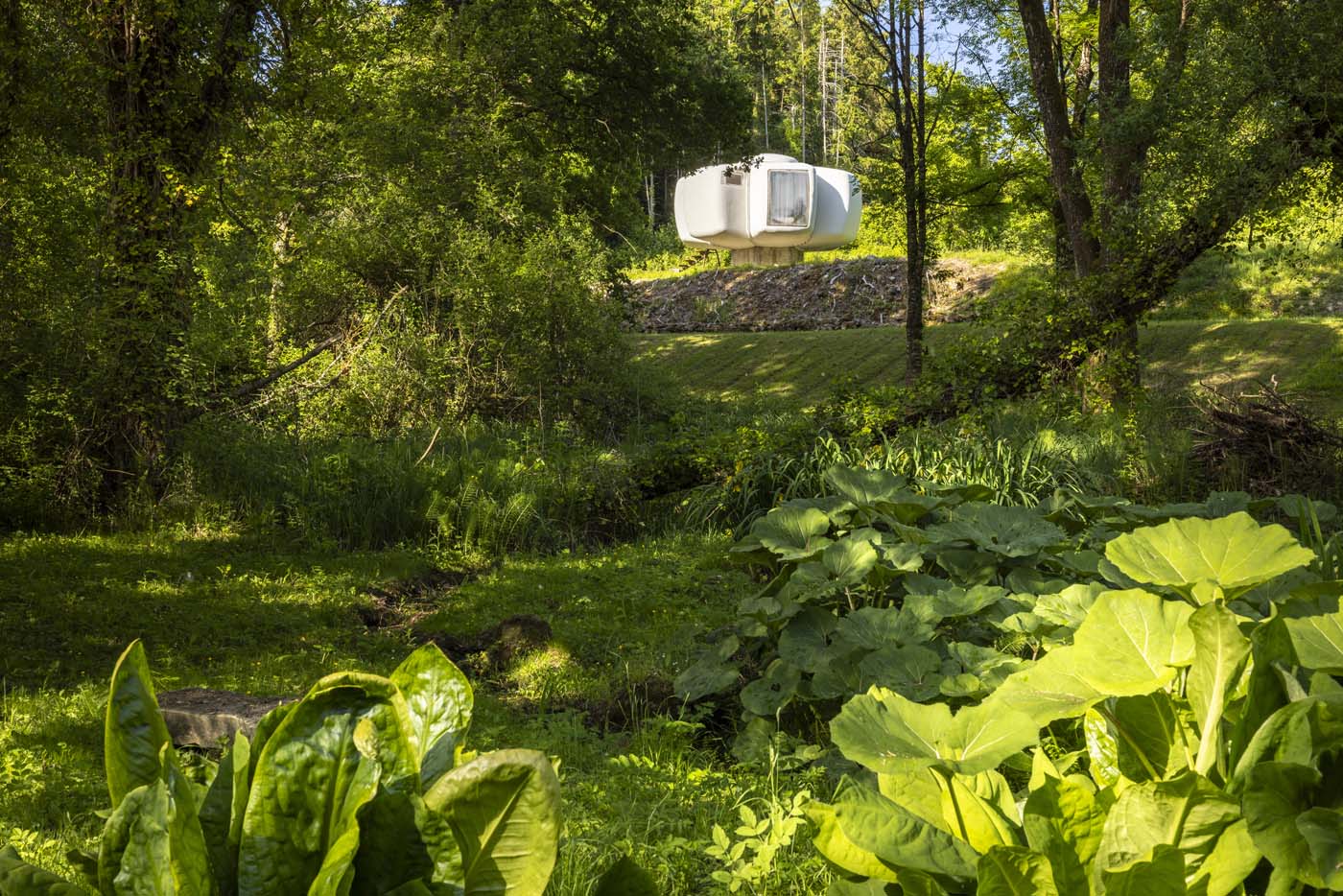
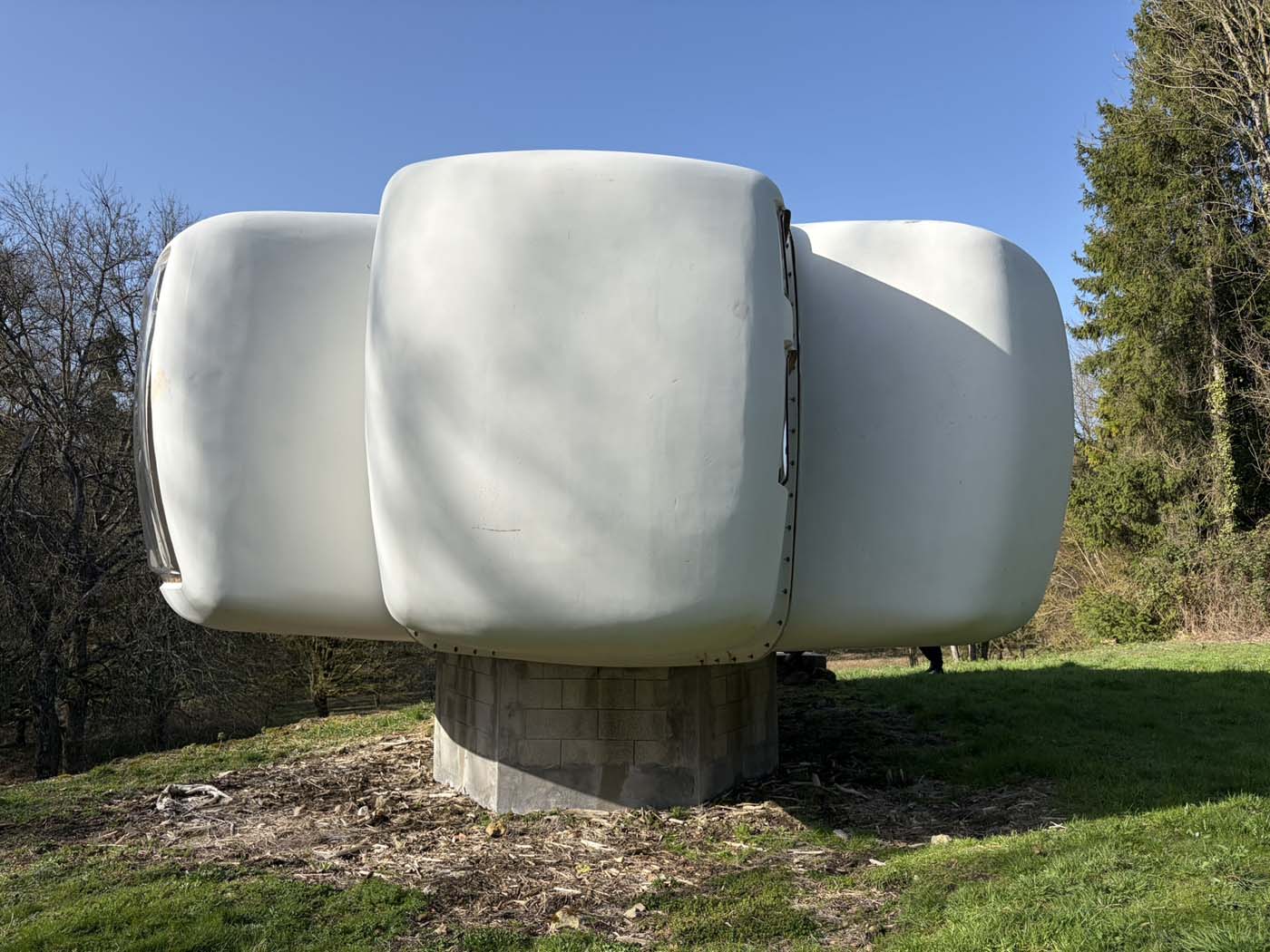
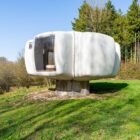
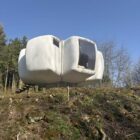
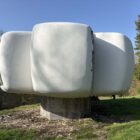
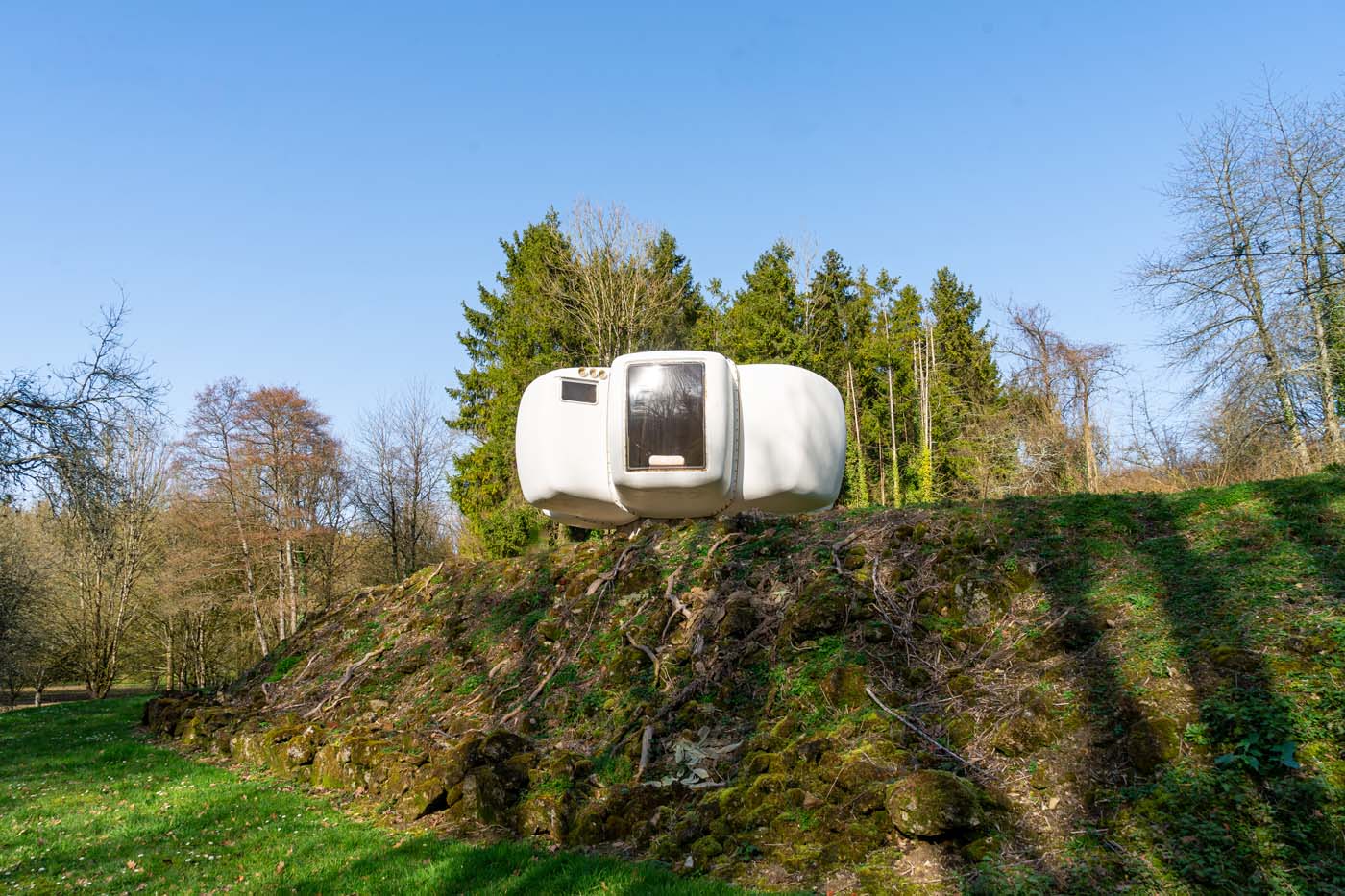
NOTICE TO COLLECTORS – The Six-shell Bubble, produced in 300 units between 1964 and 1968 by Jean-Benjamin Maneval, is one of the emblems of the visionary movement of the 1960s. Modular and transportable, this habitable capsule is currently displayed in the sculpture park of a private collector.
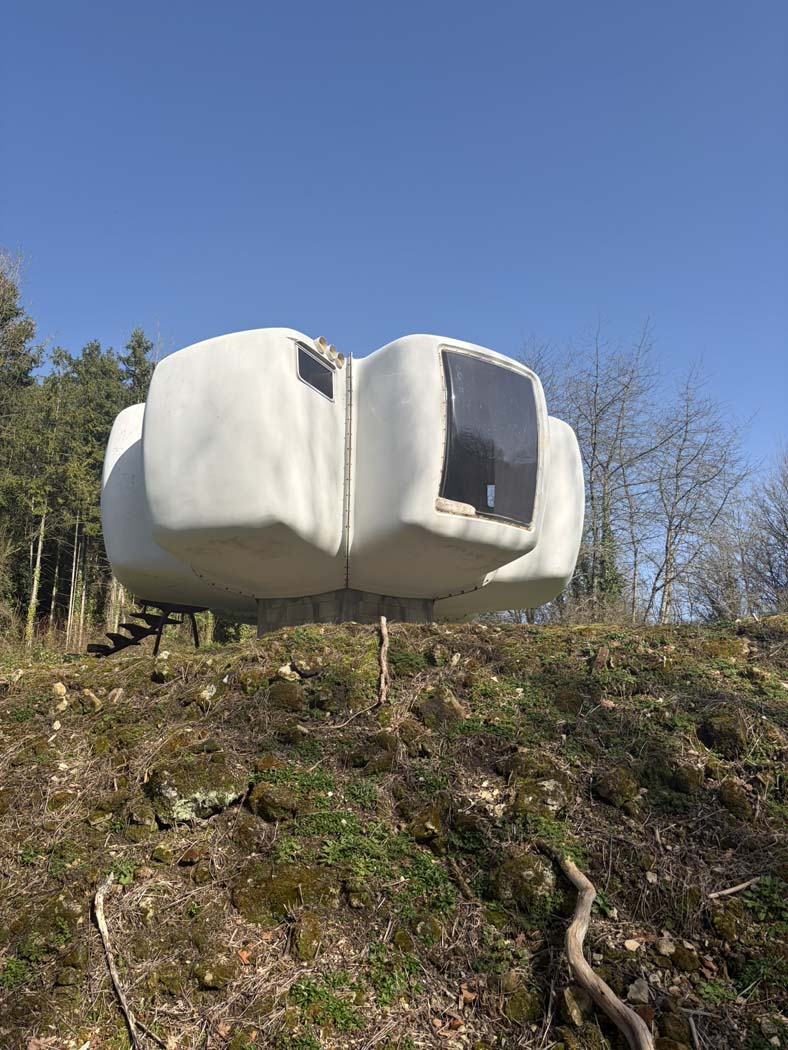
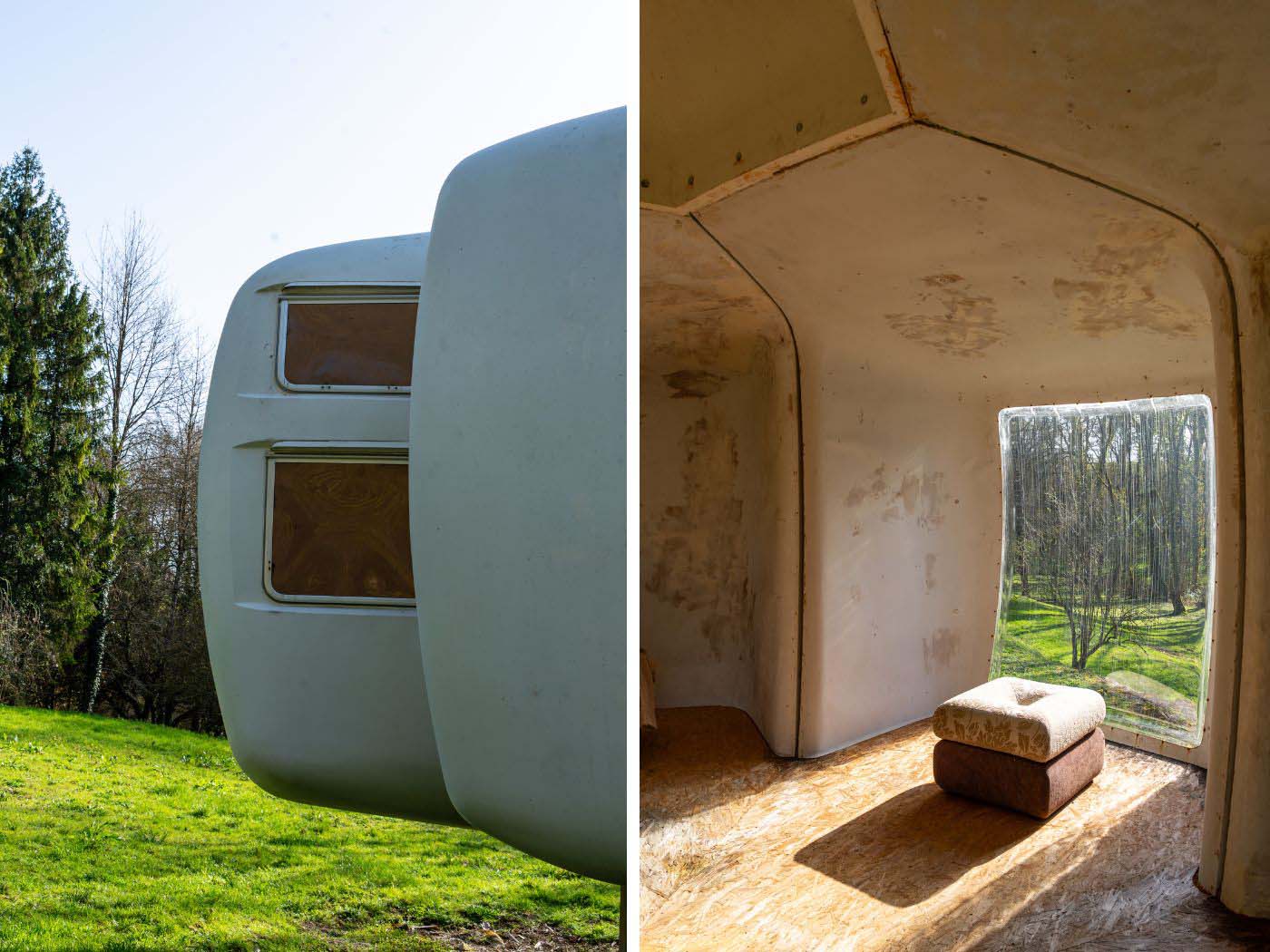
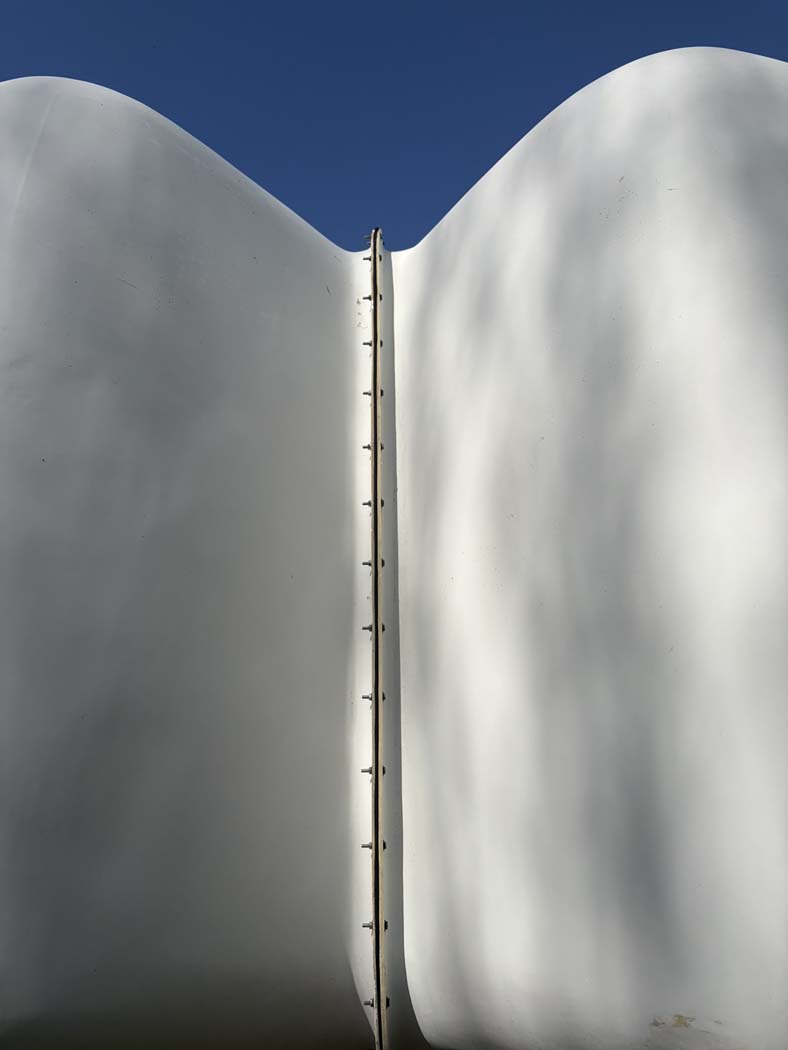
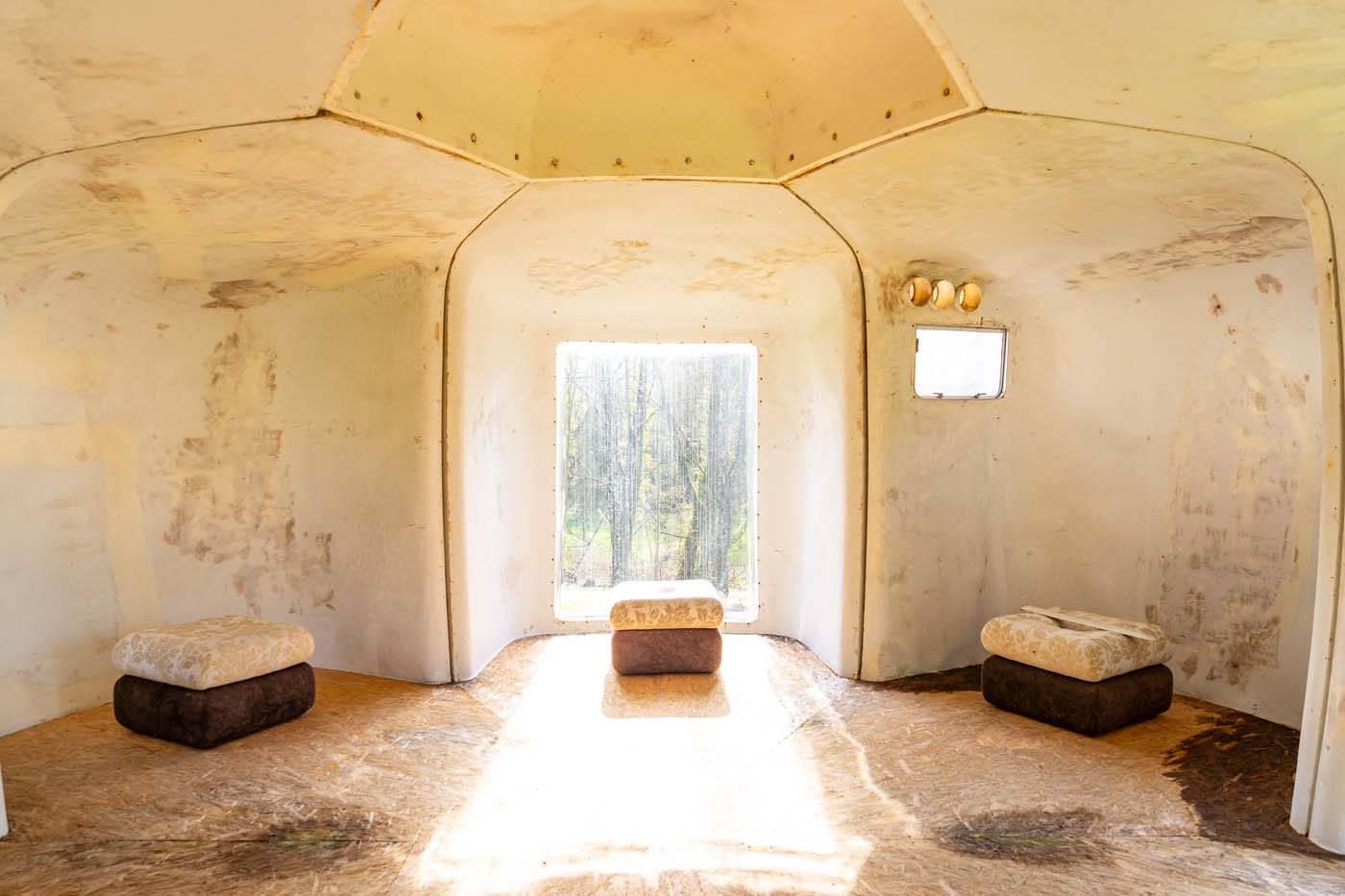
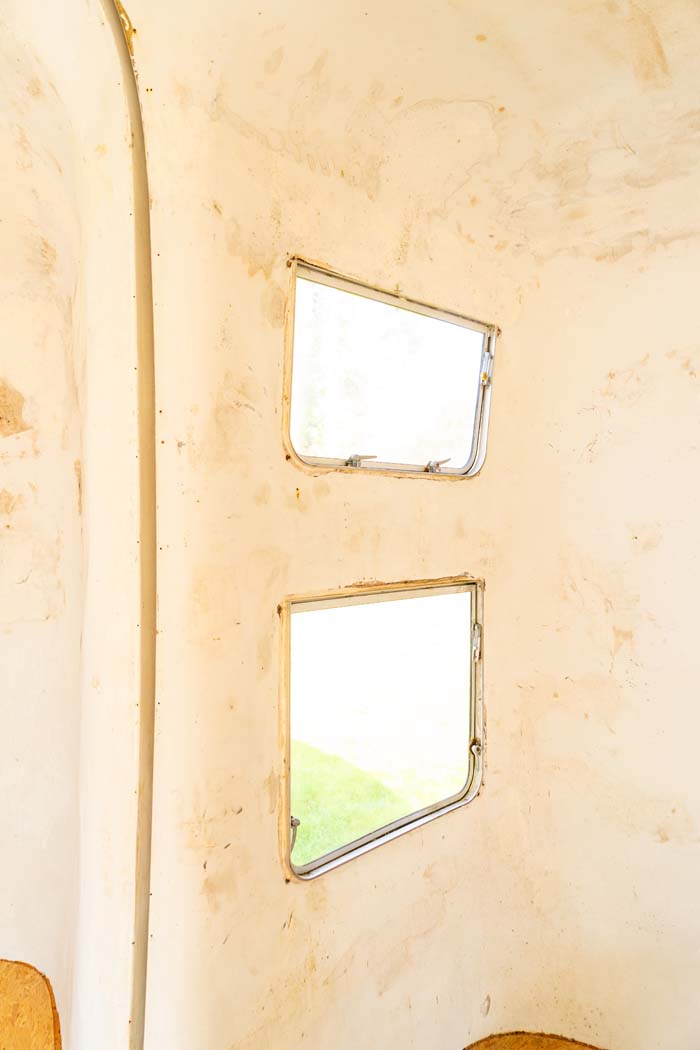
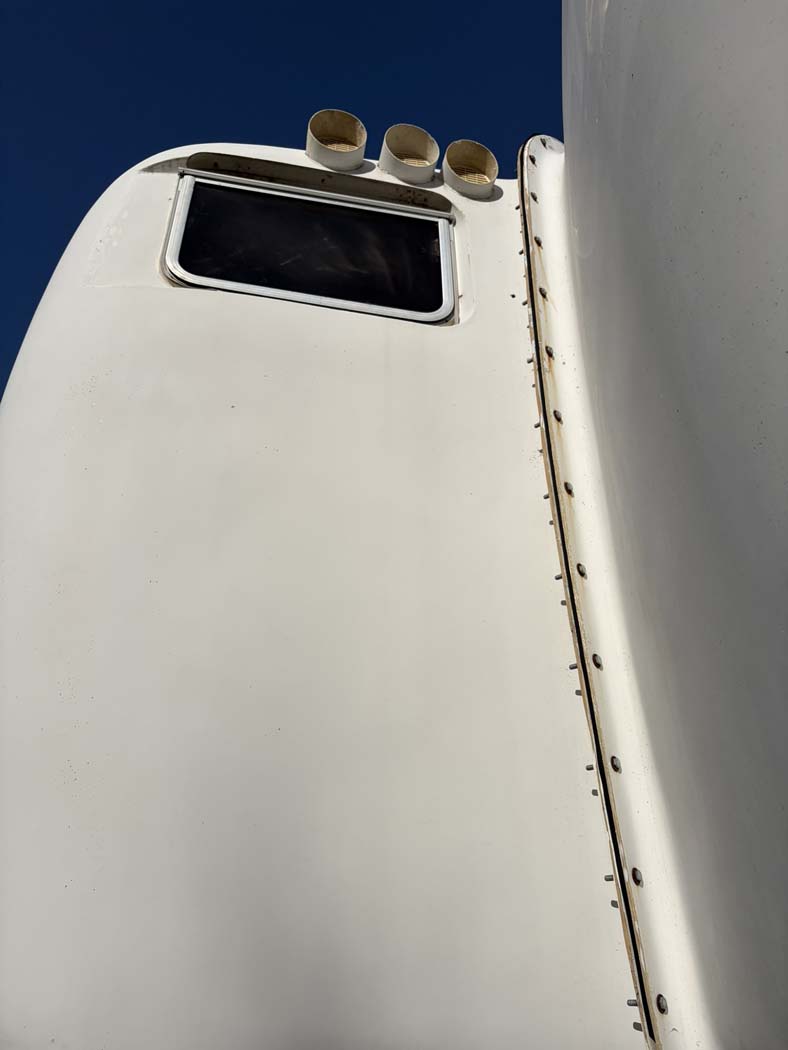
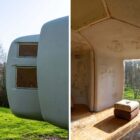
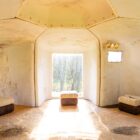
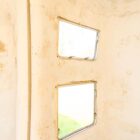
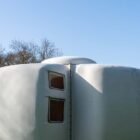
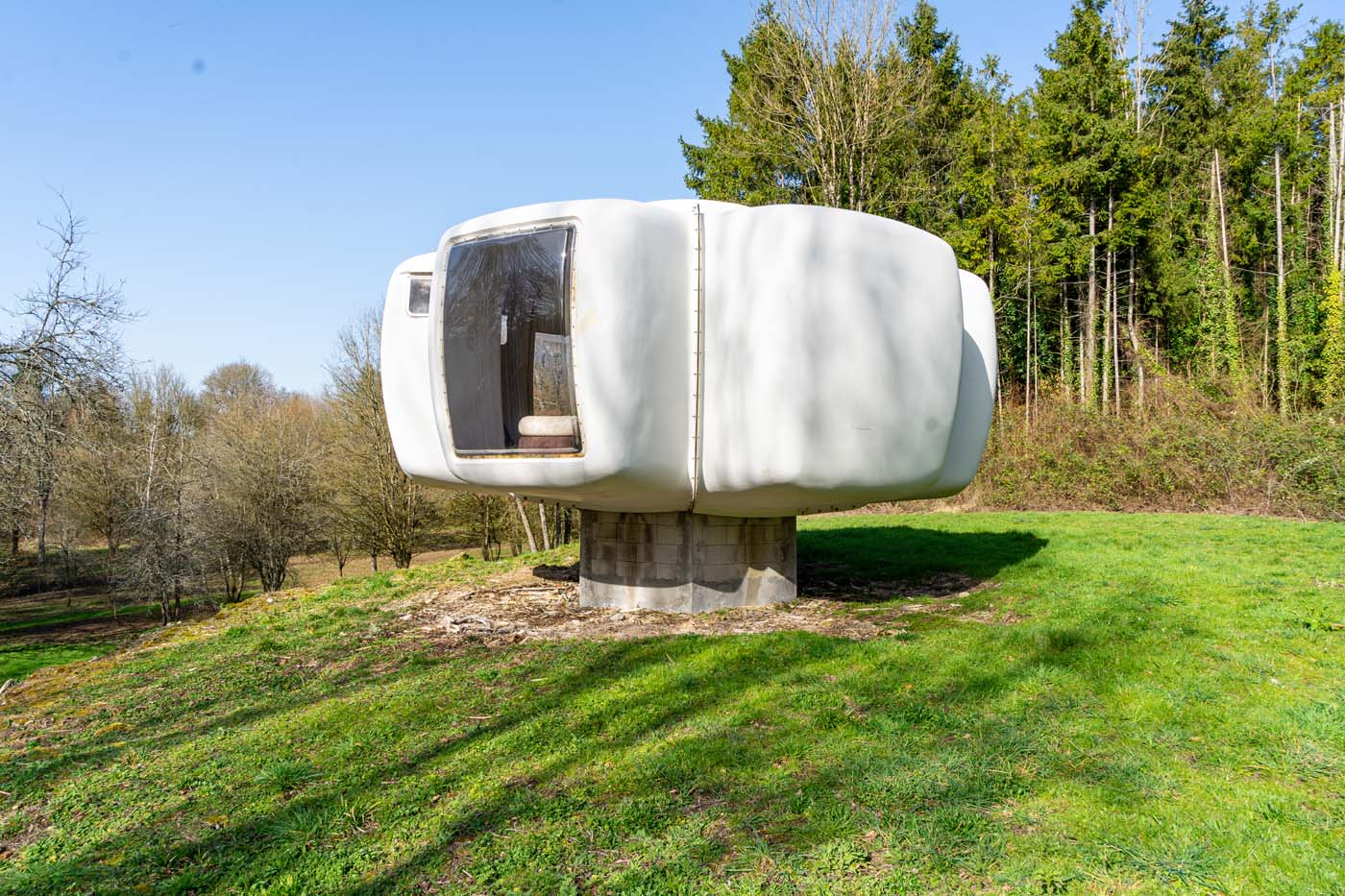
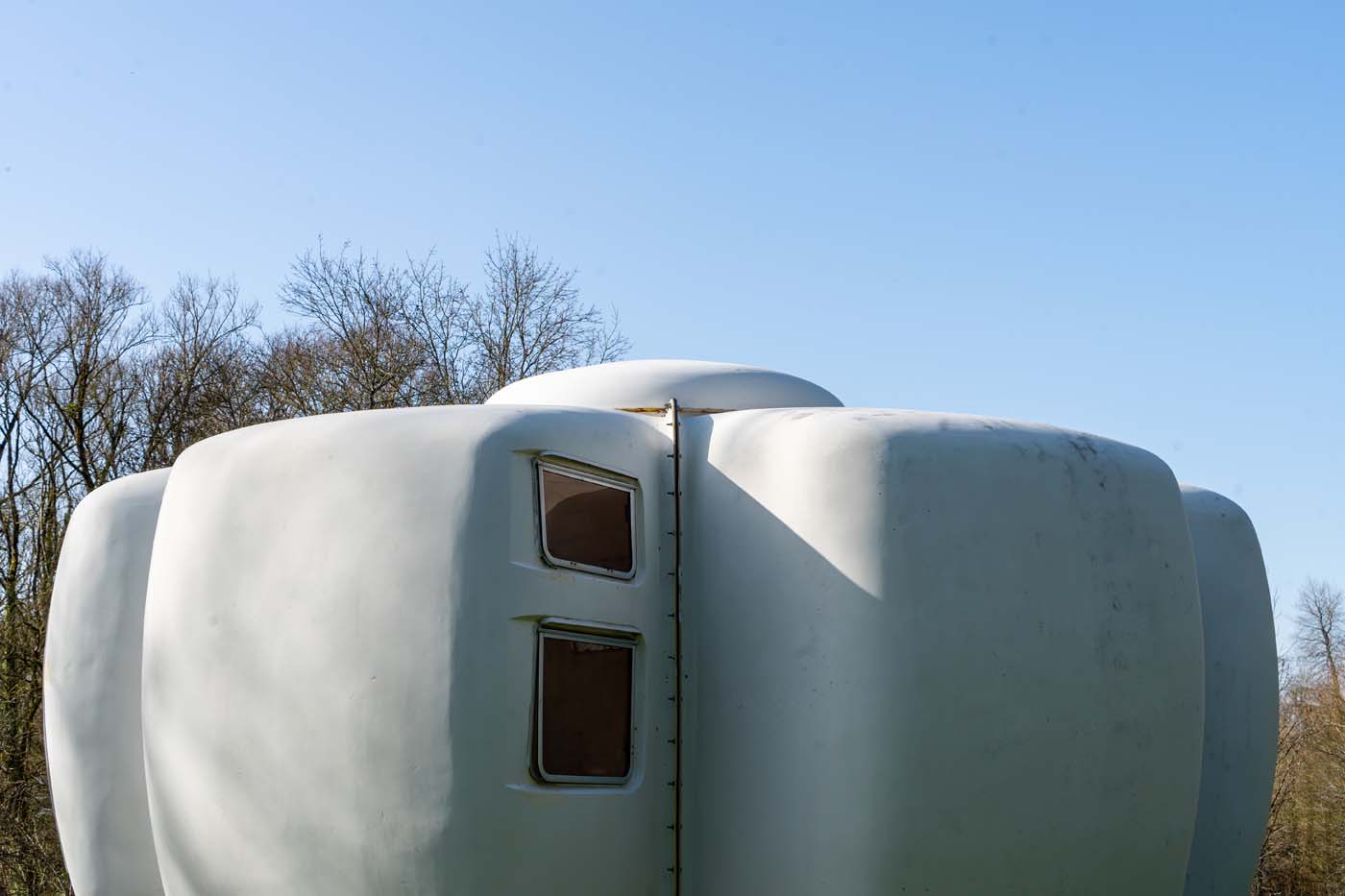
The six-shell bubbles are designed from the same mold. Each consists of two walls made of polyester reinforced with fiberglass, between which insulating polyurethane foam is injected. Large fixed plastic windows (smoked methyl methacrylate) ensure ample natural light inside.
Originally, the various modules were distributed according to their functions. There is one shell for the entrance, another for the living area, one dedicated to wet rooms, and three additional shells housing two bedrooms and a living room that can also serve as a guest room.
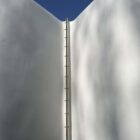
Accessed via a flight of metal steps, this organic architecture without foundations offers a living area of 36 m².
Now open-plan, this six-shell bubble is a gift to the imagination, lending itself equally well to an artistic approach or to multiple contemporary or period-inspired uses and layouts, in keeping with the spirit and forms of the era that saw its birth.

The architecture of the future
In architecture, the Trente Glorieuses (post-war boom years) in France were marked by the emergence of a “prospective and futuristic” movement, imbued with the ideals of the period, whose economic, industrial, and creative potential seemed limitless. A generation of young architects, driven by this energy of progress, this dream of innovation and space conquest, thus committed to radically renewing housing.
The experimentation with plastic materials became a new means of expression for them, allowing them to break free from formal constraints and imagine structures inspired by organic and mineral elements.
Following the first “all-plastic house” presented by René-André Coulon and Ionel Schein in 1956 at the Salon des Arts Ménagers in Paris, this revolutionary material experienced spectacular development. It enabled the creation of high-tech objects and environments, materializing on Earth the dream of infinite mobility and total communication.

© FIAC 2018 , © Reserved rights
Industrial dream and nomadic architecture
Jean-Benjamin Maneval took part in the design of this plastic micro-habitat through his collaboration with the petrochemical industry of the ELF Aquitaine group.
Making full use of the possibilities offered by the material, he designed a cellular and rational habitat. Born from the assembly of six polyester shells with bold curves and sometimes vivid colors, this “bulb” sits on a concrete base. Each protrusion is assigned a specific function, originally defined by perfectly integrated furniture and the most modern equipment.
Afin d’en assurer la commercialisation, Elf Aquitaine créé en 1967, à parts égales avec les ciments Lafarge Bâti Plastique, une société, dont fait également partie Jean-Benjamin Maneval. Cet engagement témoigne des espoirs que suscitent chez les grandes industries cet habitat en plastique, pensé comme un objet de consommation (touristique notamment), peu onéreux, facile à mettre en œuvre et aisément transportable. Néanmoins, ces maisons ne rencontrent pas le succès commercial attendu, servant pour une bonne partie d’entre elles à la création d’un village de vacances pour le comité d’entreprise d’Elf Aquitaine, à Gripp, dans les Pyrénées.


Jean-Benjamin Maneval during the installation of the bubbles for the Elf Aquitaine holiday village, Gripp, Pyrenees © Maneval Family Archives
Jean-Benjamin Maneval
Architect, urban planner, and theorist, Jean-Benjamin Maneval (1923–1986) studied at the École nationale des beaux-arts de Paris, in the studios of Alphonse Defrasse and Otello Zavaroni, as well as at the Institut d’urbanisme of the University of Paris. He was active in France, Argentina, and the United States, where he applied his dual training, notably designing offices and laboratories for the Société nationale des pétroles d’Aquitaine shortly before the six-shell bubble. In 1977, he was also responsible for the development of an urban complex in the suburbs of Washington.
Technical informations
© Texts Architecture de Collection
© Photos Manuel Bougot


