
© Architecture de Collection
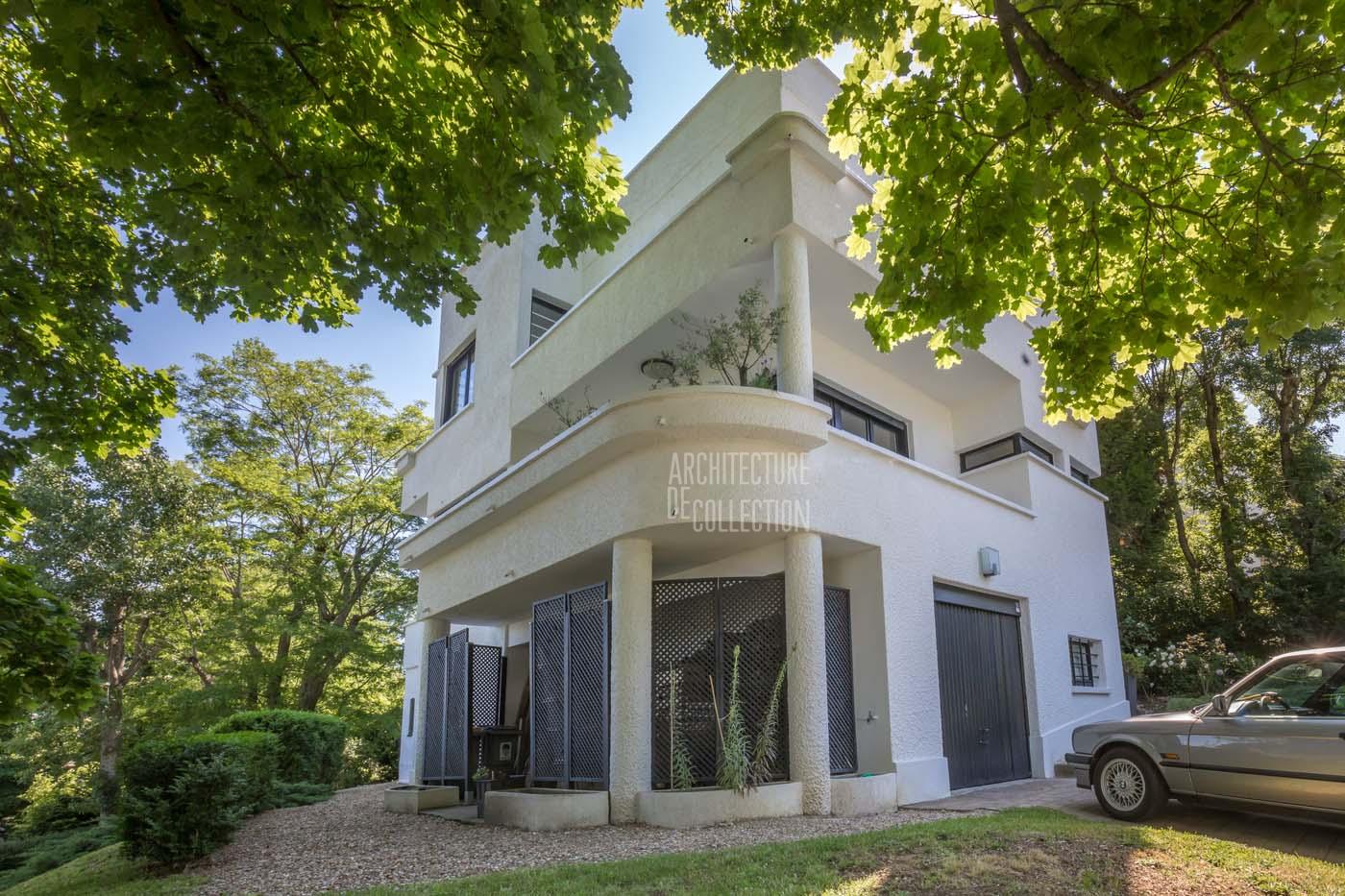
Mirasol House
Pol Abraham architect
1928
Vaucresson (92)
Architecture de Collection Catalog 2021
A modern villa on the heights of Vaucresson
The Mirasol villa was built in 1928 by Pol Abraham, a prominent modern architect who was the subject of a retrospective exhibition at the Centre Pompidou in 2008.
This villa is distinguished by its structural rationality and generous spatial layout. Typical of the “International Style,” its exterior features sculptural volumes highlighted by cornices and enlivened by setbacks and projections. Inside, the open-plan spaces are flooded with natural light thanks to large windows and corner glazing. The villa is full of characteristic 1930s details: an Art Deco canopy and exterior light fixtures, a sleek spiral staircase, and a porthole window.


Pol Abraham
Architect Pol Abraham (1891–1956) studied at the École des Beaux-Arts in Paris in the studios of Jean-Louis Pascal and Alfred-Henri Recoura. After graduating in 1920, he continued his studies at the École du Louvre until 1924, then undertook a thesis that had a lasting impact on architectural history, in which he critiqued Eugène Viollet-le-Duc’s rationalist approach to Gothic architecture.
His theoretical concerns profoundly influenced his work: Pol Abraham occupies a unique place in the French tradition of constructive rationalism, drawing both on the classical school represented by Auguste Perret and the modern movement embodied by Le Corbusier. The clarity of lines and volumetric forms create a structural aesthetic that defines his style.
Throughout his career, domestic architecture dominated his commissions. Primarily built in the Île-de-France region, his villas reflect a continuous quest for architecture balanced between modernity and tradition. The Art Deco and picturesque taste of the 1920s was gradually abandoned in favor of a refined functionalist language : corner windows, flat roofs, and cubic volumes characterize Villa Granet in Sceaux and Villa Thérèse in Vaucresson.
His recognition was solidified after World War II, when the Ministry of Reconstruction and Urbanism entrusted him with the Orléans project, where he combined prefabrication, studied during the Occupation, with a neoclassical urbanism that preserved the historical character of the city. An exceptional legacy of French modernism, his work is now increasingly the focus of heritage protection efforts.
OUR ARCHIVES
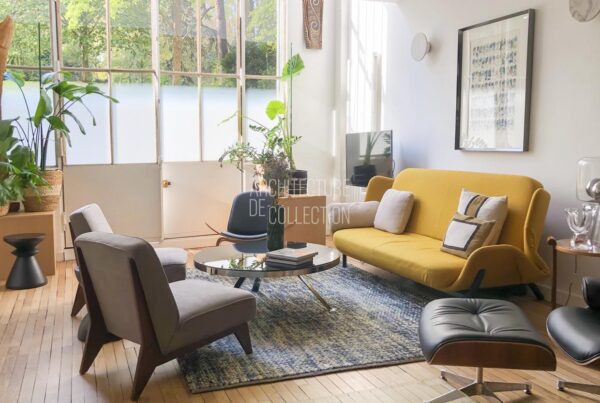
Artist’s studio in duplex, 1930
Michel Roux-Spitz architecte
Artist’s studio in duplex, 1930
Mirasol House, 1928
Pol Abraham architecte


