Description
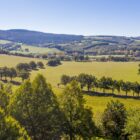
A bioclimatic architecture in an exceptional natural setting
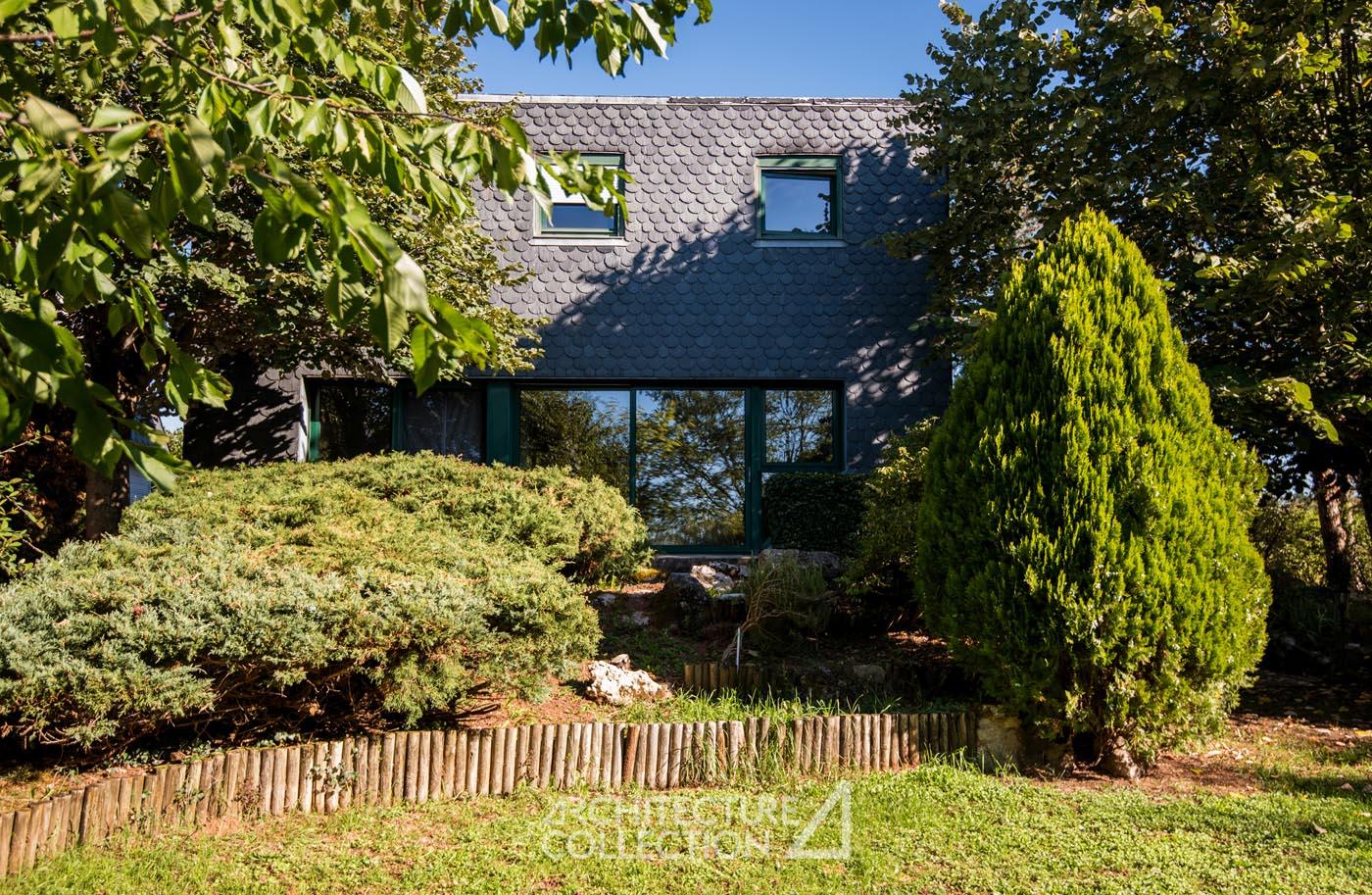
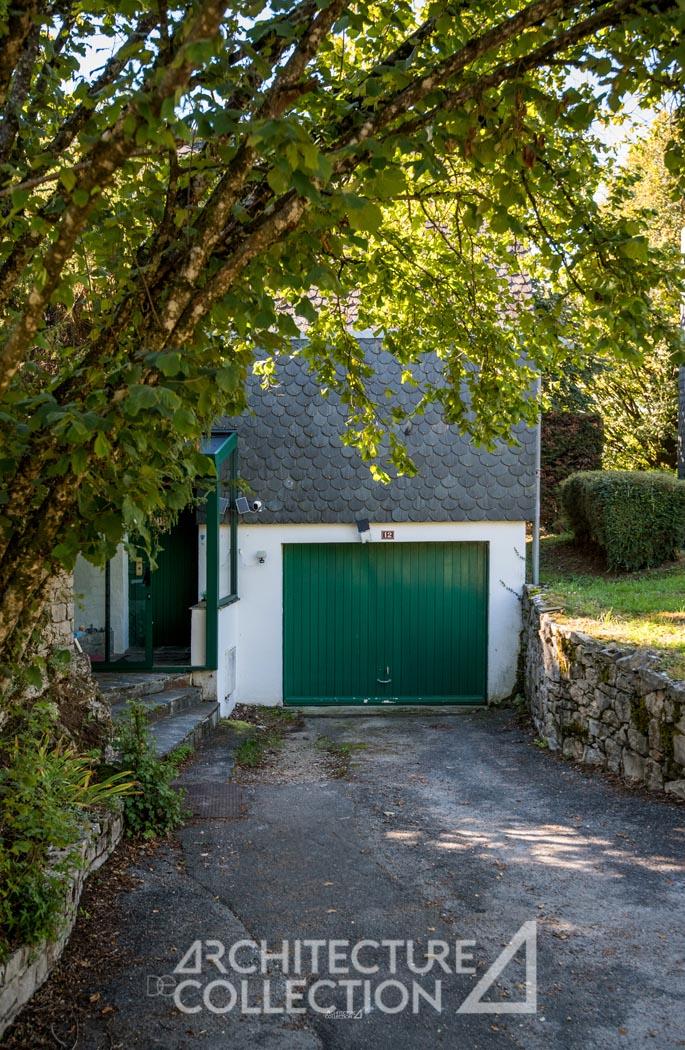
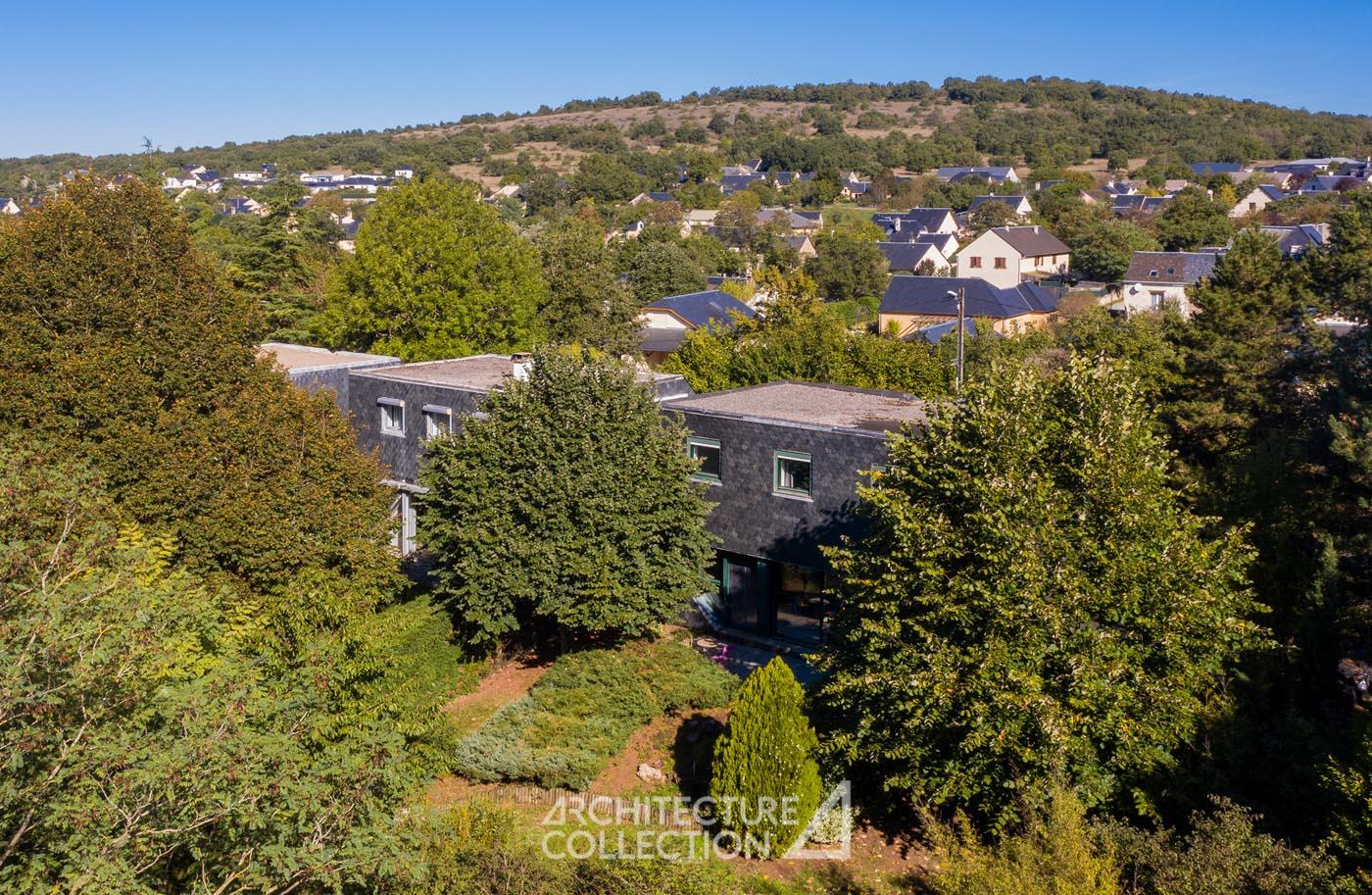
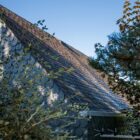
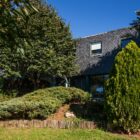
This house is part of the Roquebrune development, an innovative alternative to conventional housing estates, built between 1972 and 1975 by the architect Jacques Hondelatte and his associates Jean-Claude Duprat and Michel Fagart.
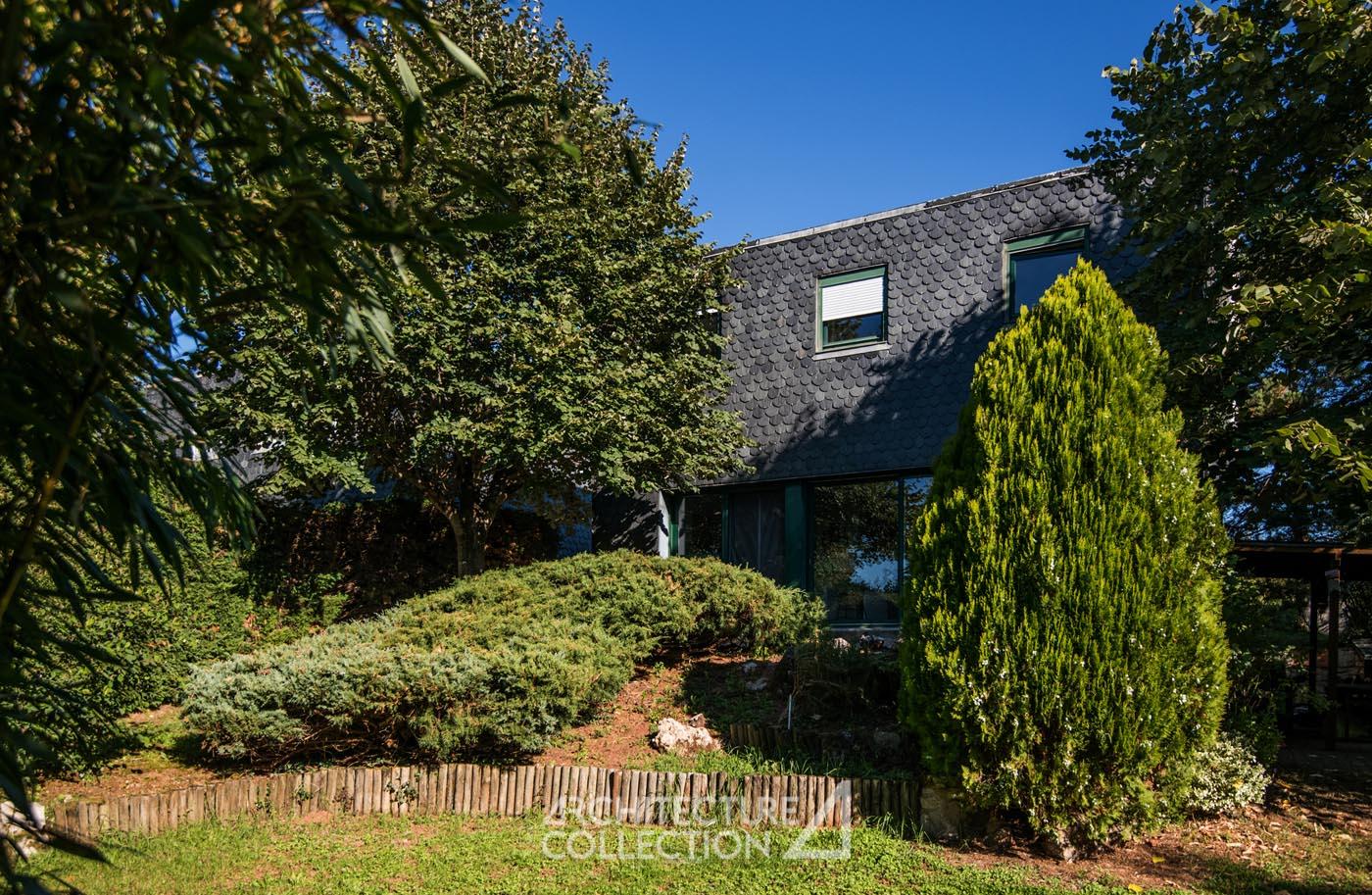
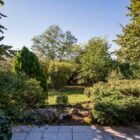
Set within a landscaped private plot of 736 m², the house offers 132 m² of living space spread over four levels.
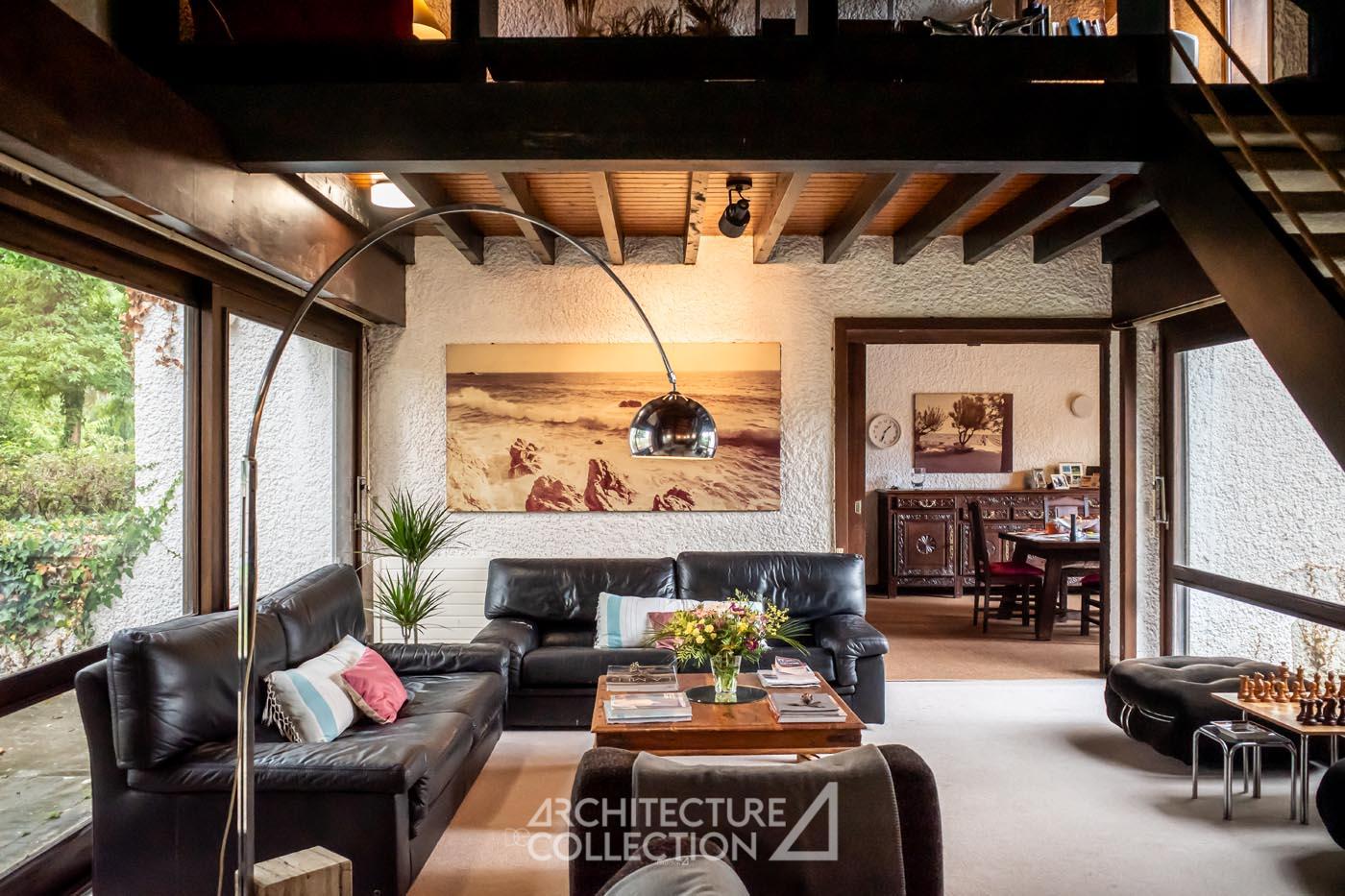
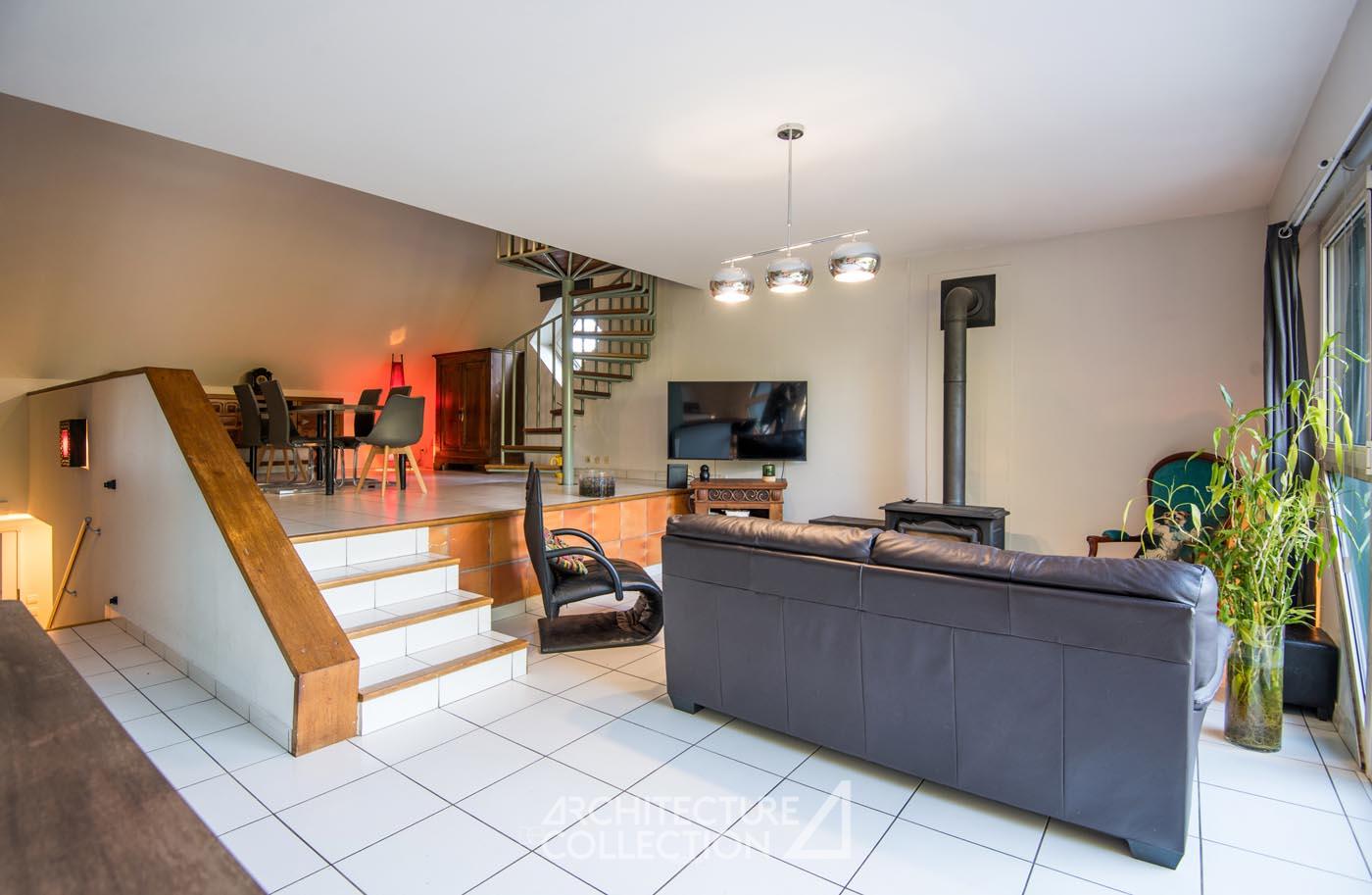
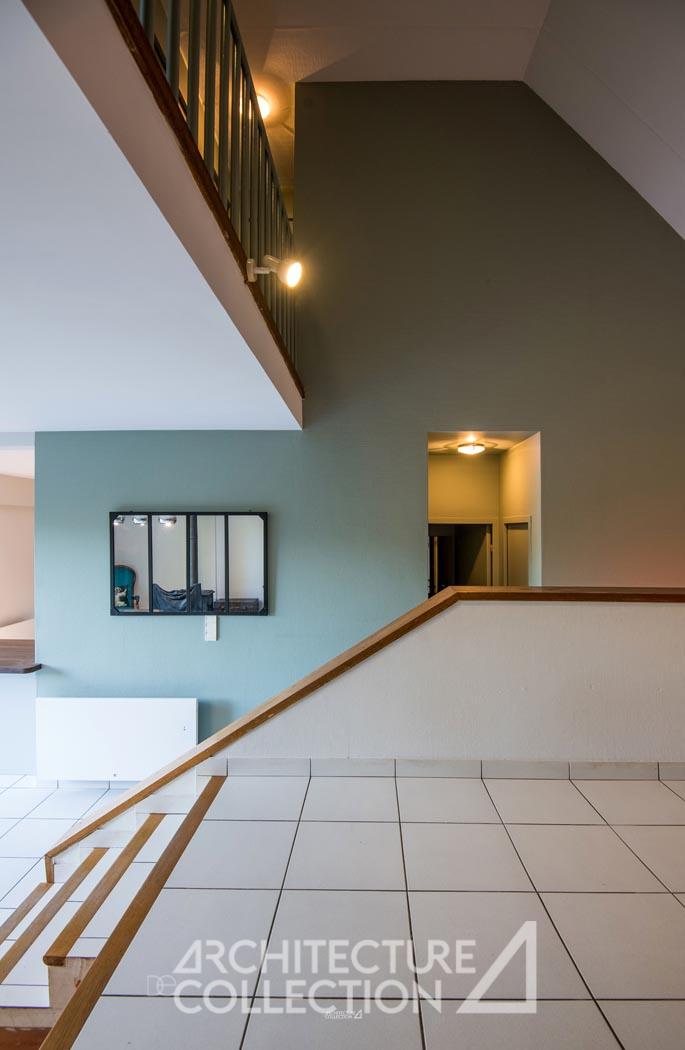
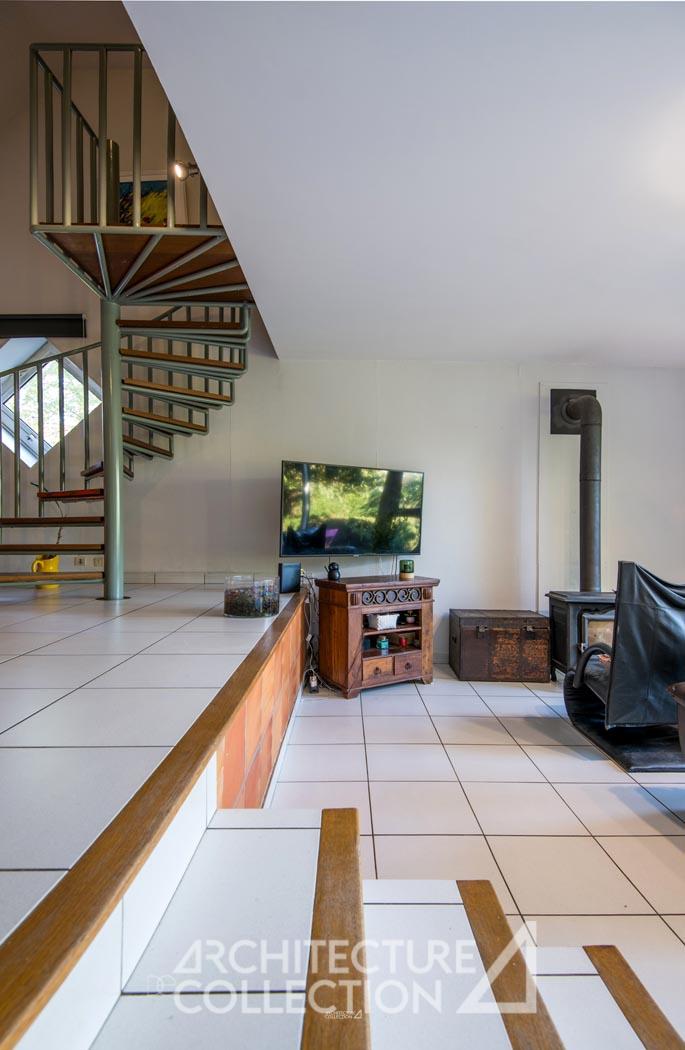
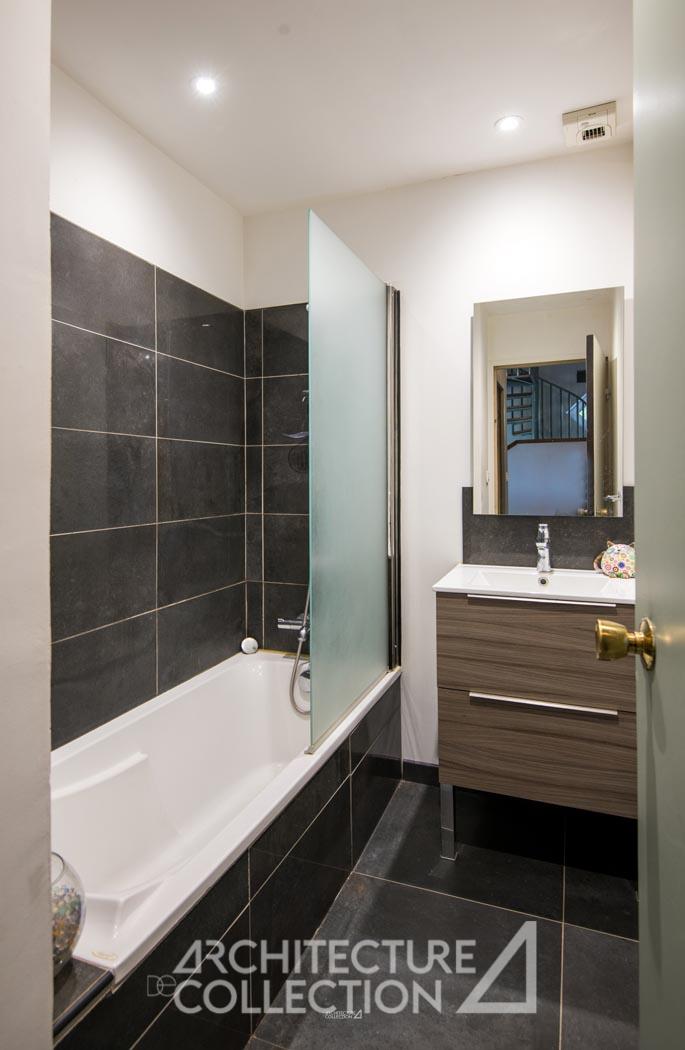
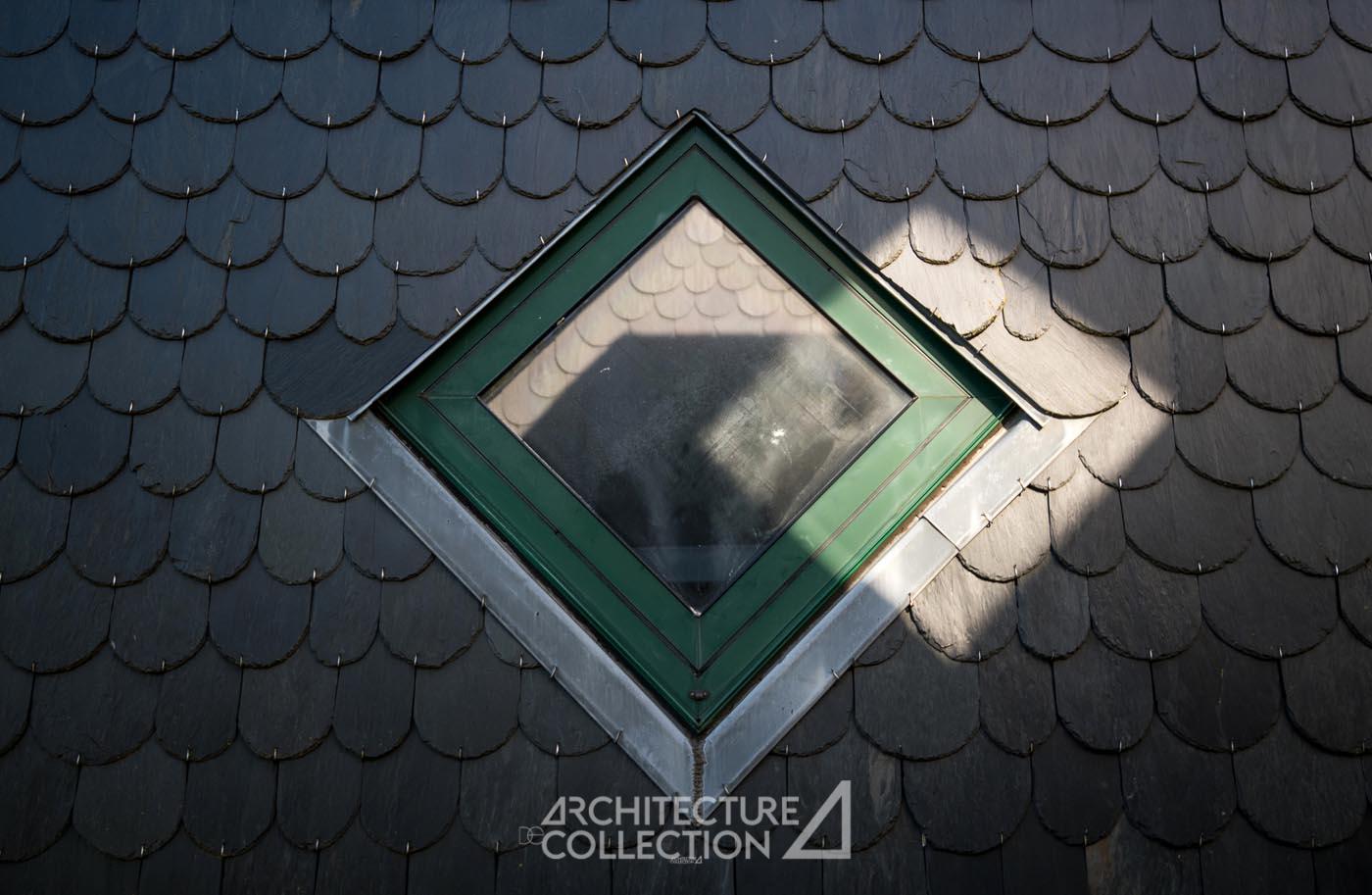
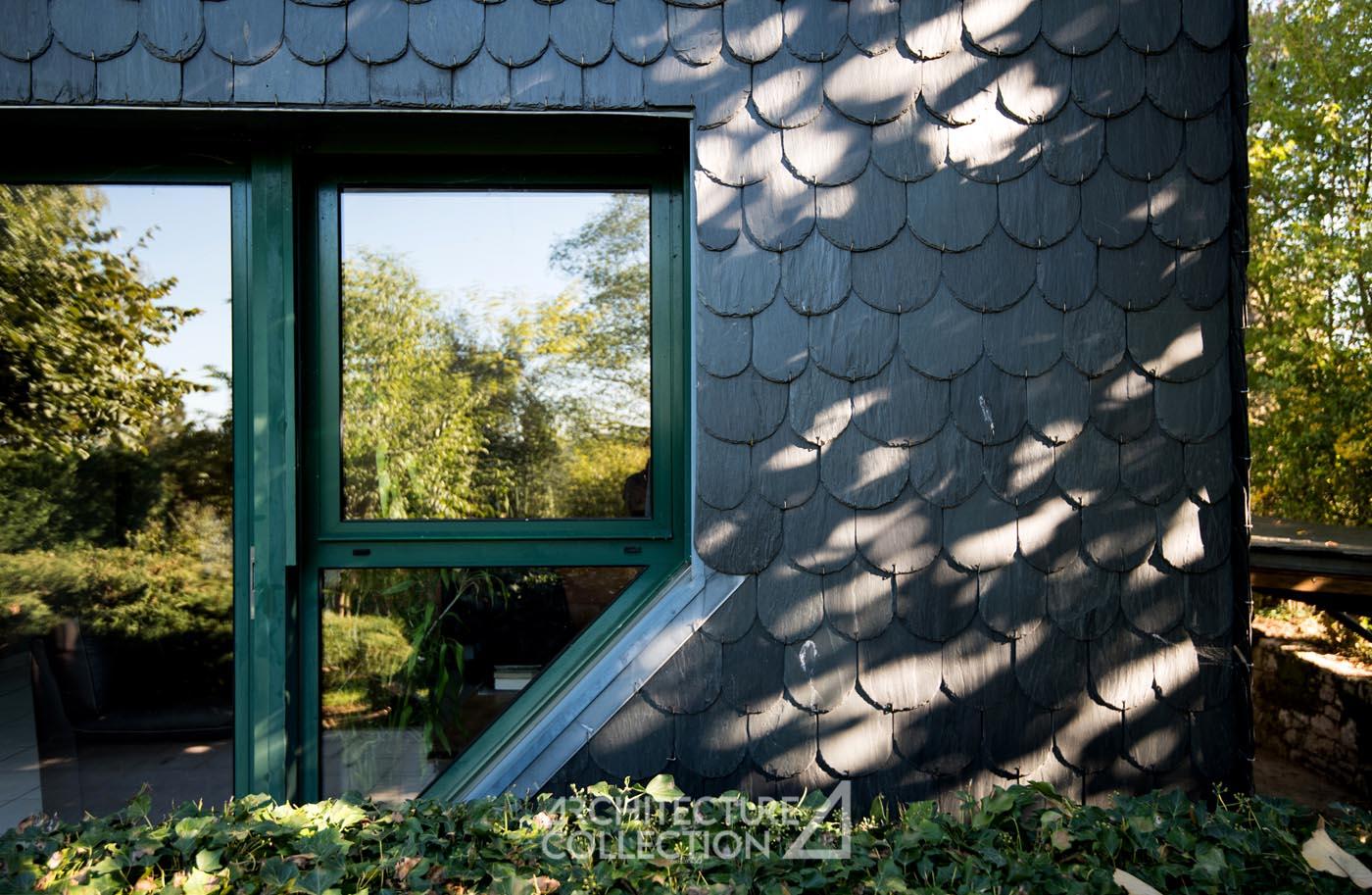
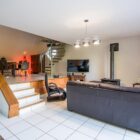
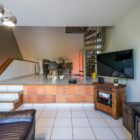
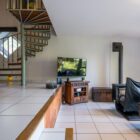
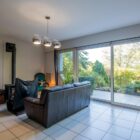
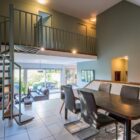
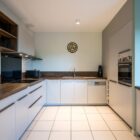
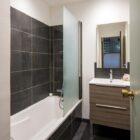
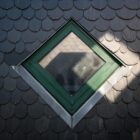
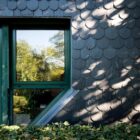
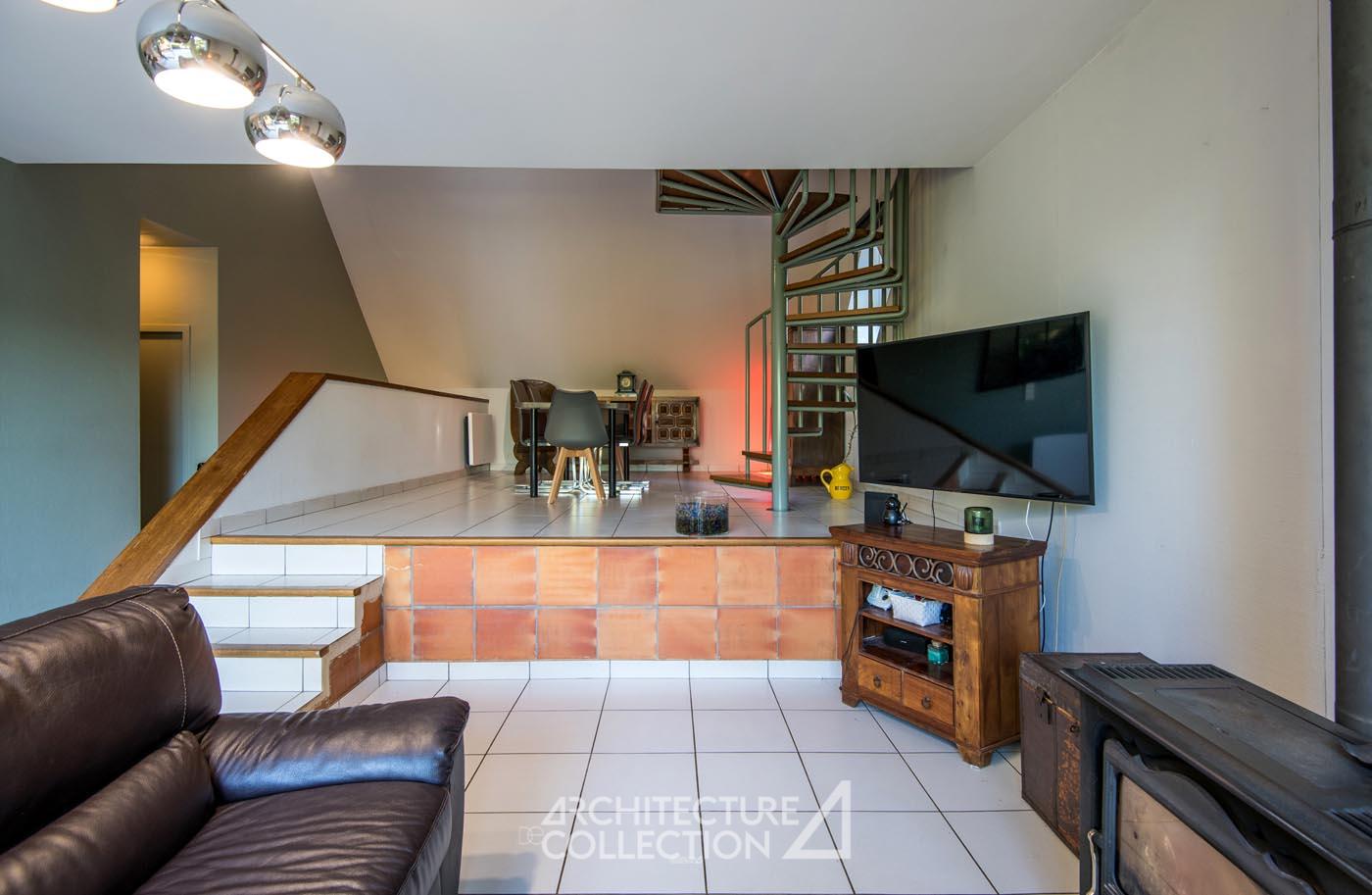
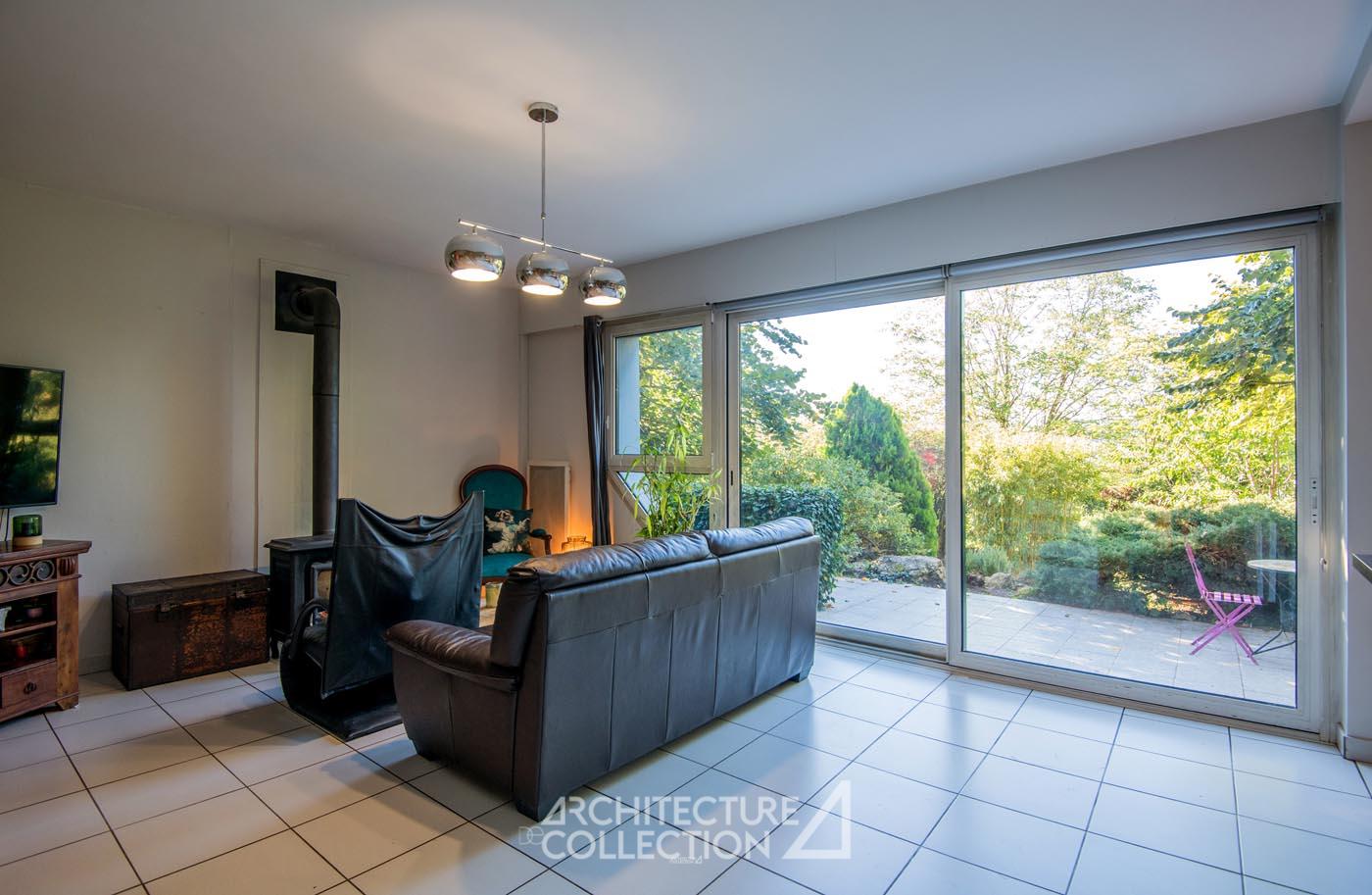
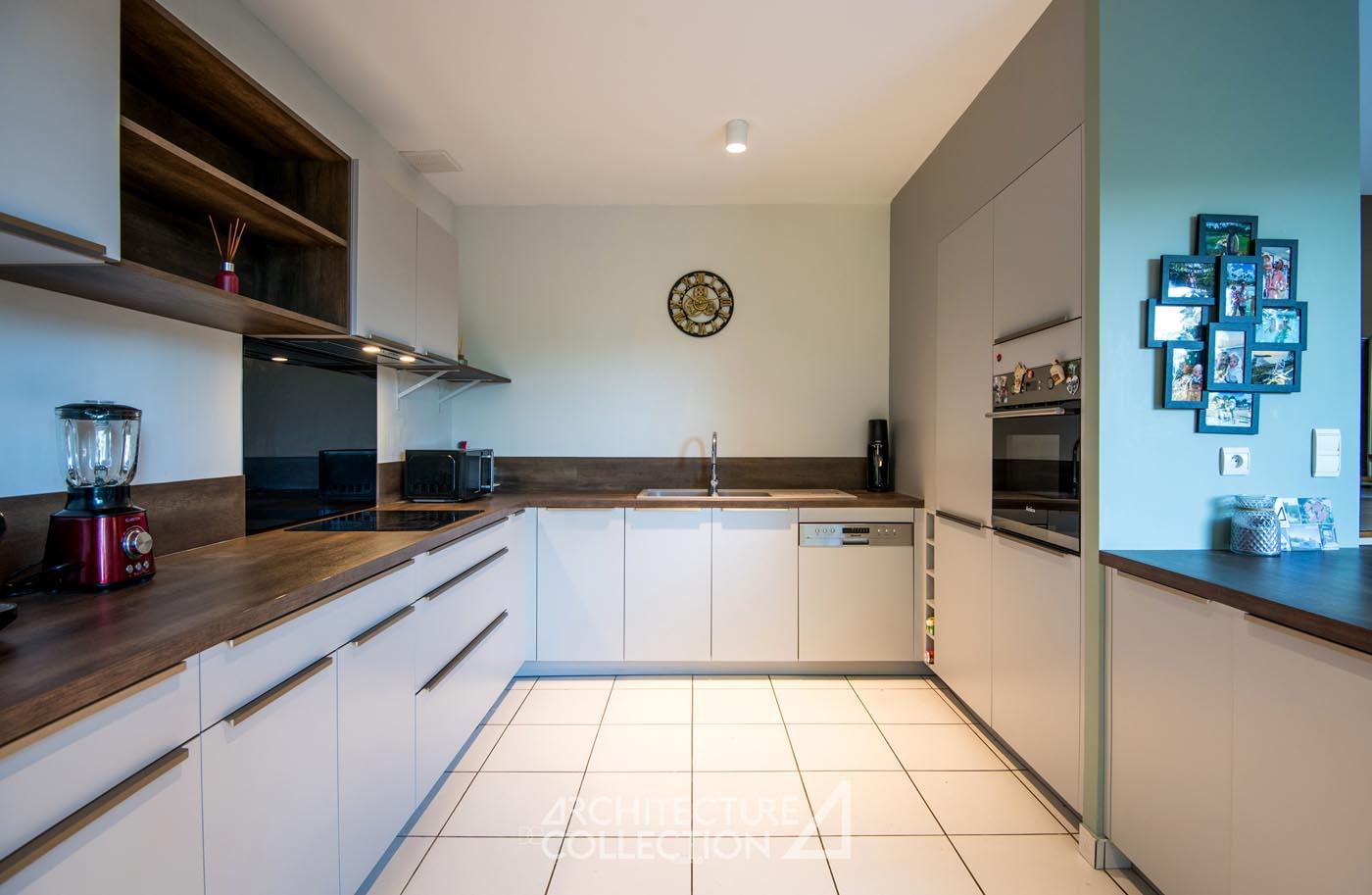
The living areas are arranged over a half-level and include a newly renovated open-plan kitchen (2024), a living room, and a double-height dining area. The entire space is filled with natural light thanks to large geometric bay windows overlooking the Palanges forest. This level is completed by a study that can also serve as a bedroom, as well as a bathroom with separate toilets.
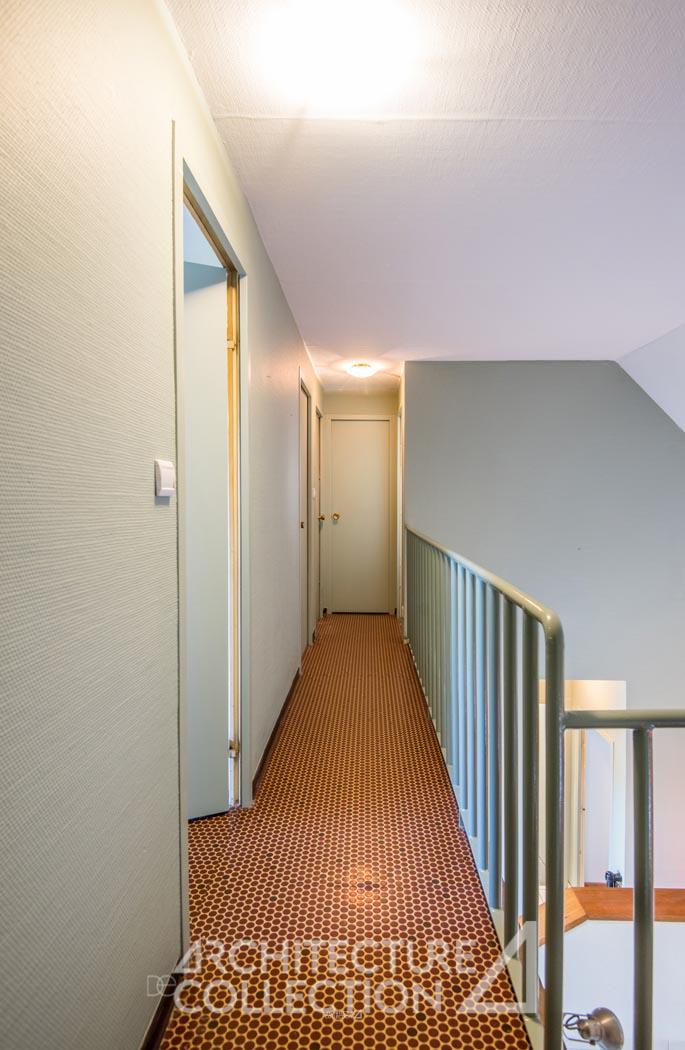
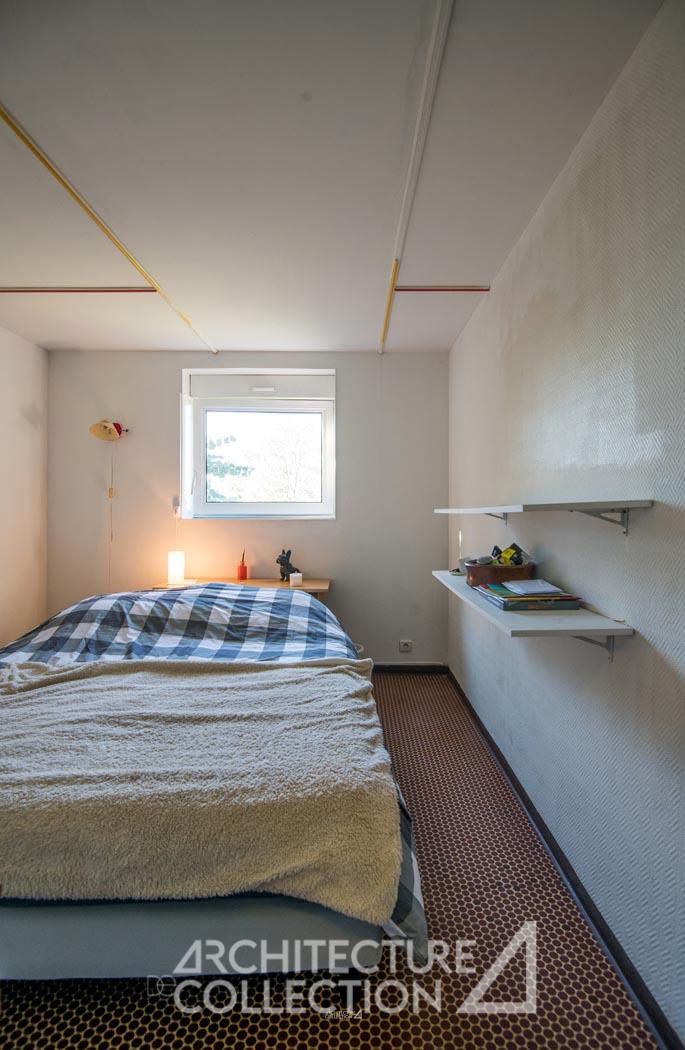
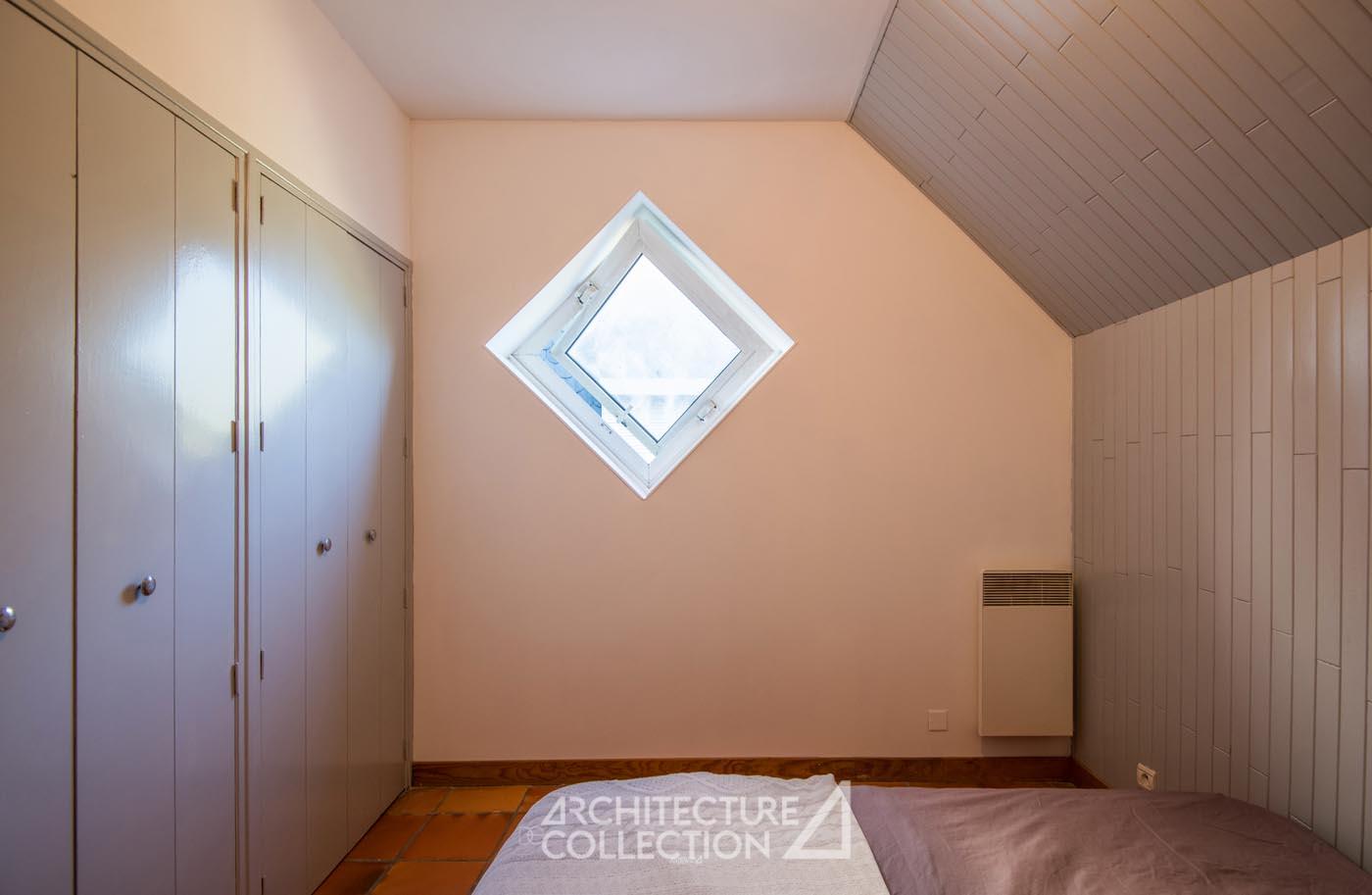
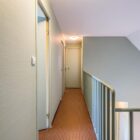
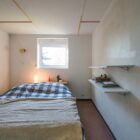
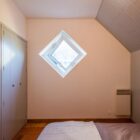
The upper level, accessed via a spiral staircase in wood and metal with a design typical of the 1970s, features three bedrooms with built-in storage, separate toilets, and a shower room.
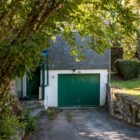
In the basement, a double garage, a laundry room, and a cellar complete the property.
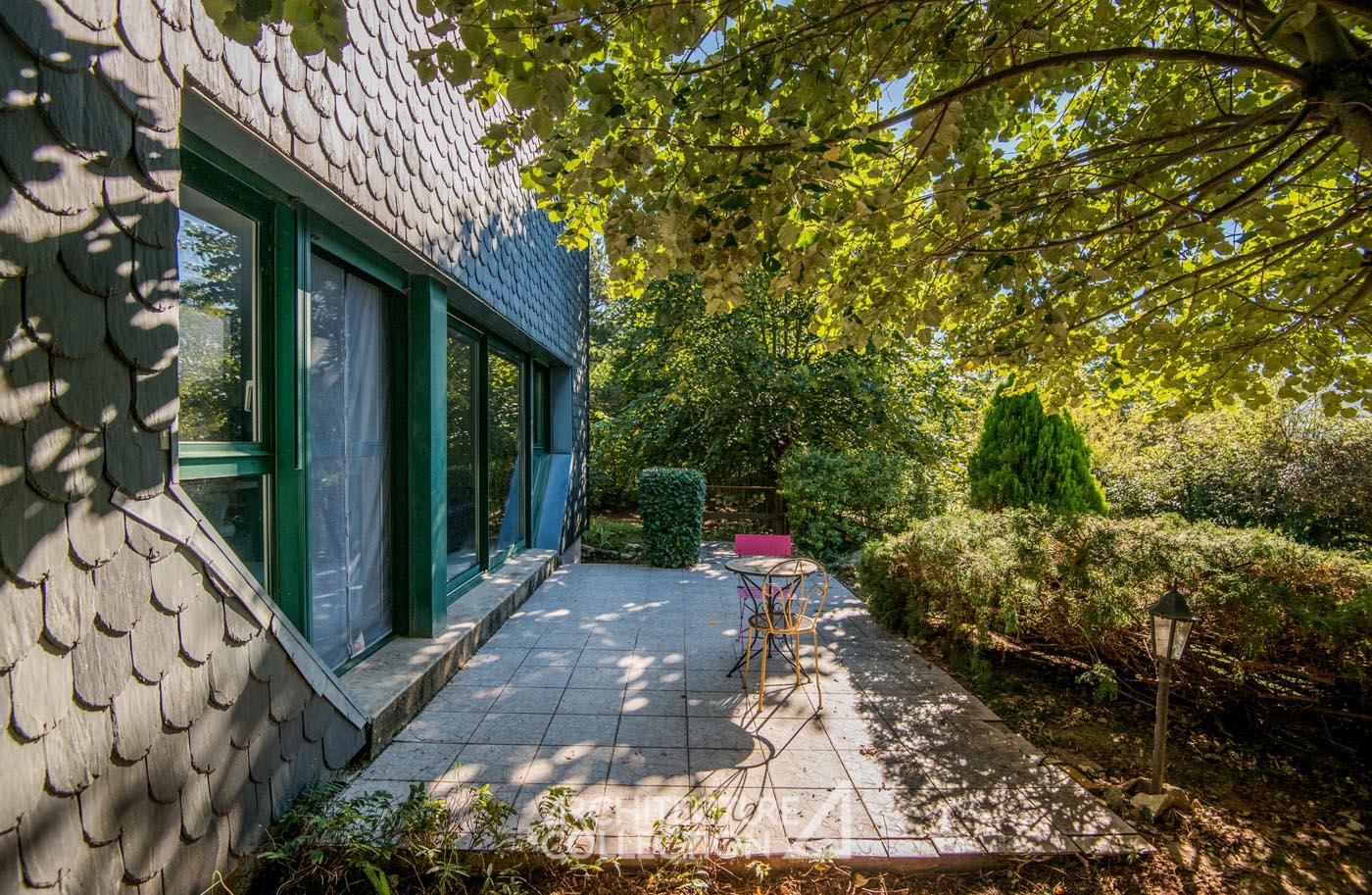
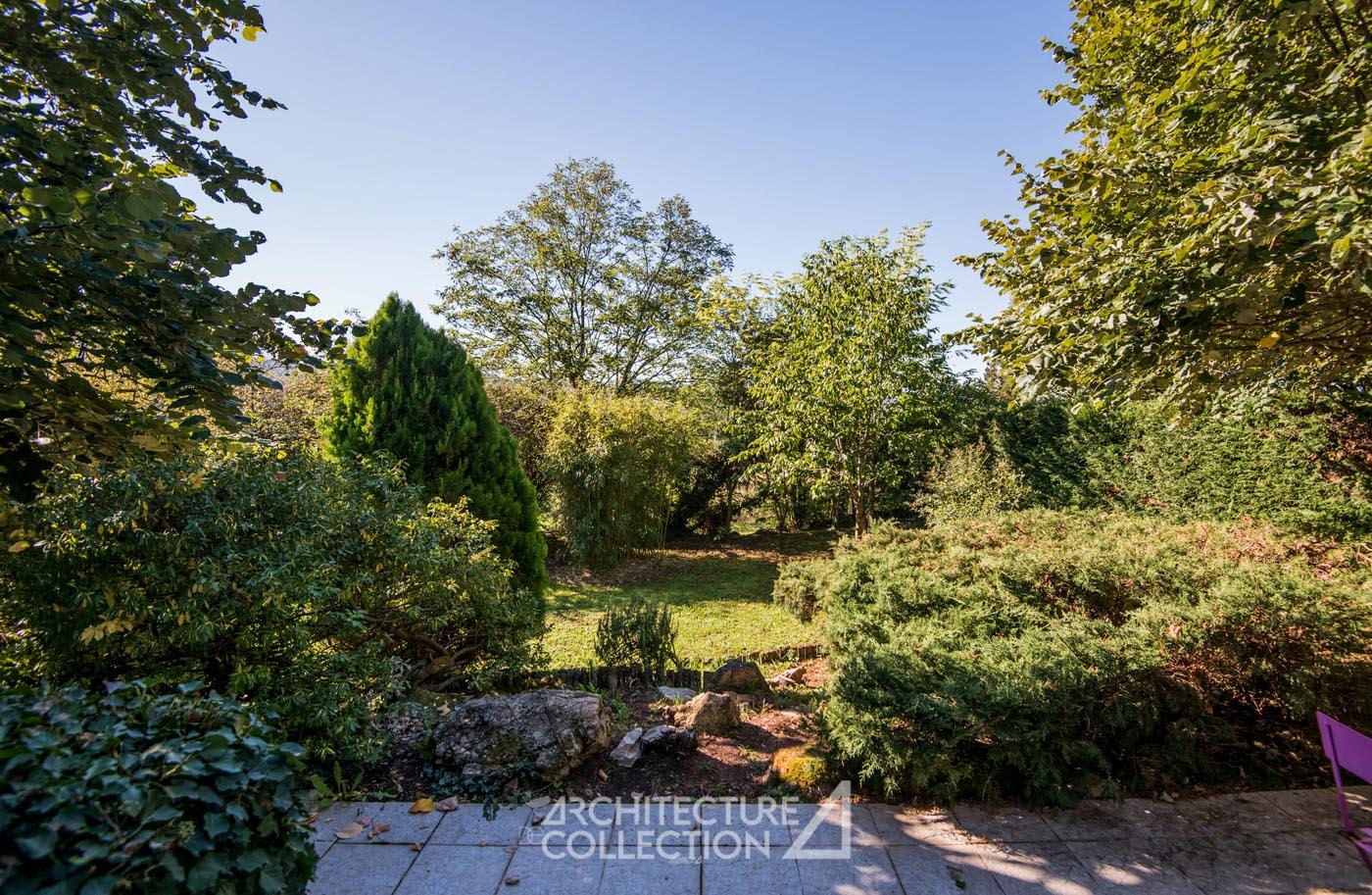
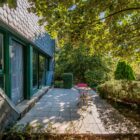
The house also benefits from a south-facing panoramic terrace and access to the shared amenities of the development, including a large garden, children’s play areas, and communal clothes drying facilities.
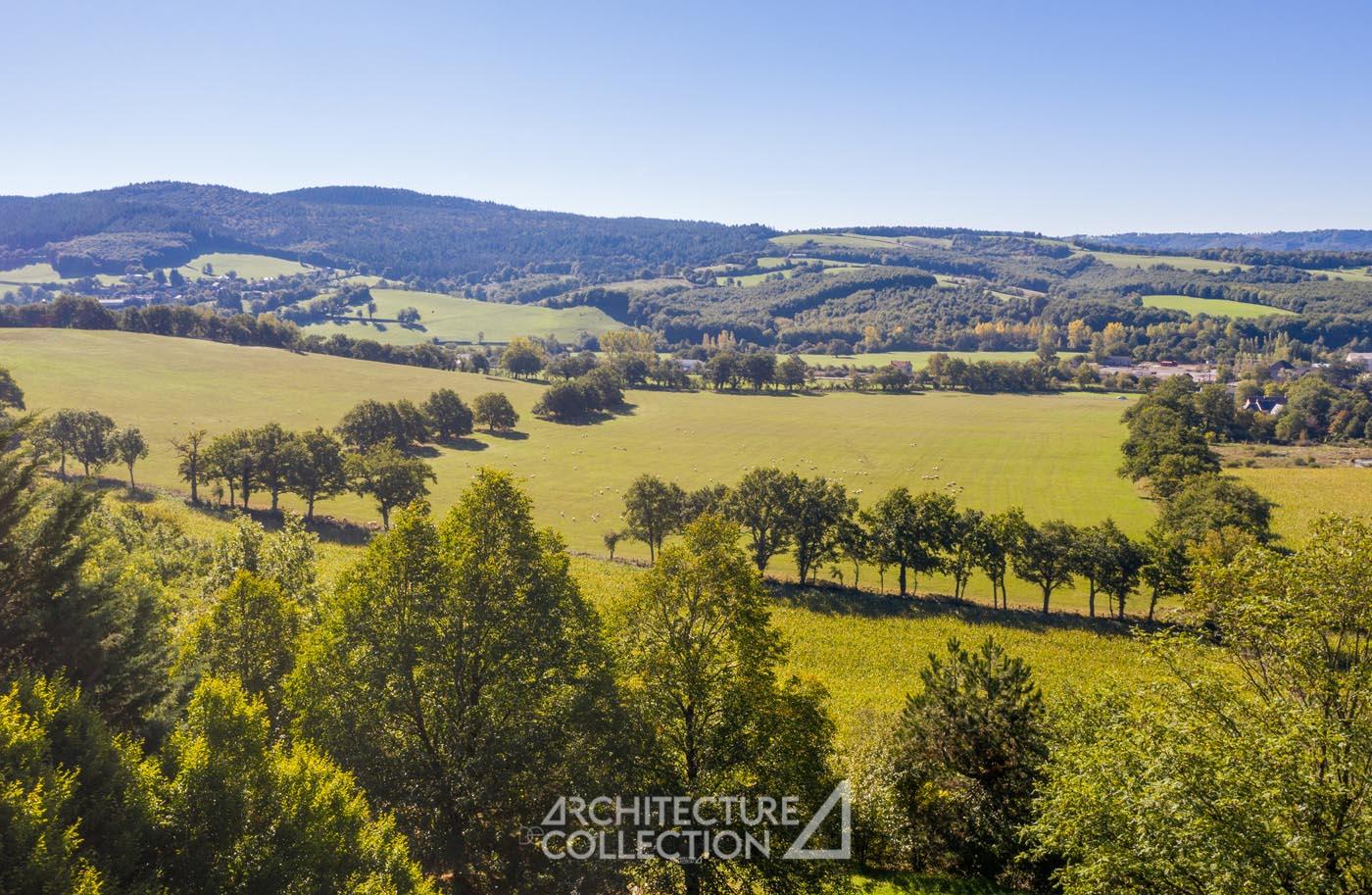
The house enjoys a preserved natural setting just 20 minutes by car from Rodez, and 1 hour 30 minutes from Montpellier and Toulouse. The development is accessed via a private road immersed in greenery and benefits from all the nearby amenities of the village, including a daycare, school, sports facilities, and local shops.
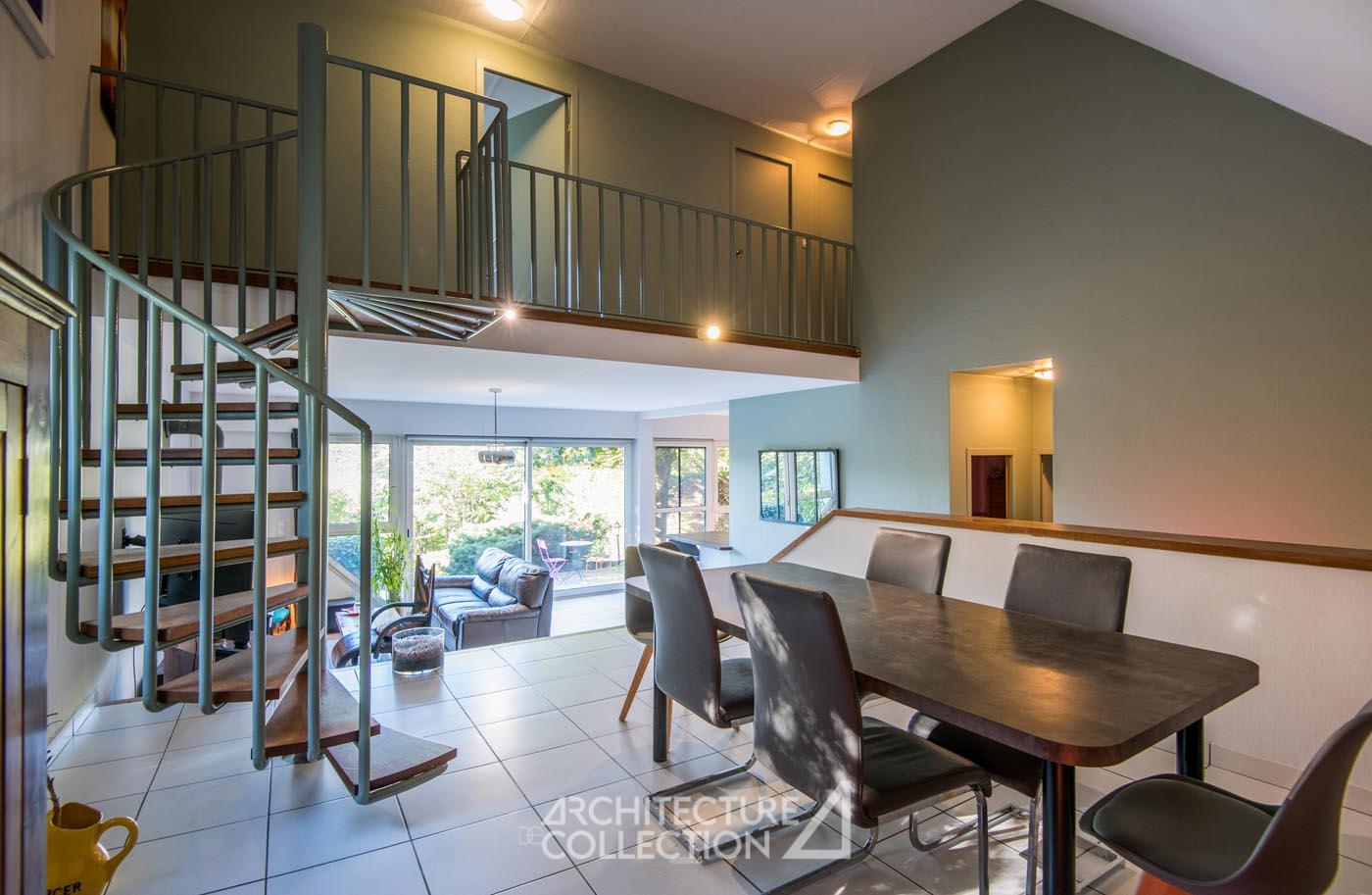
A pioneering bioclimatic housing project
The architects placed emphasis on the way residents live, prioritizing the design of interior spaces over the architectural envelope. A decade before the term even emerged, this bioclimatic approach creates a living environment well sheltered from prevailing northern winds while opening widely to unobstructed southern views, allowing the house to capture heat or protect itself from it depending on the season. Its compact volume reduces energy loss and optimizes natural light.
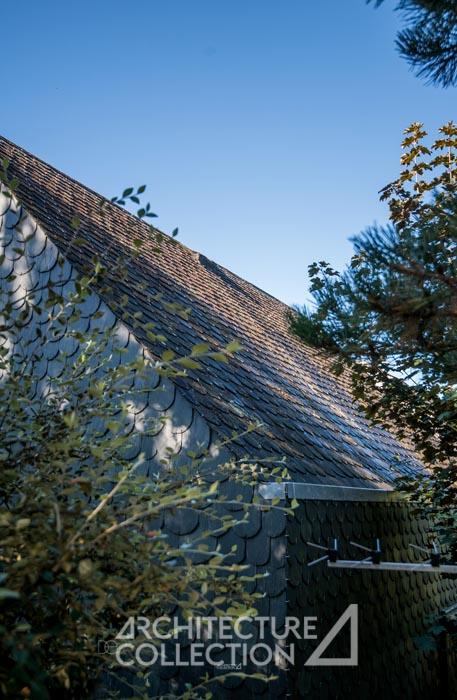
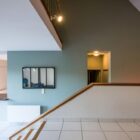
Inside, a series of split levels connected by generous visual openings creates a fluid, airy circulation while structuring the space. Numerous openings frame views of the landscape and horizon, immersing the living areas in the surrounding nature, while upstairs, the sloping roof defines more intimate spaces.
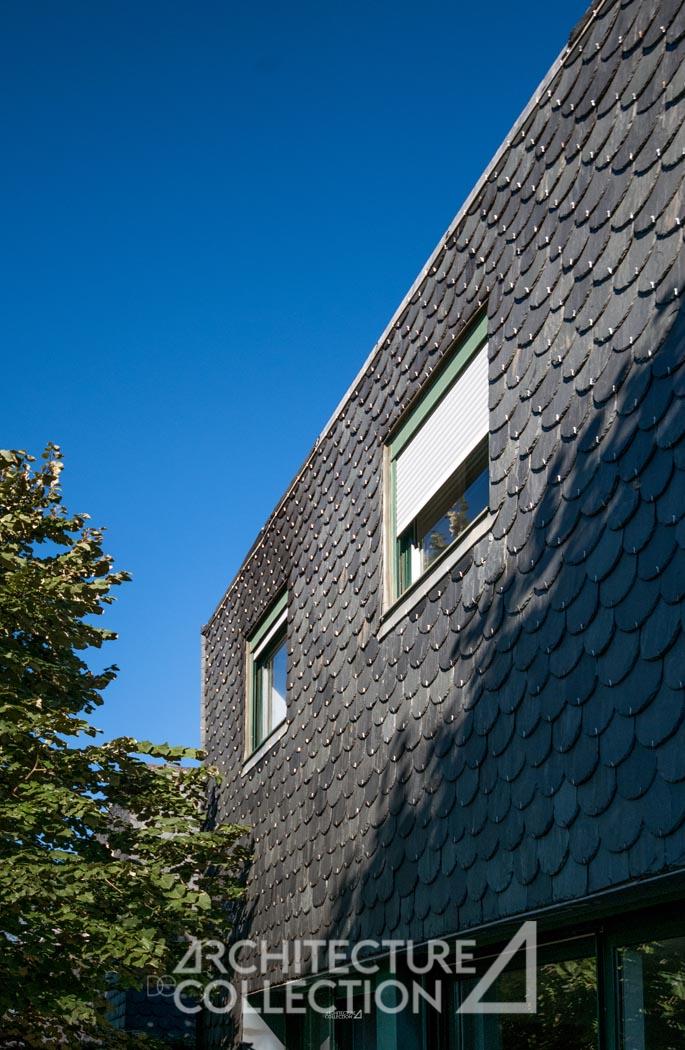

Community utopia : an innovative and sustainable housing development
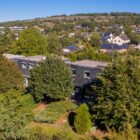
The project began in 1970, driven by a group of friends seeking affordable housing in a pleasant living environment. In the outskirts of Rodez, the development is set on a rocky cliff with open views. It consists of 19 houses designed to meet the needs, economic constraints, and communal living principles desired by the families. The collective nature of the initiative allowed the clients to commission urban architects to create a coherent and high-quality residential environment by sharing design and construction costs.
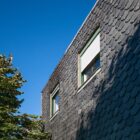
Jacques Hondelatte and his associates proposed an urban planning project focused on sustainability, prioritizing shared spaces over private ones, in contrast with conventional housing estates. The site’s landscape potential is ingeniously leveraged by integrating the buildings among the rocks. The terrain’s natural relief creates privacy between each plot without fences or hedges, enhancing the sense of openness throughout the development. The houses are designed according to seven different models, featuring varied façades and openings, while maintaining a strong overall architectural harmony.

Jacques Hondelatte, « poet architect »
Little known to the general public but highly influential for many architects, particularly those who had the opportunity to study and work with him, such as Boubacar Seck, Anne Lacaton and Jean-Philippe Vassal, Jacques Hondelatte (1942–2002) is a major figure of the Bordeaux architectural scene. A visionary, he is the author of an avant-garde body of work at the intersection of architecture and contemporary art.
A graduate of the Bordeaux School of Architecture in 1969, he worked as an urban planning consultant at the Gironde Departmental Directorate of Equipment, then at the Bordeaux Equipment Study Center until 1973. He collaborated with architects Jean-Claude Duprat and Laurent Fagart for ten years, and taught at the Bordeaux School of Architecture until his death in 2002.
Jacques Hondelatte built relatively little. Among his best-known works are the Fargues houses (1971) and Artiguebieille houses (1972), the Cotlenko apartment in collaboration with Anne Lacaton and Jean-Philippe Vassal (1990), the city centre of Niort and its dragons (1992), and the Goubet school in Paris, as well as unrealised projects such as the Bordeaux High Court (1988), the insularisation of Mont Saint-Michel (1990), and the Millau Viaduct (1994).
Awarded the Grand Prix National de l’Architecture in 1998, his work has been showcased in several exhibitions, including at the Arc-en-Rêve architecture centre in Bordeaux in 1999 (“Skyscrapers in the Head”), and at the Cité de l’Architecture et du Patrimoine in Paris in 2007 (“Before, After : Architecture Through Time”), curated by Patrice Goulet, where the Roquebrune housing development played a significant role (with the house for sale being exhibited). His work was also featured in 2012 at Six Elzévir in Paris (“The Forgotten Project”) and in London in 2017, as well as in 2018 (“Chacals comme festivals ou chacaux comme chevaux?”).
“Few architectures evoke emotions in us that we cannot rationally explain. At first, one is filled with doubt. Then, unexpectedly, one is carried away as if by magic. One then remembers that architecture is also the art of enchantment.” Excerpt from Espazium, on the occasion of the exhibition dedicated to J. Hondelatte by Arc-en-Rêve in 2018.
Technical information
Asking price : €290,000
Agency fees are payable by the seller.
Condominium, number of units : 19
Annual share of current charges : €500
Property tax : €990
Electric heating and wood stove, cast-iron electric radiators (new)
Information on the risks to which this property is exposed is available on the Géorisques website : www.georisques.gouv.fr
© Texts Architecture de Collection
© Photos Cédric Méravilles
Energy performance rating (DPE) : E – Greenhouse gas emissions (GES) : C
Heating : Average energy costs indexed to 2021 range between €3,180 and €4,370 per year (including subscriptions).